




























































$133 Billion Refunds: What the US Supreme Court’s Tariff Verdict Means for Indian Markets?
Synopsis: Indian markets await the U.S. Supreme Court verdict on Trump-era tariffs involving potential refunds of $133.5 billion and duties up to 50%–500%, a decision that could reshape India–U.S. trade flows and influence Indian market sentiment at the start of the week. Global markets are closely watching the U.S. Supreme Court as it prepares to […] The post $133 Billion Refunds: What the US Supreme Court’s Tariff Verdict Means for Indian Markets? appeared first on Trade Brains.

Synopsis: Indian markets await the U.S. Supreme Court verdict on Trump-era tariffs involving potential refunds of $133.5 billion and duties up to 50%–500%, a decision that could reshape India–U.S. trade flows and influence Indian market sentiment at the start of the week.
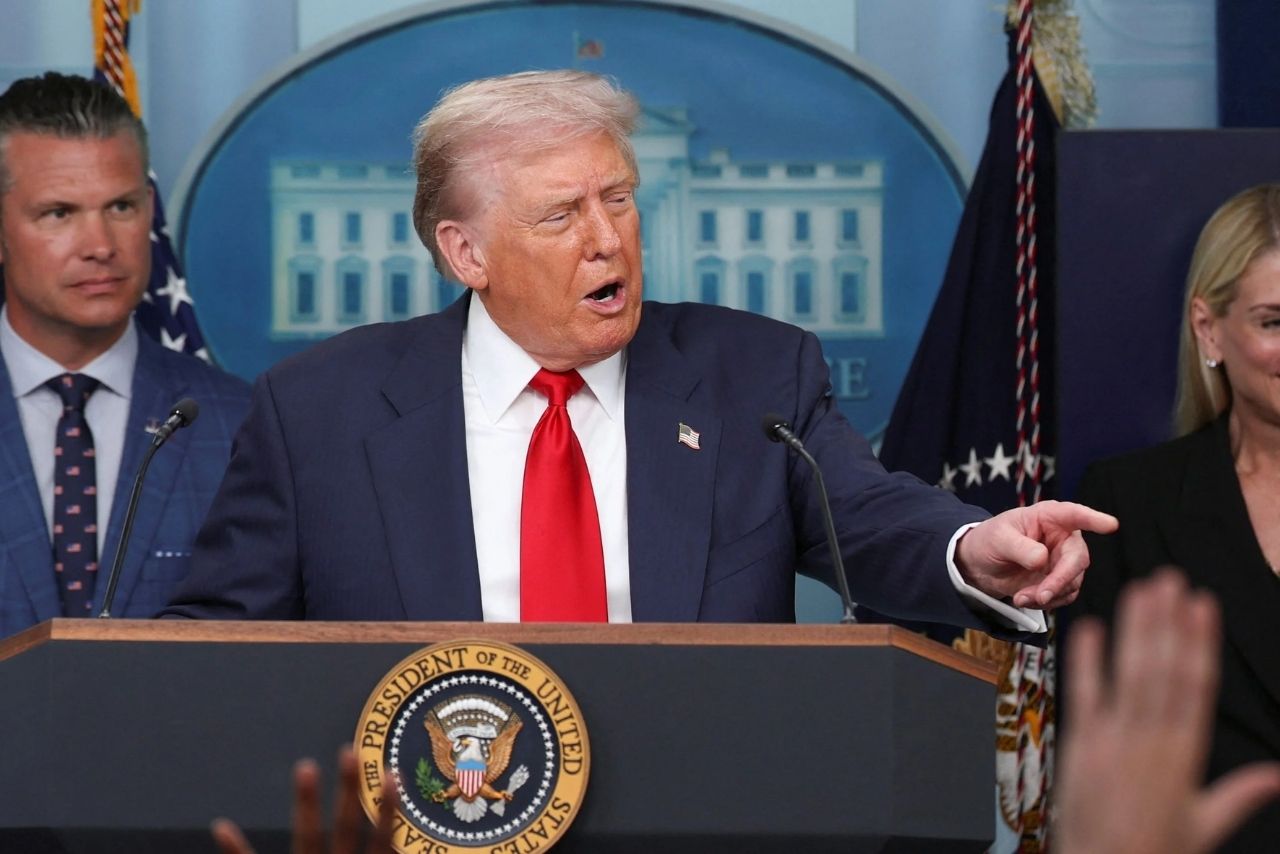
Global markets are closely watching the U.S. Supreme Court as it prepares to rule on the legality of tariffs imposed by President Donald Trump under emergency powers. These tariffs have wide implications for global trade, and could trigger one of the largest tariff refund exercises in U.S. history, with more than $133.5 billion potentially at stake.
India has already been subjected to some of the steepest U.S. tariffs globally, with duties reaching up to 50 percent on certain goods. This includes a 25 percent punitive component explicitly linked to India’s continued purchases of Russian energy. These tariffs have increased costs for Indian exporters across sectors such as engineering goods, chemicals, auto components, textiles, and pharmaceuticals, directly impacting margins and competitiveness in the U.S. market.
A much larger risk has emerged through the Sanctioning Russia Act of 2025, introduced by the U.S. Senators Lindsey Graham and Richard Blumenthal and backed by President Trump. The bill proposes secondary tariffs of up to 500 percent on countries that continue to buy Russian oil. While China and India are the largest buyers of Russian crude, recent U.S. trade actions have targeted India more aggressively. According to trade experts, a 500 percent tariff would effectively shut down India’s exports of both goods and potentially services to the U.S., jeopardising exports exceeding $120 billion annually.
The tariffs were imposed under the International Emergency Economic Powers Act (IEEPA) of 1977, a law designed for use during national emergencies. Under IEEPA, Trump levied tariffs starting February 2025, covering fentanyl-related duties, reciprocal tariffs ranging from 10 percent to 50 percent, and country-specific punitive tariffs.
About the Case
In the ongoing legal battle, lower courts have already ruled against President Trump’s use of emergency powers to impose these tariffs. The U.S Court of International Trade held that the International Emergency Economic Powers Act (IEEPA) does not grant the President explicit authority to levy broad-based import tariffs, as taxation powers rest with Congress.
This view was later affirmed by the U.S. Court of Appeals for the Federal Circuit, which agreed that the IEEPA-based tariffs were unlawful and exceeded executive authority. However, the appellate court stayed the impact of its ruling, allowing the tariffs to remain in force temporarily while the matter moved to the U.S. Supreme Court, making the upcoming verdict decisive for the future of these duties.
The U.S. Supreme Court is expected to deliver its highly anticipated verdict on the legality of President Trump’s tariff actions as early as this Friday, following oral arguments held in November. While the Court has not publicly confirmed the exact time or date, observers and markets are bracing for a decision that could arrive later this week, with timing closely watched because of its potential to reshape global trade dynamics and trigger significant tariff refunds or uphold the controversial duties.
CBP Prepares for Massive Tariff Refunds
CBP data shows tariff refund payments were $7.8 billion in 2024 and $6.7 billion through the third quarter of 2025 (In the U.S calendar year system is followed). These figures could rise sharply if the Supreme Court invalidates the tariffs, making this one of the largest refund exercises ever.
However, the U.S. Customs and Border Protection (CBP) is getting ready in case the Supreme Court cancels Trump’s tariffs, which could require refunds of more than $133.5 billion. CBP has introduced a fully electronic refund system through the ACE portal, and importers must register for ACH payments by February 6. After this date, CBP will stop issuing paper checks, as handling refunds on such a large scale would not be possible manually.
If the Supreme Court overrules Trump’s tariffs
If the Court strikes down the IEEPA-based tariffs, Indian markets are likely to open sharply higher on Monday. Relief from existing 50 percent tariffs, reduced probability of the 500 percent secondary tariff, and improved export visibility would boost sentiment. Export-oriented sectors could see strong buying, while broader indices may benefit from improved global risk appetite and easing trade-war fears.
If the Supreme Court supports Trump’s tariffs
If the Court upholds Trump’s authority under IEEPA, Indian markets could face immediate pressure. Existing tariffs would remain in force, and the administration’s leverage to push extreme measures like the 500 percent tariff would strengthen. Export-heavy stocks could see selling pressure, volatility may spike, and investors may rotate toward defensives amid heightened trade uncertainty.
Sectors in Focus
Regardless of the Supreme Court’s decision, market attention is expected to remain firmly on export-oriented sectors such as IT services, pharmaceuticals, specialty chemicals, auto components, engineering goods, textiles, metals, and gems and jewellery, given their high exposure to the U.S. market and sensitivity to tariff outcomes.
Conclusion
The U.S. Supreme Court’s verdict on Trump-era tariffs is likely to act as a key global trigger for Indian markets, particularly because of India’s high exposure to U.S. trade flows. A ruling against the tariffs would ease pressure on exporters and improve visibility for trade-linked sectors, while an endorsement would prolong uncertainty and keep risk perception elevated. Either way, the outcome is expected to shape sentiment rather than fundamentals immediately, keeping export-oriented sectors in sharp focus as investors balance policy risk with long-term demand trends.
Disclaimer: The views and investment tips expressed by investment experts/broking houses/rating agencies on tradebrains.in are their own, and not that of the website or its management. Investing in equities poses a risk of financial losses. Investors must therefore exercise due caution while investing or trading in stocks. Trade Brains Technologies Private Limited or the author are not liable for any losses caused as a result of the decision based on this article. Please consult your investment advisor before investing.
The post $133 Billion Refunds: What the US Supreme Court’s Tariff Verdict Means for Indian Markets? appeared first on Trade Brains.
What's Your Reaction?