





















































3 Chemical stocks to keep on your radar as BESS capacity is set for a 1,000% jump in 2026
Synopsis: India’s battery energy storage sector is approaching a pivotal shift, with capacity additions expected to jump nearly tenfold in 2026 as projects move from tendering to execution. As this transition unfolds, select chemical companies with exposure to battery materials and energy storage supply chains are emerging as key beneficiaries to watch. India’s clean energy […] The post 3 Chemical stocks to keep on your radar as BESS capacity is set for a 1,000% jump in 2026 appeared first on Trade Brains.

Synopsis: India’s battery energy storage sector is approaching a pivotal shift, with capacity additions expected to jump nearly tenfold in 2026 as projects move from tendering to execution. As this transition unfolds, select chemical companies with exposure to battery materials and energy storage supply chains are emerging as key beneficiaries to watch.
India’s clean energy story is quietly entering a decisive phase. While solar and wind capacity additions grab headlines, a far more critical piece of the puzzle is now falling into place behind the scenes. With battery energy storage moving from policy intent to large-scale execution, 2026 could mark a structural shift for multiple sectors, especially chemicals. But which companies are actually positioned to benefit when this wave hits the ground?
India’s BESS 2026 Outlook
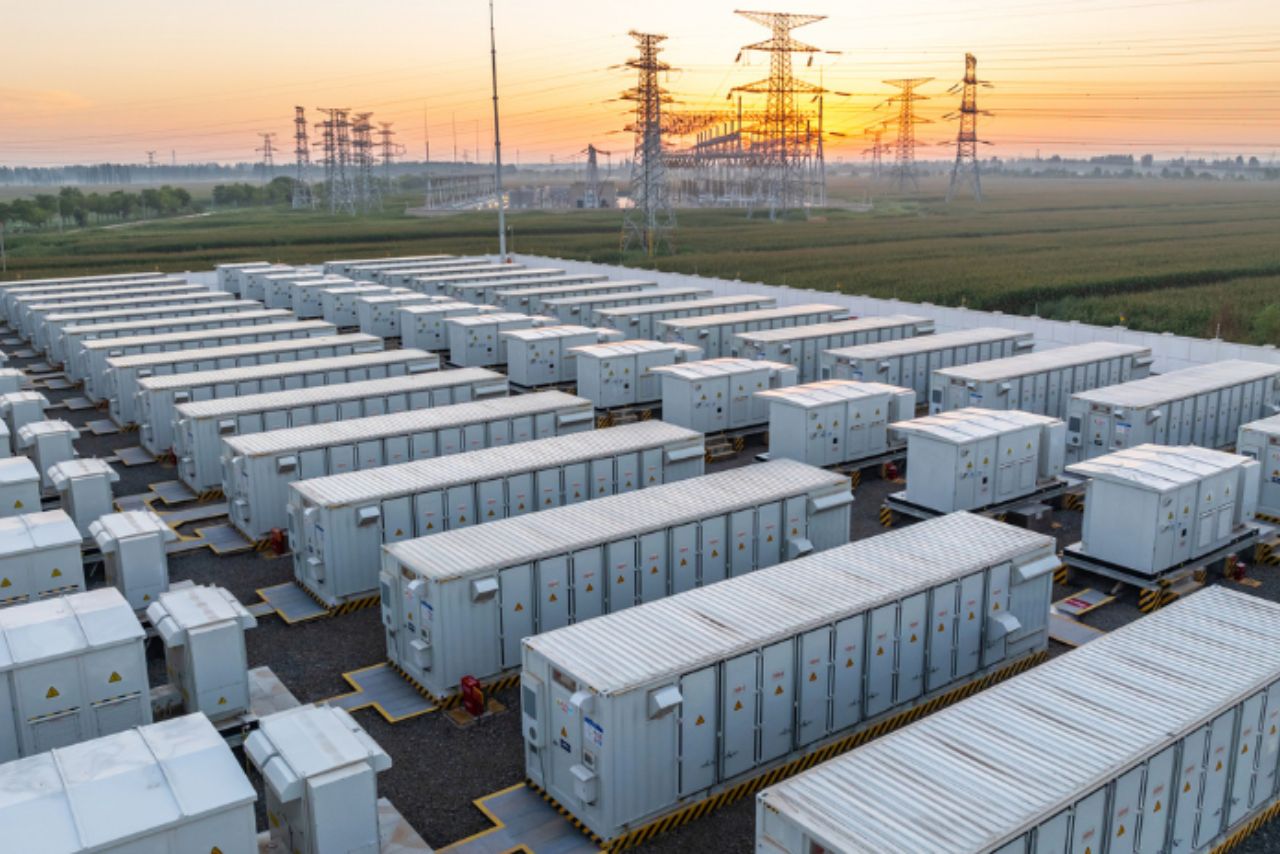
India’s battery energy storage system landscape is heading into what could be its most consequential year yet. According to estimates from the India Energy Storage Alliance, annual BESS capacity additions are expected to surge nearly ten times in 2026, rising from about 507 MWh in 2025 to roughly 5 GWh. This jump stands out sharply against the backdrop of limited execution so far, with total commissioned capacity until 2025 at just 708 MWh.
The significance of 2026 lies in the shift from announcements to action. Nearly 60 GWh of storage projects are expected to move into the implementation phase, riding on a record tendering year in 2025 that lifted cumulative tendered capacity by 84 percent to 224 GWh. This transition is expected to test the sector’s ability to deliver at scale amid evolving cost dynamics and financing challenges.
Several milestones underscore this turning point. In March 2026, Adani is scheduled to commission a 1,126 MW / 3,530 MWh BESS project in Gujarat, one of the largest battery storage installations at a single location globally. Rajasthan is also expected to float tenders in January 2026 for the country’s largest solar-plus-BESS project at the Pugal Solar Park. At the same time, the commercial and industrial segment is beginning to take shape, highlighted by Juniper Green Energy’s 60 MWh merchant BESS project commissioned in December.
Industry participants believe the coming year will separate intent from execution. While aggressive tariff bidding in 2025 reflected strong confidence, the real challenge will be delivering projects on time and at promised price points, especially amid volatility in battery input costs and funding conditions.
Stocks to look out for
Gujarat Fluorochemicals
Gujarat Fluorochemicals Limited is one of India’s most strategically positioned chemical companies, with a strong presence across fluoropolymers, fluorochemicals, and battery materials. Part of the INOXGFL Group, which has a legacy spanning more than nine decades, the company operates three manufacturing facilities in Gujarat, including a highly integrated complex at Dahej, and also owns a captive fluorspar mine in Morocco.
Its global footprint extends across Europe, the US, and the Middle East, giving it direct access to international customers and supply chains. The stock currently trades at around Rs. 3,419.20, translating into a market capitalization of roughly Rs. 37,559.91 crore.
The company’s product portfolio spans multiple segments critical to the energy transition. Its fluoropolymer range includes PTFE, PVDF, PFA, FEP, fluoroelastomers, micro powders, and advanced engineering plastics used across batteries, semiconductors, aerospace, and renewable applications. In fluorochemicals, Gujarat Fluorochemicals manufactures HF-based, TFE-based, KF-based products and refrigerants.
It also produces bulk chemicals such as caustic soda and chlorinated solvents. Importantly, the company has built a comprehensive battery materials offering that includes LiPF6 salt, LFP cathode active material, PVDF and PTFE binders, electrolyte formulations, and high-performance additives.
From a financial standpoint, the company’s three-year compounded profit growth stands at minus 11 percent, while compounded sales growth over the same period is around 6 percent. Debt as of September 2025 was about Rs. 1,722 crore, down meaningfully from Rs. 2,080 crore in March 2025, indicating improving balance sheet discipline. Operating profit margins stand at a healthy 27 percent on a trailing twelve-month basis. However, valuations remain stretched, with the stock trading at a price-to-earnings multiple of 55.3 compared with an industry average of 28.7, suggesting the stock is priced well ahead of peers.
Much of the long-term outlook rests on its subsidiaries and new energy initiatives. GFCL EV Products, a wholly owned subsidiary, is building an integrated battery materials platform catering to EV and energy storage applications, with products that cover nearly half the cost structure of an LFP cell.
The group has outlined investments of around Rs. 6,000 crore over the next four to five years to scale up battery materials capacity, with Phase I already operational at Jolva in Gujarat. Another subsidiary, GFCL Solar and Hydrogen Products, focuses on fluoropolymer solutions for solar modules and green hydrogen, including proton exchange membranes for electrolyzers and fuel cells.
Operationally, the company has recently commissioned its LFP cathode active material facility in India and expects commercial sales to begin after customer approvals. Qualification for fluoropolymer binders is progressing, with sales likely to start in the first half of calendar year 2026. Electrolyte formulations are currently under evaluation with domestic cell manufacturers across EV and BESS segments.
Sales of LiPF6, a common electrolyte salt used in batteries, are also expected to commence soon, supported by a sharp rise in global prices from around USD 10 per kg to nearly USD 17 per kg, a trend that materially improves profitability prospects. As one of the few fully integrated non-China LiPF producers, Gujarat Fluorochemicals is positioning itself as a key beneficiary of global supply chain diversification.
Neogen Chemicals
Neogen Chemicals Limited has steadily built a niche in specialty chemicals since its incorporation in 1989, with a strong focus on bromine-based and lithium-based chemistries. The company manufactures a wide range of organic and inorganic specialty chemicals used across pharmaceuticals, agrochemicals, engineering fluids, electronic chemicals, specialty polymers, water treatment, and increasingly, battery applications.
With a portfolio exceeding 250 products, Neogen also undertakes custom synthesis and contract manufacturing, developing processes in-house for specific global clients. Its manufacturing footprint spans Maharashtra, Gujarat, and Telangana. The stock is currently priced near Rs. 1,319, giving it a market capitalisation of about Rs. 3,479.74 crore.
Neogen’s offerings include advanced organic intermediates such as brominated compounds, organolithium reagents like n-butyl lithium, and complex molecules that combine multiple chemistries. On the inorganic side, it produces lithium-based specialty chemicals catering to batteries, pharmaceuticals, and eco-friendly cooling systems. This diversified chemistry platform provides the foundation for its expansion into lithium-ion battery materials, particularly electrolytes and electrolyte salts.
Financially, the company has delivered a three-year compounded sales growth of around 17 percent, although compounded profit growth has been flat to slightly negative at negative 1 percent. Debt has risen sharply, reaching about Rs. 1,132 crore as of September 2025, nearly double the levels seen in FY25. Operating margins stand at roughly 17 percent on a trailing basis. Valuations, however, appear demanding, with the stock trading at a PE of 90.1 compared with an industry average of 28.7, indicating significant overvaluation relative to peers.
The company’s battery materials ambitions are housed under Neogen Ionics, a wholly owned subsidiary. Neogen Ionics has acquired 65 acres at Dahej PCPIR for battery materials projects, with construction well underway and operations expected to begin during 2026. It has already commissioned one of India’s earliest lithium-ion battery electrolyte facilities at Dahej SEZ in April 2024.
In a strategic move to diversify supply chains away from China, Neogen Ionics entered into a joint venture with Japan’s Morita Chemicals, forming Neogen Morita New Materials, where Neogen holds an 80 percent stake. This venture will focus on solid LiPF₆ salt production, with Morita contributing USD 20 million.
Commercial production timelines are aligned with India’s ACC battery rollout, with electrolyte production expected in the first half of FY27 and lithium electrolyte salts in the second half. The company has already achieved key customer validations, including final PPAP approval from an Indian gigafactory customer for long-term electrolyte supply.
Its Dahej plant has also received provisional approvals for electrolyte salts from a major international customer, with final clearances anticipated by the end of FY26. Additional global customer approvals are in advanced stages, positioning Neogen as a potential early mover in domestic battery electrolyte supply.
Himadri Speciality Chemicals
Himadri Speciality Chemical Limited has evolved into a global specialty chemicals group with a strong emphasis on innovation, sustainability, and advanced materials. The company exports to more than 50 countries and operates eight zero-liquid discharge manufacturing facilities powered entirely by in-house clean energy.
Its portfolio spans traditional carbon materials and emerging battery components, supported by consistent investments in R&D and process optimisation. The stock currently trades around Rs. 472.35, translating into a market capitalisation of approximately Rs. 23,829.82 crore.
Himadri’s product range includes speciality carbon black, coal tar pitch, refined naphthalene, specialty oils, and advanced materials catering to lithium-ion batteries, aluminium, graphite electrodes, tyres, paints, defence, and construction chemicals. Coal tar pitch, a critical input for battery anode materials, is a key strength, with Himadri being among the few global manufacturers with backward integration. The company has also made progress in developing high-performance materials for both anode and cathode applications.
From a financial perspective, Himadri stands out with a three-year compounded profit growth of 111 percent and compounded sales growth of 18 percent. Debt levels are moderate at around Rs. 864 crore as of September 2025. Operating margins are robust at about 21 percent on a trailing twelve-month basis. Valuations appear reasonable, with the stock trading at a PE of 36.5, broadly in line with the industry average of 35.1, suggesting pricing is largely aligned with fundamentals.
Strategically, Himadri has made several targeted investments to strengthen its battery materials ecosystem. It holds a 17.6 percent post-conversion stake in Sicona Battery Technologies, along with board representation, giving it access to advanced silicon-carbon anode technology.
It has also acquired stakes in International Battery Company in the US and Invati, further expanding its global footprint in energy storage solutions. These collaborations are aimed at accelerating next-generation battery material development for EVs and stationary storage.
The company has outlined an ambitious roadmap to produce 200,000 tonnes per annum of LFP cathode active material over the next five to six years, enough to support nearly 100 GWh of lithium-ion battery capacity. This would make it one of the first large-scale ex-China suppliers globally. Parallel efforts are underway in anode materials, including natural, synthetic, hybrid, and silicon-based solutions, with ongoing customer engagements and approval processes. Together, these initiatives position Himadri as a fully integrated battery materials player at a time when global customers are actively seeking diversified, non-China supply chains.
Disclaimer: The views and investment tips expressed by investment experts/broking houses/rating agencies on tradebrains.in are their own, and not that of the website or its management. Investing in equities poses a risk of financial losses. Investors must therefore exercise due caution while investing or trading in stocks. Trade Brains Technologies Private Limited or the author are not liable for any losses caused as a result of the decision based on this article. Please consult your investment advisor before investing.
The post 3 Chemical stocks to keep on your radar as BESS capacity is set for a 1,000% jump in 2026 appeared first on Trade Brains.
What's Your Reaction?