

















































Cochin Shipyard: How Its Mega Project Reduces India’s Dependence on Foreign Shipyards?
Synopsis: Cochin Shipyard shares rose 3% after approval for a ₹1,570 crore Vadinar ship repair facility, enabling large vessel repairs, reducing foreign dependence, cutting forex outflow, and boosting jobs and maritime self-reliance. The shares of a Mid-Cap company specialising in building and repairing ships, including tankers, bulk carriers, passenger vessels, and specialised vessels, as well […] The post Cochin Shipyard: How Its Mega Project Reduces India’s Dependence on Foreign Shipyards? appeared first on Trade Brains.

Synopsis: Cochin Shipyard shares rose 3% after approval for a ₹1,570 crore Vadinar ship repair facility, enabling large vessel repairs, reducing foreign dependence, cutting forex outflow, and boosting jobs and maritime self-reliance.
The shares of a Mid-Cap company specialising in building and repairing ships, including tankers, bulk carriers, passenger vessels, and specialised vessels, as well as construction for the Indian Navy, are in focus upon receiving approval for the development of a state‑of‑the‑art Ship Repair Facility at Vadinar, Gujarat.
With a market capitalization of Rs. 46,098.33 crores in the day’s trade, the shares of Cochin Shipyard Ltd jumped upto 3.0 percent, making a high of Rs. 1,765.00 per share compared to its previous closing price of Rs. 1,712.15 per share.
What Happened
Cochin Shipyard Ltd, engaged in building and repairing ships, including tankers, bulk carriers, passenger vessels, and specialised vessels, as well as construction for the Indian Navy, has secured approval for the development of a state‑of‑the‑art Ship Repair Facility at Vadinar, Gujarat.
The Cabinet Committee on Economic Affairs, chaired by the Prime Minister Shri Narendra Modi, today approved the development of a state‑of‑the‑art Ship Repair Facility at Vadinar, Gujarat, marking a major expansion of the national ship repair ecosystem. The project will be jointly implemented by Deendayal Port Authority (DPA) and Cochin Shipyard Limited (CSL).
The project involves a combined investment of Rs. 1,570 crore by Deendayal Port Authority (DPA) and Cochin Shipyard Limited (CSL). DPA will develop the civil infrastructure, including jetties, at an estimated cost of Rs. 650 crore, while CSL will invest about Rs. 920 crore in ship repair infrastructure, including two large floating docks, and will also operate the facility.
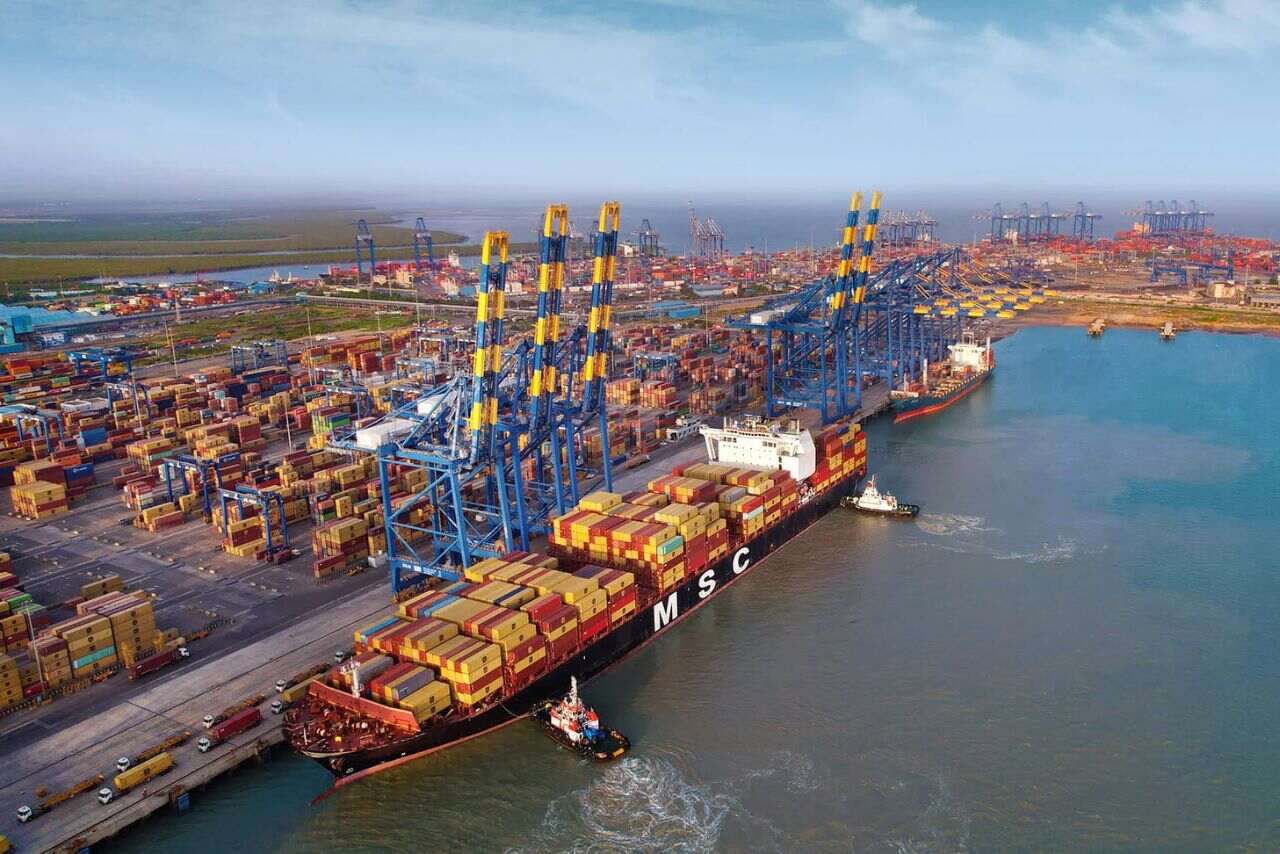
The project will be developed as a brownfield facility featuring a 650-metre jetty, two floating dry docks, workshops, and supporting marine infrastructure. Located at Vadinar, its natural deep draft, strong connectivity to major shipping routes, and proximity to ports like Mundra and Kandla make it well-suited for servicing large commercial and foreign-flagged vessels.
Impact
The Vadinar Ship Repair Facility will directly address a critical gap in India’s ship repair infrastructure, as the country currently lacks adequate domestic capacity to repair large vessels exceeding 230 m in length. By enabling repair of vessels up to 300 m, the facility will allow high‑value repairs of large vessels within India.
This will significantly reduce dependence on foreign shipyards and curb foreign exchange outflow. Enhanced turnaround times and strengthened repair capability on the western coast will improve the overall competitiveness of Indian ports.
The project is expected to create sustainable employment, generating approximately 290 direct and around 1,100 indirect jobs across ship repair, logistics, and ancillary industries, while catalysing a broader maritime industrial ecosystem. The initiative will contribute to regional economic growth and support India’s long‑term maritime objectives under Maritime India Vision 2030 and Maritime Amrit Kaal Vision 2047.
Will it Reduce India’s Dependence on Foreign Shipyards?
The Vadinar Ship Repair Facility strengthens India’s ability to handle large vessel repairs domestically, addressing a long-standing gap in maritime infrastructure. At present, many large commercial and foreign-flagged ships have to depend on overseas shipyards due to limited capacity within the country. With the new facility enabling repairs for vessels up to 300 metres and equipped with modern infrastructure like floating dry docks and workshops, India will significantly expand its in-house repair capabilities.
This development is expected to reduce the need for sending ships abroad for maintenance, thereby lowering foreign exchange outflow and improving turnaround time for shipping operators. By enhancing repair capacity on the western coast and improving service efficiency at major ports, the project supports greater self-reliance in the maritime sector and strengthens India’s position in global shipping and port services.
Financials & Others
The company’s revenue rose by 8.93 percent from Rs. 1,070 crores in December 2024 to Rs. 1,165 crores in December 2025. Meanwhile, Net profit fell from Rs. 184 crores to Rs. 138 crores in the same period.
The company demonstrates strong financial efficiency, with a Return on Capital Employed (ROCE) of 20.4% and Return on Equity (ROE) of 15.8%, indicating effective utilisation of capital and healthy profitability for shareholders. Its low debt-to-equity ratio of 0.18 reflects a conservative leverage position, suggesting financial stability and limited reliance on borrowed funds.
Additionally, the company maintains a healthy dividend payout of 42.9%, showing consistent value distribution to shareholders. Operational efficiency has also improved, with debtor days reducing significantly from 33.2 to 18.5 days, indicating better receivables management and stronger cash flow discipline.
Cochin Shipyard Limited (CSL), incorporated in 1972 and based in Kochi, is India’s largest state-owned shipbuilding and maintenance facility. A Government of India undertaking under the Ministry of Ports, Shipping and Waterways, CSL specialises in constructing, repairing, and upgrading vessels, including aircraft carriers for the Indian Navy.
The company’s order book stands strong at ₹21,100 crore, reflecting a well-diversified mix across defence, commercial, and ship repair segments. Defence contracts dominate with 65% share at ₹13,700 crore, followed by commercial exports at ₹4,200 crore (20%), domestic commercial orders at ₹1,700 crore (8%), and ship repair at ₹1,500 crore (7%), indicating a balanced presence in both strategic and commercial markets.
In terms of execution status, the order pipeline is actively progressing across different stages of production. Around 25 projects are in the design and engineering phase, 37 are in hull fabrication, and 13 are in the advanced stage, showing steady conversion of orders into execution and providing revenue visibility for the near to medium term.
Disclaimer: The views and investment tips expressed by investment experts/broking houses/rating agencies on tradebrains.in are their own, and not that of the website or its management. Investing in equities poses a risk of financial losses. Investors must therefore exercise due caution while investing or trading in stocks. Trade Brains Technologies Private Limited or the author are not liable for any losses caused as a result of the decision based on this article. Please consult your investment advisor before investing.
The post Cochin Shipyard: How Its Mega Project Reduces India’s Dependence on Foreign Shipyards? appeared first on Trade Brains.
What's Your Reaction?