
































Crypto Market Structure Bill Nears Finish Line, Says White House Digital Asset Director
Negotiations over the long-debated crypto market structure bill, known as the CLARITY Act, appear to be moving forward after a third round of talks at the White House on Thursday, even though a final agreement has yet to be reached. White House Takes Lead In Crypto Talks Patrick Witt, executive director of the President’s Council […]

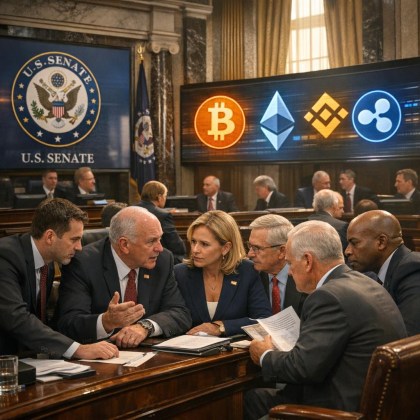
Negotiations over the long-debated crypto market structure bill, known as the CLARITY Act, appear to be moving forward after a third round of talks at the White House on Thursday, even though a final agreement has yet to be reached.
White House Takes Lead In Crypto Talks
Patrick Witt, executive director of the President’s Council of Advisers on Digital Assets, described the meeting as “a big step forward” in a post on social media platform X (previously Twitter). “We’re close,” Witt wrote, adding that if both sides continue negotiating in good faith, he fully expects the deadline to be met.
Additional details about the latest session were reported by Crypto In America journalist Eleanor Terrett. According to sources present at the meeting, the gathering was smaller than the previous week’s session and included representatives from Coinbase and Ripple.
No individual bank executives attended directly. Instead, the banking industry was represented through trade associations, including the American Bankers Association, the Bank Policy Institute, and the Independent Community Bankers of America.
Terrett indicated that, unlike earlier sessions where industry groups largely guided the discussion, the White House took a more assertive role this time. Witt reportedly introduced draft legislative language that became the centerpiece of the conversation.
The proposed text addressed concerns raised by banks in a document circulated last week titled “Yield and Interest Prohibition Principles.” While acknowledging those objections, the draft also made clear that any restrictions on rewards would be limited in scope.
One key takeaway is that paying yield on idle stablecoin balances — a central objective for many crypto firms — is effectively off the table. The debate has narrowed to whether companies may provide rewards tied to specific activities rather than simple account balances.
Daily Penalties Proposed In Draft
According to one crypto industry participant, banks’ resistance may be driven more by competitive pressures than by fears of large-scale deposit flight, which had previously been framed as the core concern.
A source from the banking side said their camp is still advocating for the inclusion of a formal deposit outflow study in the bill. Such a study would analyze how the growth of payment-focused stablecoins might affect traditional bank deposits over time.
That banking source noted optimism about a new proposed anti-evasion provision in the draft. The language would grant authority to the Securities and Exchange Commission (SEC), the Treasury Department, and the Commodity Futures Trading Commission (CFTC) to ensure compliance with a ban on yield for idle balances.
Civil penalties could reach $500,000 per violation, per day, underscoring the seriousness of the enforcement framework under consideration.
Terrett further disclosed in his coverage that the next phase will involve bank trade groups briefing their members on the latest developments to assess whether there is flexibility around permitting certain forms of stablecoin rewards.
Talks are expected to continue in the coming days. One source familiar with the negotiations said that meeting the end-of-month deadline remains realistic, suggesting that, while differences persist, momentum toward a compromise is building.
Featured image from OpenArt, chart from TradingView.com
What's Your Reaction?