






















































DreamFolks Services new growth strategy explained after domestic airport lounge exit
Dreamfolks Services, India’s largest airport service aggregation platform, offers access to lounges, food and beverages, spa services, meet-and-assist, airport transfers, transit hotels and nap rooms, along with baggage transfer facilities. Its clientele includes leading card networks, banks, online travel agencies, airlines and corporates. The company had announced that all domestic airport lounge services for its […] The post DreamFolks Services new growth strategy explained after domestic airport lounge exit appeared first on Trade Brains.

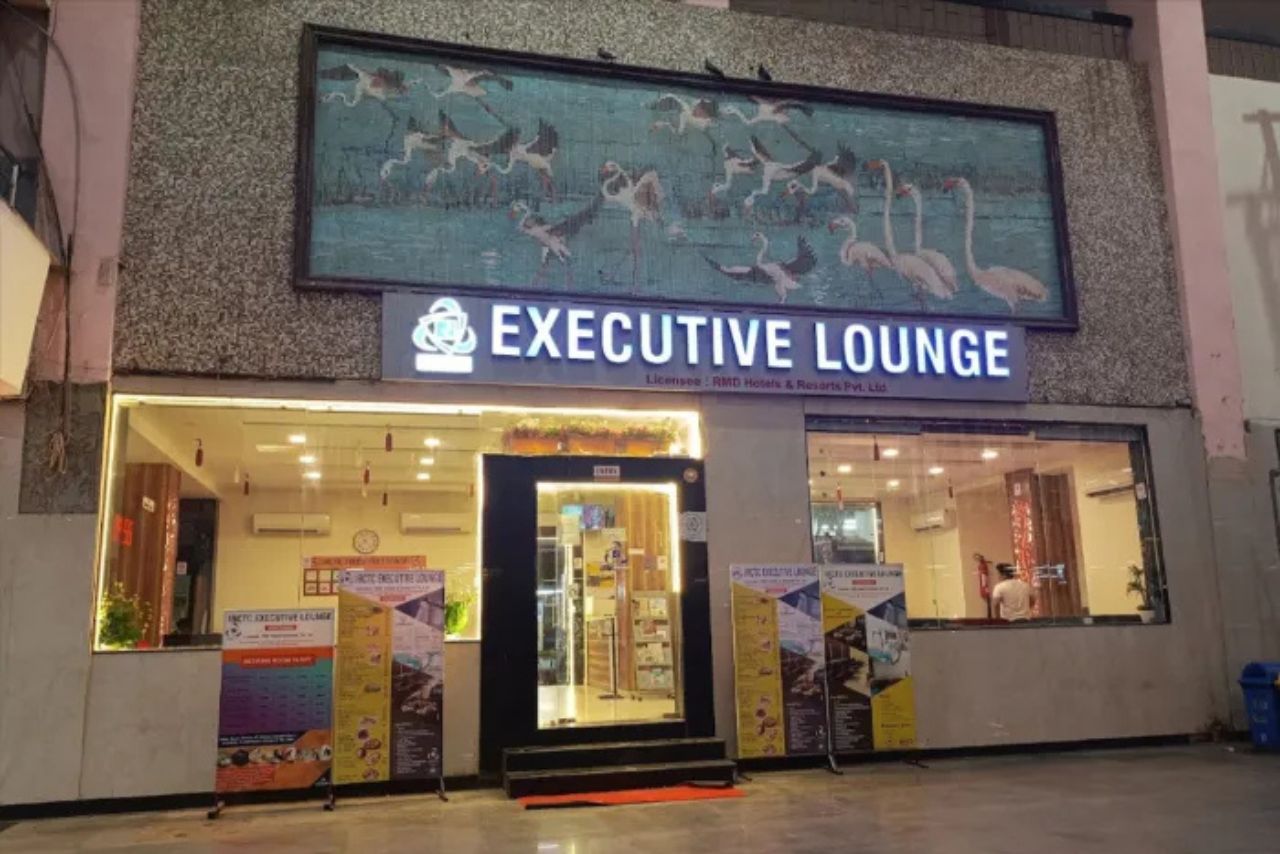
Dreamfolks Services, India’s largest airport service aggregation platform, offers access to lounges, food and beverages, spa services, meet-and-assist, airport transfers, transit hotels and nap rooms, along with baggage transfer facilities.
Its clientele includes leading card networks, banks, online travel agencies, airlines and corporates. The company had announced that all domestic airport lounge services for its clients will be discontinued effective 16 September 2025.
The shares of the Dreamfolks Services have been in focus since the last 1 year with the share price declining from Rs. 421 to Rs. 117.50, marking a decline of about 72 percent. The domestic lounge business contributed approximately 93 percent of the company’s revenue in fiscal 2025.
In Q2FY26, on a quarterly basis Sales declined from Rs. 349 crore to Rs. 206 crore, which is a decrease of 41.0 percent. Operating profit fell from Rs. 27 crore to Rs. 12 crore, representing a decline of 55.6 percent. PBT dropped from Rs. 28 crore to Rs. 15 crore, down 46.4 percent. Net profit reduced from Rs. 21 crore to Rs. 11 crore, a fall of 47.6 percent.
On a yearly basis, Sales decreased from Rs. 317 crore to Rs. 206 crore, a contraction of 35.0 percent. Operating profit slipped from Rs. 23 crore to Rs. 12 crore, lower by 47.8 percent. PBT fell from Rs. 22 crore to Rs. 15 crore, a decline of 31.8 percent. Net profit reduced from Rs. 16 crore to Rs. 11 crore, down 31.3 percent.
Revenue for Q2 FY26 declined significantly due to disruptions in the domestic airport program, but a favorable business mix and disciplined cost management helped expand gross and PAT margins year-on-year.
What Went Wrong?
The company announced on September 16, 2025, that it would discontinue domestic airport lounge services for its clients. This marks a major strategic shift, as domestic lounge aggregation has long been a core part of its business model, catering to banks, card issuers, airlines, online travel agents, and corporate customers across India. While its international lounge network and other domestic services will continue to operate as usual, the withdrawal from domestic lounges was expected to materially affect the company’s overall business performance.
DreamFolks had been hit by a wave of contract terminations, underscoring mounting pressures in its domestic lounge operations. Travel Food Services (TFS) ended its extended lounge access agreement on September 15, 2025, after the two sides failed to agree on revised commercial terms.
On the same day, Adani Digital and Semolina Kitchens also exited their partnerships, further shrinking DreamFolks’ domestic presence. Adding to this strain, Encalm Hospitality also terminated its arrangement with dreamfolks. Together, these exits represent a significant disruption to the company’s domestic operations.
These developments mirror a broader shift unfolding across the airport services industry, with major airport operators increasingly embracing direct-to-consumer lounge models. Players such as Travel Food Services (TFS) and Adani Airports Holdings Ltd. (AAHL) are moving toward direct partnerships with banks and card networks to eliminate dependency on intermediaries. Adani, for instance, launched its own digital platform in July 2025, allowing passengers to book lounge access directly and bypass third-party aggregators.
By cutting out middlemen, operators aim to improve margins, streamline service delivery, and enhance customer experience. For DreamFolks, however, this industry transformation threatens a vital revenue stream and heightens the competitive pressures in an already evolving market.
What Is The Company Doing Now?
DreamFolks has entered a decisive phase of business realignment, reshaping its operations to match the rapidly transforming travel experience industry. The company noted that the quarter marked a thoughtful transition away from a legacy business stream that had served it for years. These steps, though visible in the near term through financial impacts, were taken with a forward-looking vision aimed at long-term value creation. According to the company, these actions strengthen the foundation for the next phase of growth, one that is more diversified, resilient, and aligned with the expectations of modern travellers and experience-driven consumers.
Acquisition of Ten11 Hospitality: Entering Railway Lounges
A major development in the quarter was the acquisition of Ten11 Hospitality LLP, marking an important milestone in the company’s growth journey. After democratizing airport lounge access and serving over 11 million passengers in FY25, DreamFolks is now aiming to bridge the premiumization gap in railway travel, a market with over 7.15 billion passengers in FY24-25 and undergoing rapid infrastructure upgrades.
Through this acquisition, DreamFolks gains direct ownership and operational control of key railway lounge locations such as Chennai, Mumbai, and Vadodara, with Chennai already operational and the remaining two set to start soon. This vertical integration strengthens its travel ecosystem, reduces dependency on third-party operators, and creates a pathway for expansion into additional high-traffic railway hubs.
A Four-Pillar Transformation Strategy
DreamFolks is executing a well-defined strategic shift built on four pillars, Global Expansion, Client Diversification, Premium Lifestyle Services, and Technological Transformation. These pillars collectively position the company for sustainable, long-term growth while reducing its dependence on any single service category.
Global Expansion & Client Diversification
The company’s global expansion efforts are beginning to yield meaningful results. Major lounges across Southeast Asia and the Middle East are now part of its network, and its monthly global lounge transaction volumes have already more than doubled compared to Q1 FY26. With over 900 global airport touchpoints outside India and coverage in more than 100 countries through 3,000+ touchpoints, the company is significantly expanding its international footprint. This broadening network enhances business resilience by diversifying demand across regions and platforms.
On the client diversification front, DreamFolks has added more than 30 enterprise clients over the past year across fintech, travel, and lifestyle sectors. To increase engagement and retention, it offers curated benefit bundles that include global lounge access, social club memberships, wellness experiences, travel dining, and coffee-at-mall privileges. These bundled services enable partner brands to deliver differentiated experiences to both customers and employees.
Scaling Adjacent Premium Lifestyle Services
The company continues to reduce dependence on airport lounges by scaling adjacent, high-growth lifestyle offerings. These include members-only social club access, golf privileges, railway lounges, coffee-at-malls, highway dining, wellness experiences, and entertainment services. These initiatives support its evolution from being purely a lounge aggregator to becoming a comprehensive travel and lifestyle experience platform. A premium offering, members-only social club access, went live during the quarter with one of the world’s leading banks.
DreamFolks has also launched revamped Club Memberships to extend premium travel and lifestyle benefits, including members-only club access, golf, railway lounges, global lounges, beauty and grooming, and healthcare, to a wider audience. Meanwhile, the company is expanding across emerging cities and travel hubs in India and growing internationally through thousands of touchpoints. Its golf portfolio alone now includes 850+ clubs globally and 73 in India. New offerings such as Coffee at Malls, with more than 100 outlets live, and access to 3,000+ members-only social clubs are gaining rapid traction.
Technology Transformation and ML-Driven Orchestration
DreamFolks is also investing aggressively in technology to make its platform more agile and scalable. A key capability is its ML driven intelligent orchestration system that gives clients unprecedented flexibility in personalizing service selection, pricing, and consumption. This system enables dynamic configuration of both traditional and next-generation services tailored to specific consumer cohorts. The company’s platform already includes advanced tools such as cohort-based benefits, spend-based and usage-based models, benefit fungibility, and aggregation, all of which are integrated with client ecosystems.
In October 2025, during the Global Fintech Fest, DreamFolks executed a significant strategic pivot by expanding its direct-to-consumer and digital footprint. It rolled out three major initiatives: DreamFolks Club 2.0, A premium B2C membership platform offering global lounges, social clubs, golf, and wellness services, shifting the business from travel-focused to holistic lifestyle-focused.
Integration with the WSFx Global Pay forex card. Embedding lounge access, meet & assist, airport transfers, and travel privileges directly into the payment experience. Collaboration with The Card Company to power Wallet α, India’s first premium digital wallet on PPI rails, democratizing elite experiences like global lounges and premium lifestyle services.
Macro Tailwinds in Lifestyle and Travel Segments
DreamFolks is positioning itself to tap into strong macros in the lifestyle and travel sectors. India’s premium private club market is projected to grow from Rs. 576 crore in 2024 to Rs. 941 crore by 2029, with nearly 18 percent CAGR. Globally, passenger traffic is expected to exceed 12 billion by 2030, driven by growth in APAC and the Middle East.
The global airport lounges market is also forecasted to expand at a 14.1 percent CAGR between 2025 and 2033. Additionally, India’s railway lounge industry is set for rapid growth, supported by the government’s Rs. 2,400 billion railway capex for FY25 and an expectation that India will account for 40 percent of global rail activity by 2050. The company aims to play a central role in capturing these opportunities.
Clarification on Domestic Airport Lounges and Revenue Mix
Addressing concerns about the continuation of its domestic airport lounge business, the company clarified that although the domestic lounge program has been discontinued, its contracts with banking partners remain active. This is enabling new services to be launched in the coming months under existing bank partnerships. Global lounge volumes are growing, and the same clients who used domestic lounge services are now collaborating on global programs.
The company also emphasized that shifting toward railway lounges requires far lower capital compared to airport lounge build-outs. Entering at this early stage of railway privatization allows DreamFolks to secure a strategic footprint at minimal cost while reducing dependency-related risks seen in the airport lounge model.
-Manan Gangwar
Disclaimer

The views and investment tips expressed by investment experts/broking houses/rating agencies on tradebrains.in are their own, and not that of the website or its management. Investing in equities poses a risk of financial losses. Investors must therefore exercise due caution while investing or trading in stocks. Trade Brains Technologies Private Limited or the author are not liable for any losses caused as a result of the decision based on this article. Please consult your investment advisor before investing.
The post DreamFolks Services new growth strategy explained after domestic airport lounge exit appeared first on Trade Brains.
What's Your Reaction?