

































































Factors Affecting India VIX Movement & Market Sentiment
India VIX moves up when traders pay higher premiums for Nifty 50 options, mainly for downside protection. It moves down when fear reduces, hedges unwind, and option sellers are willing to write options at lower premiums. In simple terms, India VIX reflects how nervous or relaxed the options market is about the next 30 days. […] The post Factors Affecting India VIX Movement & Market Sentiment appeared first on Trade Brains.

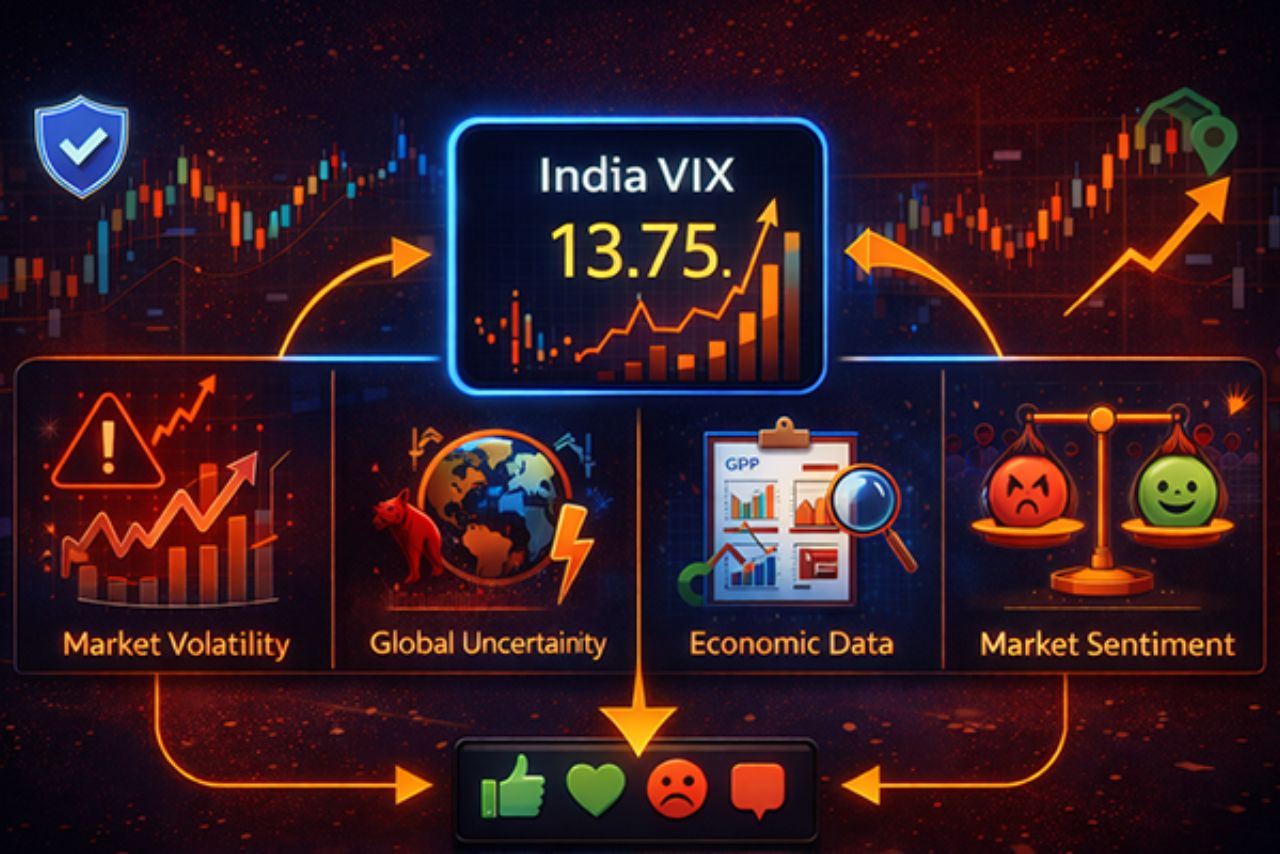
India VIX moves up when traders pay higher premiums for Nifty 50 options, mainly for downside protection. It moves down when fear reduces, hedges unwind, and option sellers are willing to write options at lower premiums. In simple terms, India VIX reflects how nervous or relaxed the options market is about the next 30 days.
This matters for normal investors because rising India VIX often comes with faster price swings, deeper intraday cuts, and weaker risk appetite. In that phase, smaller and mid-sized stocks can get hit harder, so BSE Small Cap sentiment can deteriorate faster than large caps.
What India VIX Measures in Simple Terms
India VIX is an implied volatility index derived from the Nifty 50 index option prices. It represents the market’s expected volatility for the next 30 calendar days, expressed as an annualised percentage. How to interpret the number:
- If India VIX is 15, it means the market is pricing roughly 15 per cent annualised volatility.
- That does not mean the market will fall or rise. It only signals the expected intensity of movement.
A helpful way to think about it: higher India VIX usually means wider daily swings and a more fragile market mood.
The Main Drivers Behind India VIX Movement
Here are the key drivers behind the India VIX movement:
1) Demand for Hedging and Protection
The most significant driver is hedging demand. When investors and institutions buy protection using put options, option premiums rise and implied volatility increases. This pushes India VIX higher. You will often see this when:
- Traders expect near-term uncertainty
- There is fear of sudden downside moves.
- Institutions reduce risk and buy portfolio protection.
When hedging demand falls, premiums cool, and India VIX tends to decline.
2) Scheduled Events That Can Move Markets
India VIX often rises before known events and cools after the event is over, even if the outcome is neutral. This happens because uncertainty is highest before the event, and once the market gets clarity, volatility gets “sold off.” Common India triggers include:
- RBI monetary policy decisions
- Union Budget announcements
- Election phases and result days
- Heavy earnings weeks for top Nifty stocks
- Major global central bank events that affect risk sentiment
The key point is this: India VIX can rise even when Nifty is not falling, simply because the market expects a larger move once the event occurs.
3) Global Risk and Foreign Flows
India is not isolated from global risk. When global markets go risk-off, India VIX can rise due to:
- Higher volatility in global equities
- Sharp moves in crude oil
- USD strength and currency pressure
- FII risk reduction, which impacts liquidity and sentiment
In such phases, even strong domestic narratives can get temporarily overridden by global positioning and flows.
4) Liquidity, Positioning, and Expiry Effects
Liquidity changes can lift India VIX quickly. When market depth is thin, price moves become sharper, so option writers demand higher premiums, and implied volatility rises. Expiry weeks also matter because:
- Large open interest clusters at key strikes can amplify moves
- Traders roll positions to the next series.
- Dealer hedging can increase intraday swings.
So, sometimes India VIX jumps not because of fresh bad news, but because the market structure forces quicker hedging.
5) Sudden Shocks and Panic Pricing
During extreme risk events, India VIX can spike sharply because everyone wants protection at the same time. When protection becomes expensive and scarce, the index can rise very fast.
These are rare, but when they happen, they usually coincide with forced selling, sharp gaps, and extensive daily ranges.
How India VIX Connects to Market Sentiment
India VIX is often called a “fear gauge” because it tends to rise when sentiment weakens. But it is more accurate to call it a “risk pricing gauge.” Here is how sentiment typically looks across broad ranges:
- Low India VIX: market is relaxed, risk appetite is stronger, pullbacks are usually bought faster
- Rising India VIX: uncertainty increases, traders pay for protection, and dips become harder to buy confidently
- High India VIX: fear and instability increase, and markets can overshoot both on the downside and during rebounds
A significant point for investors: a high India VIX does not mean markets will keep falling. It only means swings can be violent in both directions.
Why BSE Small Cap Often Reacts More Than Large Caps
BSE Small Cap stocks typically have lower liquidity and higher volatility than large caps. That is why when India VIX rises, the impact can be more substantial in the small-cap segment. Common patterns seen in rising-volatility phases:
- Small caps fall faster when broad risk-off hits
- Stock-specific bad news gets punished more.
- Bid-ask spreads widen, making entry and exit harder.
- Quality small caps also get sold temporarily due to liquidity-driven selling.
This is not only about fundamentals. It is also about market mechanics. When fear rises, investors prefer liquidity, and money rotates toward large caps.
Conclusion
India VIX moves mainly due to hedging demand, event risk, global uncertainty, liquidity, and positioning. It is one of the fastest indicators of changing market mood because it reflects what traders are willing to pay for protection right now.
For investors tracking BSE Small Cap, India VIX is especially useful because rising volatility often hits small caps harder through liquidity and sentiment channels. Used correctly, it helps you manage risk expectations, avoid overexposure during unstable phases, and recognise when fear is distorting prices.
Disclaimer: The views and investment tips expressed by investment experts/broking houses/rating agencies on tradebrains.in are their own, and not that of the website or its management. Investing in equities poses a risk of financial losses. Investors must therefore exercise due caution while investing or trading in stocks. Trade Brains Technologies Private Limited or the author are not liable for any losses caused as a result of the decision based on this article. Please consult your investment advisor before investing.
The post Factors Affecting India VIX Movement & Market Sentiment appeared first on Trade Brains.
What's Your Reaction?