








































How the IndiGo–Air India Duopoly Is Quietly Dismantling India’s OTA Economics
Synopsis: With the government formally confirming a 91 percent aviation duopoly in parliament, both IndiGo and the Air India Group are now executing a deliberate direct-to-consumer strategy putting the OTA commission model under structural strain. The question facing India’s travel aggregator sector has sharpened considerably. Over the last few years, both IndiGo and Air India […] The post How the IndiGo–Air India Duopoly Is Quietly Dismantling India’s OTA Economics appeared first on Trade Brains.

Synopsis: With the government formally confirming a 91 percent aviation duopoly in parliament, both IndiGo and the Air India Group are now executing a deliberate direct-to-consumer strategy putting the OTA commission model under structural strain.
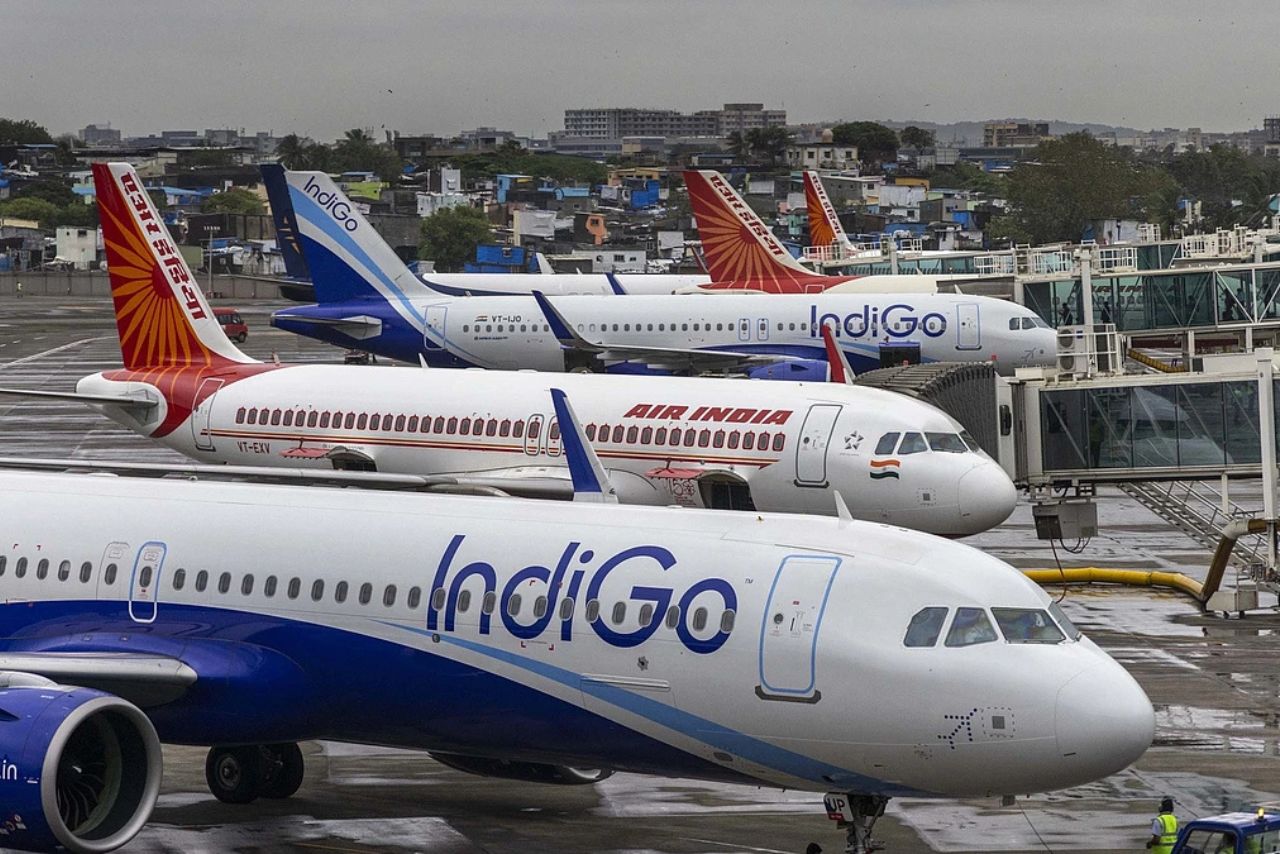
The question facing India’s travel aggregator sector has sharpened considerably. Over the last few years, both IndiGo and Air India have pushed customers to book tickets directly with them and parliament’s confirmation on March 30 that the two carriers together hold 91 percent of India’s domestic aviation market has formalised the negotiating leverage these airlines now carry over every OTA on their platform.
In a written reply to Rajya Sabha on March 30, Minister of State for Civil Aviation Murlidhar Mohol confirmed that IndiGo holds a 63.6 percent domestic market share and the Air India Group holds 26.5 percent. Akasa Air holds 4.8 percent, SpiceJet 3.9 percent, and three regional carriers share the remaining fraction between them. TMC’s Sagarika Ghose, who had posed the question, called it “effectively a duopoly, even if not explicitly acknowledged.”
The arithmetic of how this happened is instructive. In April 2012, when IndiGo pulled its entire inventory from MakeMyTrip, IndiGo had just over 20 percent of the domestic market and MakeMyTrip controlled roughly 45 percent of the OTA segment.
Today, IndiGo alone commands over 60 percent of domestic seats, while Jet Airways and Go First have exited the market entirely. The OTA that once had the leverage now sells tickets for an airline three times its original size.
The Direct Sales Push: Products, Pricing, and Promo Codes
The tools being deployed are increasingly granular. IndiGo has launched an ‘UpFront’ service available exclusively on its own website and app for approximately Rs. 3,000. The airline has also been reaching out to customers directly through AI-driven mailers with targeted promo codes, per industry sources. Certain fare categories (student fares, senior citizen fares) are simply not made available to OTAs.
The pricing divergence is already visible at the transaction level. In one parallel search, the initial fare on both IndiGo’s website and MakeMyTrip appeared identical at Rs. 5,200 for a Delhi-Mumbai route. But at the payment stage on MakeMyTrip, a prompt appeared to increase the fare to Rs 5,600. On IndiGo’s own platform, the fare was held at Rs. 5,200. MakeMyTrip, in response, said fare information is dynamic and fully controlled by the airlines, and that the system performs a real-time validation from airline or GDS systems at checkout.
The structural issue is that domestic flight ticketing margins for OTAs are less than 0.25 percent. International flights bring in approximately 1.5 percent, hotels over 4 percent, and holiday packages over 10 percent. Domestic air is effectively a loss-leader for OTAs.
Why Moving the Needle Is Hard
Despite the structural incentive, IndiGo’s direct booking share has moved from roughly 12 percent to approximately 18 percent over the last decade, a six-percentage-point gain that required years of fare sweeteners and loyalty incentives. The reason the needle moves slowly is that passengers want to compare fares across airlines, and that comparison is simply not possible on a single airline’s app. OTAs also bundle multiple bank offers that standalone airline portals cannot match.
The stalemate persists partly because neither IndiGo nor Air India has blinked first. The December 2025 mass cancellation crisis which stranded 3,64,933 passengers between December 3 and 5 and resulted in 5,689 cancelled flights for the month may have temporarily delayed any aggressive move, given that OTAs absorbed the customer service burden during the meltdown.
The OTA Battle
The India-specific buffer that limits how far direct booking can go is geography. India has approximately 80,000 travel agents, with roughly half dealing in air traffic, and 1.5 million railway agents and in tier-II and tier-III markets, the local agent shop that books flights, pays electricity bills, and shops on Amazon and Flipkart for customers is not going away. Metro consumers may have shifted; the next 200 million air passengers likely have not.
Disclaimer: The views and investment tips expressed by investment experts/broking houses/rating agencies on tradebrains.in are their own, and not that of the website or its management. Investing in equities poses a risk of financial losses. Investors must therefore exercise due caution while investing or trading in stocks. Trade Brains Technologies Private Limited or the author are not liable for any losses caused as a result of the decision based on this article. Please consult your investment advisor before investing.
The post How the IndiGo–Air India Duopoly Is Quietly Dismantling India’s OTA Economics appeared first on Trade Brains.
What's Your Reaction?