










































KEI Industries: How India’s Data Centre Boom Could Be a ₹25,000 Cr Opportunity for the Company
Synopsis: India’s data-centre boom is creating a massive cable demand opportunity. But as hyperscale projects scale up and competition intensifies, is KEI Industries positioned to capture this Rs 25,000 crore shift? India is building at a pace that is hard to wrap your head around. According to a Deloitte report published in February 2026, India […] The post KEI Industries: How India’s Data Centre Boom Could Be a ₹25,000 Cr Opportunity for the Company appeared first on Trade Brains.

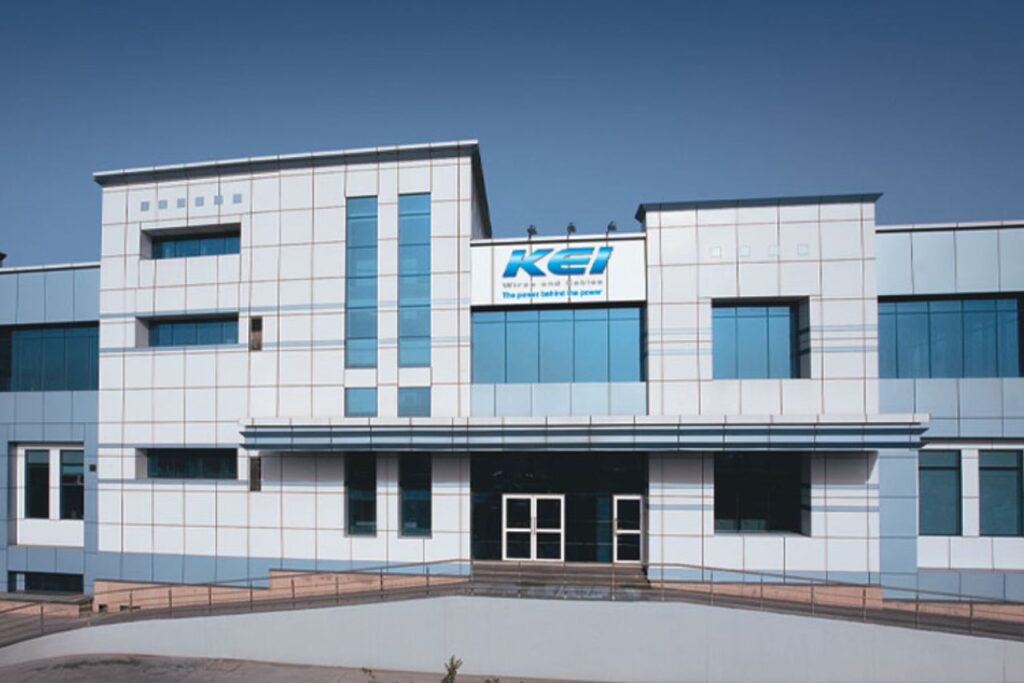
Synopsis: India’s data-centre boom is creating a massive cable demand opportunity. But as hyperscale projects scale up and competition intensifies, is KEI Industries positioned to capture this Rs 25,000 crore shift?
India is building at a pace that is hard to wrap your head around. According to a Deloitte report published in February 2026, India is set to attract $200 billion in new data centre investment over the next four years through 2030, part of a larger $800 billion wave sweeping across Asia-Pacific.
The country’s data centre capacity, which stood at roughly 1.5 gigawatts (GW) in 2025, is expected to scale to 8–10 GW by 2030. In simple terms, India is in the middle of one of the largest digital infrastructure build-outs any country has ever undertaken.
In this article, we will look at such a company that supplies one of the most important yet overlooked instruments behind building these machines, whichare the cables, and the company we are discussing today is KEI Industries. Recently, the management had said something about its business potential from the Data centre boom, which we will discuss more in detail.
Management Comments
Anil Gupta, Chairman and MD of KEI Industries, said India’s rapid data-centre expansion is opening up a large, long-term growth opportunity for the cables and wires industry.
According to him, India is expected to invest $30–35 billion in data centres by 2030–31, which will translate into 8–10 gigawatts (GW) of data-centre capacity. Since cables account for 3–5% of total data-centre project costs, this alone creates an estimated Rs 25,000 crore incremental opportunity for the industry.
Gupta explained that data centres are extremely cable-intensive projects. Each 1 GW of data-centre capacity requires Rs 3,500–4,000 crore worth of cables, including high-voltage power cables, backup connectivity systems and multiple layers of redundancy to ensure uninterrupted operations. These requirements make cables the backbone of data-centre infrastructure, rather than a small ancillary component.
He added that KEI Industries is already well-positioned to benefit from this trend. The company currently holds an 11–13% market share in the cables and wires segment and based on this share, the company could potentially capture Rs 2,500–3,000 crore of the total data-centre opportunity over time, without needing any major change in its business model.
Importantly, the company has been executing data-centre projects for more than five years, even though most existing projects in India are still relatively small, typically in the 10–50 megawatt range.
On the supply side, Gupta dismissed concerns about imports or foreign competition. He said cable supplies for data centres are entirely domestically sourced, and Indian manufacturers are well equipped to meet demand at scale. According to him, imports are “absolutely not a fear”, as domestic players have both the capacity and technical capability to supply large, complex projects across the country.
Gupta also highlighted that upcoming data centres are expected to be concentrated in coastal regions such as Mumbai, Chennai and Andhra Pradesh, due to better connectivity, power availability and proximity to global data routes. This geographic concentration further supports sustained demand for power and connectivity cables over the next several years.
On the growth outlook, KEI Industries remains confident. Gupta said the company expects to grow around 20% annually, not just for the current year but over the next four to five years on a compounded basis. He added that input cost volatility is not a major concern, as KEI closely manages its inventory, pricing and order book, allowing it to protect margins even when raw material prices fluctuate.
He also pointed out that the data-centre opportunity could expand further due to related investments in power generation, including solar, wind and thermal projects needed to support these facilities. This creates a broader infrastructure tailwind beyond just data centres.
Overall, management’s commentary suggests that KEI Industries sees the data-centre build-out as a structural, multi-year demand driver, not a short-term cycle. With strong execution capability, domestic sourcing, stable margins and clear growth visibility, the company believes it is well placed to benefit as India’s digital infrastructure continues to scale.
Why Data Centres Need So Many Cables?
To understand why this opportunity is so large, it helps to understand what actually goes into a data centre. These are not ordinary buildings. A data centre is essentially an enormous, always-on computing facility that runs thousands of servers, stores data for millions of users, and powers everything from your Netflix stream to your bank transaction. Each one of these facilities, at its core, is an extraordinary consumer of power, and power needs cables to travel.
The cables inside a data centre operate at multiple layers. High-voltage power cables bring electricity into the facility from the grid. Then there are distribution cables that route power within the building. On top of those are connectivity cables that create redundant pathways so that if one route fails, another immediately takes over — because a data centre cannot afford to go dark, even for a second.
Gupta noted that data centres being built in India today are relatively small at 10–50 megawatts each. But as AI workloads intensify and Reliance Industries already announced a 3 GW AI campus at Jamnagar, which is the single largest such investment in India, these facilities will grow dramatically in size and, with them, in cable demand per project.
The Deloitte report adds important context. It notes that data centres alone will contribute more than 10% of the peak power demand in each of the key states, Maharashtra, Tamil Nadu, Karnataka, Telangana, and Andhra Pradesh, by 2030. That scale of power consumption requires a corresponding scale of power infrastructure, from the grid all the way to the server rack. Cables are not a minor line item in this build-out; they are foundational.
KEI’s Position & Competitive Landscape
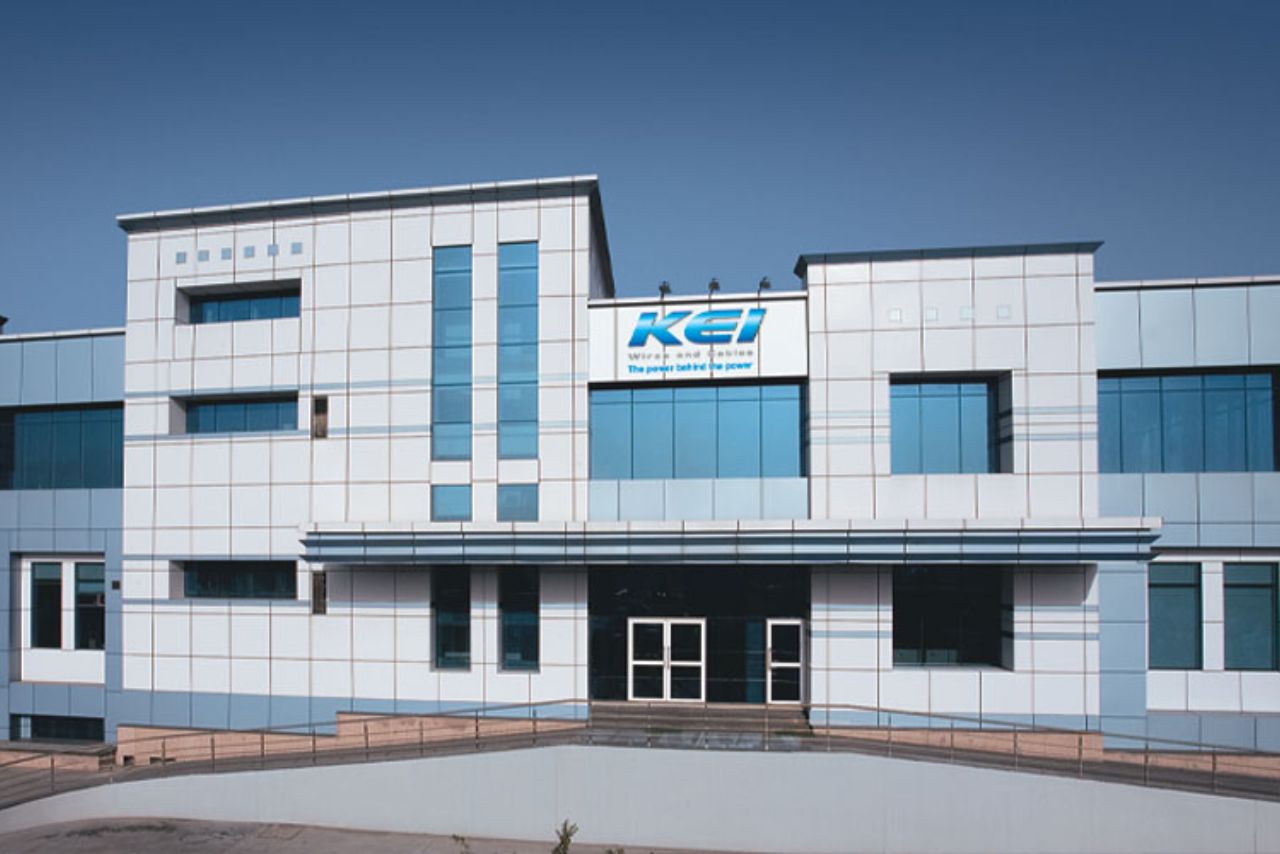
KEI Industries is not a new player in this space. Gupta confirmed that the company has been executing data centre projects for more than five years, making it one of the more experienced domestic suppliers in a market that is only just beginning to attract wide attention.
The company operates nine manufacturing plants, produces Extra High Voltage (EHV) cables up to 400kV, serves more than 2,000 institutional clients, and distributes its products through a network covering more than 60 countries. On the question of import competition, Gupta was unambiguous: “Imports are absolutely not a fear. It is purely domestic supplies, and we are well equipped to supply any quantity.” That confidence, however, does not mean KEI will have the data centre cable market to itself.
India’s cable and wires sector is one of the most competitive manufacturing industries in the country, with approximately 400 players operating across organised and unorganised segments, according to an analysis by JM Financial and Jefferies. The organised market is dominated by a handful of major players, Polycab India, KEI Industries, Havells, Finolex Cables, and the fast-growing RR Kabel, and none of them holds more than 15–20% market share, which means the data centre opportunity is very much an open field.
Additionally, two of India’s largest conglomerates, Adani Enterprises and UltraTech Cement, also announced their entry into the cables and wires market, which is currently valued at around Rs 1 lakh crore and growing at double-digit rates.
Adani’s subsidiary, Kutch Copper Ltd, has formed a joint venture called Praneetha Ecocables to manufacture metal products, cables and wires, while UltraTech Cement said it will invest Rs 1,800 crore to build a greenfield manufacturing plant near Bharuch, Gujarat, expected to be commissioned by December 2026.
This move by two deep-pocketed players into a market where no single organised company holds more than 15–20% share signals that competition is about to intensify. Their entry, leveraging copper supply chains and strong balance sheets, could reshape the competitive landscape for established players such as Polycab, KEI Industries, Havells, Finolex and RR Kabel, potentially accelerating consolidation and pricing pressure across the industry.
Two giants
Polycab India, the largest player in the segment with approximately 26-27% market share in the organised market, is the most formidable competitor KEI will face. Polycab reported a revenue and net profit growth of 46% and 36%, respectively, as compared to KEI Industries’ revenue and net profit growth of 20% and 42% respectively.
Also, Polycab’s EBITDA margins stood at 13%, running ahead of KEI’s 11%. Although KEI Industries reported higher net profit growth, Polycab took the lead in sales growth and higher margins.
In a race for large institutional contracts, which data centre projects inevitably are, Polycab’s balance sheet strength and scale give it a natural advantage in bidding aggressively. Havells, while primarily a consumer electricals brand, has significant cable manufacturing capabilities and a strong brand that could make it a credible player for mid-sized data centre projects. Finolex and RR Kabel round out the competitive landscape, with RR Kabel in particular showing aggressive expansion intent since its IPO.
What KEI’s advantage comes down to, in this specific market, is its track record in Extra High Voltage cables and EPC (engineering, procurement, and construction) services for complex infrastructure projects. Data centres, especially the hyperscale ones being planned by Amazon Web Services, Microsoft, and Google for new capacity around Mumbai, Chennai, and Hyderabad, require exactly the kind of high-voltage, technically demanding cable solutions that sit in KEI’s core competency. That experience is not easily replicated.
The Bigger Opportunity
The data centre boom in India is not a short-term trend driven by one or two large projects. It is a structural shift with multiple, durable drivers that will sustain demand for years.
India currently contributes about 20% of the world’s data consumption but hosts less than 5% of the world’s data centres, according to the Deloitte report, an enormous gap that represents the investment opportunity in precise terms. As the Digital Personal Data Protection (DPDP) Act mandates more data to be stored within Indian borders, as cloud computing penetration deepens across banking, healthcare, e-commerce, and government services, and as AI workloads multiply demand for computing power, the trajectory of data centre construction is pointing in only one direction.
The Indian wires and cables market as a whole is projected to grow from $10 billion in 2025 to $17 billion by 2032, at a CAGR of approximately 8%, according to Fortune Business Insights.
But data centres, along with renewable energy projects, which Gupta also flagged as an adjacent opportunity, are among the highest-growth sub-segments within that broader market. Solar, wind, and thermal power infrastructure required to support data centres adds another layer of cable demand on top of the facility construction itself. This means the Rs 25,000 crore headline figure KEI’s CMD cited may actually be the floor rather than the ceiling of what this demand wave could generate for the industry.
For KEI specifically, the trajectory is clear. With 20% growth targeted on a compounded basis, a market capitalization of over Rs 45,000 crore, and a share price that has already gained nearly 25% in the past year, the market is beginning to price in this structural tailwind.
The data centre opportunity provides one of the most concrete, quantifiable growth levers the company has articulated publicly, and that specificity is itself meaningful in a market where most infrastructure stories are described only in broad strokes.
India is wiring itself for a digital future. The cables that make that possible need to come from somewhere. KEI Industries, backed by five-plus years of data centre execution experience and a growing institutional client base, is positioning itself to be the company that supplies a significant share of those cables. The question is not whether the opportunity is real, but rather it asks how much of the Rs 25,000 crore prize KEI can claim before its well-resourced competitors do the same.
Disclaimer: The views and investment tips expressed by investment experts/broking houses/rating agencies on tradebrains.in are their own, and not that of the website or its management. Investing in equities poses a risk of financial losses. Investors must therefore exercise due caution while investing or trading in stocks. Trade Brains Technologies Private Limited or the author are not liable for any losses caused as a result of the decision based on this article. Please consult your investment advisor before investing.
The post KEI Industries: How India’s Data Centre Boom Could Be a ₹25,000 Cr Opportunity for the Company appeared first on Trade Brains.
What's Your Reaction?