


































































More Than Just Visas: How Does BLS International Services Make Money?
Synopsis: BLS International Services earns its revenues by managing the execution-heavy front end of visa, consular and citizen services for governments, without taking approval risk. Its asset-light, volume-led model combines per-application fees and value-added services, supported by rising travel demand and expanding digital service delivery across India and overseas markets. Walk into any visa application […] The post More Than Just Visas: How Does BLS International Services Make Money? appeared first on Trade Brains.

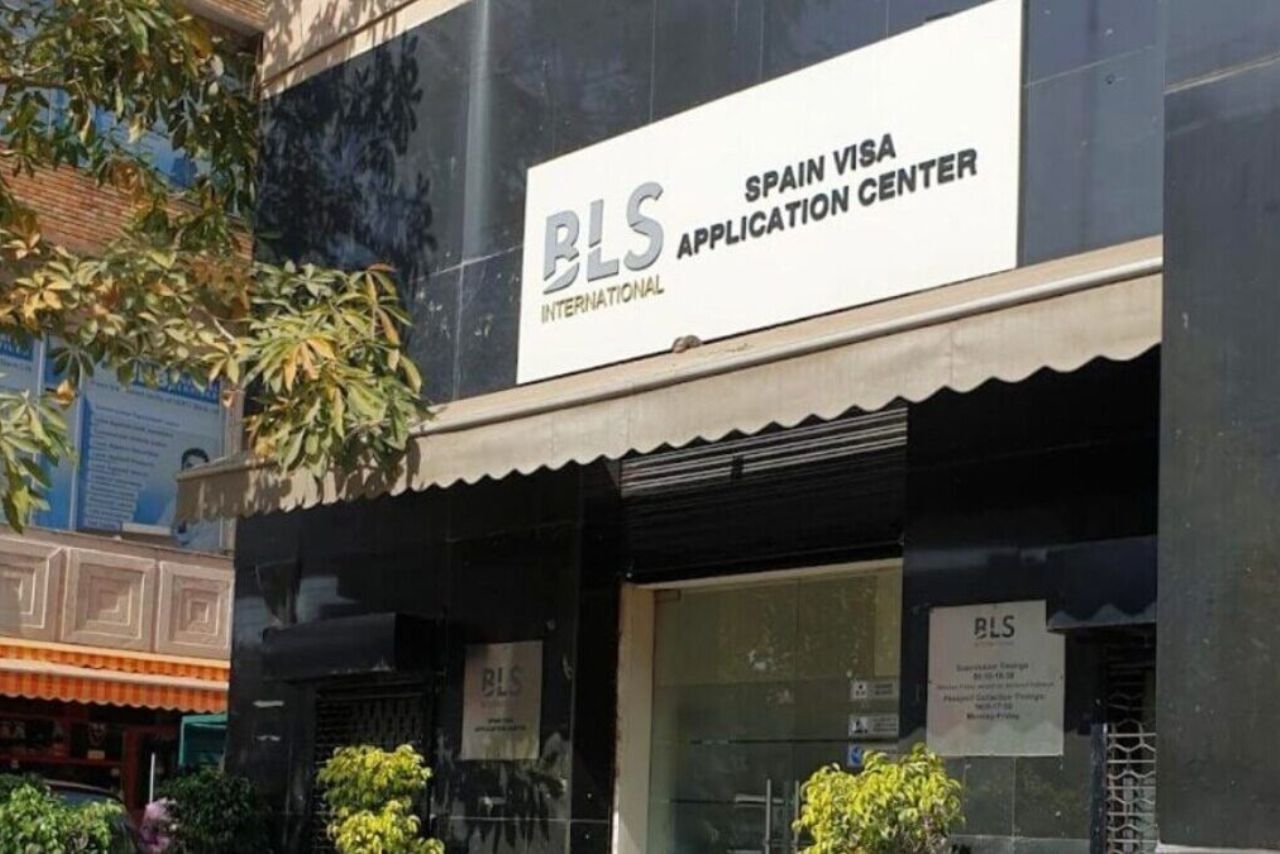
Synopsis: BLS International Services earns its revenues by managing the execution-heavy front end of visa, consular and citizen services for governments, without taking approval risk. Its asset-light, volume-led model combines per-application fees and value-added services, supported by rising travel demand and expanding digital service delivery across India and overseas markets.
Walk into any visa application centre and the scene is immediately recognisable. Numbered tokens flash on screens, documents are checked, biometrics are captured and passports move steadily across counters.
To applicants, it appears as a standard administrative exercise. Yet behind this tightly managed process lies a more complex business reality. With governments retaining full control over approvals and applicants paying official fees, the question is how the company operating the entire front-end of this system generates its revenues.
BLS International Services Ltd. operates as a global, technology-driven services partner to governments and citizens, specialising in the back-end execution of visa, passport and consular processes. Since starting operations in 2005, the company has built a reputation for handling high-volume, sensitive citizen services such as biometrics, attestation, e-governance and e-visa facilitation, where data security and process discipline are critical.
The company works with more than 46 client governments, including embassies, consulates and diplomatic missions, and has gradually scaled its footprint across over 70 countries.
What began with a single visa processing contract for the Portuguese Embassy in New Delhi has evolved into a global network of over 50,000 service centres, supported by a workforce of more than 60,000 employees and associates delivering consular, biometric and citizen-facing services worldwide.
BLS does not play any role in visa approvals. Instead, it manages the administrative and non-judgemental aspects of the application process on behalf of governments, enabling diplomatic missions to focus solely on assessment and decision-making. By 2024, the company accounted for around 17 percent of the global visa outsourcing market by value and 10 percent by volume, excluding the United States. The shares of the company are trading at Rs. 317 with a market capitalization of Rs. 13,048 crore.
Understanding The Business Model
Building on its long-standing expertise in government-to-citizen services, BLS International has steadily expanded beyond visa processing into a wider set of citizen-facing services. In India, this expansion is carried out through its subsidiary, BLS E-Services Limited, which works with the Central Government as well as several state governments to deliver front-end public services at scale.
Globally, BLS is among the top two providers of outsourced visa, passport, consular and citizen services. Its operations are organised under two core business segments: Visa and Consular Services, and Digital Services.
Visa and Consular Services
This is the company’s largest business segment, contributing roughly 75 percent of overall revenue. Under this vertical, BLS partners with governments to manage the non-discretionary and administrative side of visa, passport and consular workflows. The company handles the front-end processes while governments retain full control over evaluation and approvals. BLS offers end-to-end visa and consular support, including application intake, document verification, attestation, biometric capture and e-visa facilitation.
Alongside core visa processing, the company earns additional income through allied and value-added services. These include facilities such as document photocopying, courier support, form-filling assistance, SMS alerts, translation services, insurance tie-ups, premium lounges and mobile biometric services. On the consular side, BLS supports services such as passport renewals, document legalisation, citizenship-related processes, residency programmes and notary services.
Digital Services
The Digital Services segment contributes around 25 percent of revenue and is largely focused on India. Through BLS E-Services, the company provides front-end citizen services to government bodies, particularly in semi-urban and rural areas where access remains limited.
A key pillar of this segment is the Business Correspondent model, which supports the Government of India’s financial inclusion initiatives. Through its physical network, BLS enables basic banking services such as account opening, balance enquiries, money transfers, passbook updates and doorstep delivery of government benefits.
The company is also active in e-governance services, where it operates BLS touchpoints that allow citizens to access a wide range of public services. These include birth and death certificate registrations, PAN and Aadhaar enrolments, land and property record services, and healthcare-related checks under schemes like Ayushman Bharat. In addition, assisted e-services are delivered through BLSe stores, offering ticketing, assisted e-commerce, point-of-sale services and other digital products. Revenue in this segment is generated through a mix of registration fees, transaction-based commissions and service charges.
Simple Explanation
In simple terms, BLS makes money by standing in the middle and doing the hard, repetitive work that governments don’t want to do themselves. Every time someone applies for a visa, passport or citizen service, BLS collects the application, checks the documents, and runs the process smoothly for a small fee. The more people travel, migrate or use government services, the more work flows through BLS, and that steady flow is what keeps the business running.
Why Governments Pay BLS?
From a government’s perspective, outsourcing to a player like BLS solves a very practical problem. Running visa and citizen service centres requires physical infrastructure, trained staff, technology systems and constant upgrades, all of which involve heavy capital spending. By outsourcing, governments shift this to a variable cost model, paying only for applications processed, while still offering a standardised, global service experience to applicants. Importantly, compliance, audit trails and data security remain built into the process, without adding administrative burden on diplomatic missions.
Crucially, decision-making power stays entirely with governments. BLS is paid purely for execution, not outcomes, which removes policy and approval risk from its revenue model. That said, contracts are tender-based and come with strict pre-conditions around experience, credit strength, IT capability and operational track record, as highlighted by Crisil. While BLS’s established position reduces renewal risk, sustaining growth remains closely linked to demand trends and contract wins.
Segmental Performance
Visa and Consular business
The Visa and Consular business has been the primary growth engine for BLS over the past few years. Revenue from operations in this segment rose from Rs. 756 crore in FY22 to Rs. 1,653 crore in FY25, translating into a strong compound annual growth rate of 30 percent. Profitability expanded at a much faster pace, with EBITDA increasing from Rs. 110 crore in FY22 to Rs. 570 crore in FY25, reflecting a CAGR of 73 percent.
This sharp improvement is also visible in margins, with EBITDA margin rising from 14.6 percent to 34.5 percent over the same period. The growth was driven by a steady rise in application volumes, which increased from 15 lakh in FY22 to 37.5 lakh in FY25, a CAGR of 36 percent. At the same time, net revenue earned per application improved from Rs. 1,638 to Rs. 2,903, growing at a CAGR of 21 percent, indicating better pricing and higher uptake of value-added services. In Q2FY26, the segment reported revenue of Rs. 459 crore, compared to Rs. 418 crore in the same quarter last year, while profit before taxes and interest increased to Rs. 184 crore from Rs. 152 crore year on year.
Digital Services business
The Digital Services business has also scaled meaningfully, though with a different margin profile. Revenue from operations grew from Rs. 256 crore in FY23 to Rs. 315 crore in FY24 and further to Rs. 540 crore in FY25. EBITDA rose from Rs. 34 crore in FY23 to Rs. 45 crore in FY24 and Rs. 60 crore in FY25, even as margins fluctuated, moving from 13.4 percent in FY23 to 14.3 percent in FY24 before moderating to 11 percent in FY25.
The expansion in revenue has been supported by rapid network growth, with the number of digital service touchpoints increasing from over 92,000 in FY23 to more than 1,42,000 by FY25. In Q2FY26, the segment recorded revenue of Rs. 278 crore compared to Rs. 77.39 crore in the corresponding quarter last year, while profit before tax rose to Rs. 25 crore from Rs. 17 crore year on year.
BLS International Services makes money by handling the busy, detail-heavy work of visas, passports, and citizen services, work that governments don’t want to do themselves. Its business grows as more people travel, move, or use government services, and as digital adoption spreads. With a strong track record, expanding footprint, and steady demand, BLS is well-positioned to keep growing while governments stay focused on the decisions that matter most.
Disclaimer: The views and investment tips expressed by investment experts/broking houses/rating agencies on tradebrains.in are their own, and not that of the website or its management. Investing in equities poses a risk of financial losses. Investors must therefore exercise due caution while investing or trading in stocks. Trade Brains Technologies Private Limited or the author are not liable for any losses caused as a result of the decision based on this article. Please consult your investment advisor before investing.
The post More Than Just Visas: How Does BLS International Services Make Money? appeared first on Trade Brains.
What's Your Reaction?