






































Patel Retail Stock: How Can a DMart-Like Strategy and Private Labels Fuel Its Next Growth Phase?
Synopsis: Having crossed the Rs 1,000 crore revenue milestone in FY26, this regional retailer is betting on a DMart-style cluster expansion strategy and higher private-label penetration to drive its next phase of growth. The real test now lies in whether improving margins, backward integration and disciplined store additions can translate into sustained profitable growth. India’s […] The post Patel Retail Stock: How Can a DMart-Like Strategy and Private Labels Fuel Its Next Growth Phase? appeared first on Trade Brains.

Synopsis: Having crossed the Rs 1,000 crore revenue milestone in FY26, this regional retailer is betting on a DMart-style cluster expansion strategy and higher private-label penetration to drive its next phase of growth. The real test now lies in whether improving margins, backward integration and disciplined store additions can translate into sustained profitable growth.
India’s organised grocery retail segment continues to remain relatively under-penetrated despite years of economic development in the country. While domestic players have managed to gain traction among investors, regional retailers with extensive knowledge about the areas in which they operate continue to make profits by executing their growth plans meticulously.
In the case at hand, a certain company has succeeded in creating a niche for itself over the past three decades using neighbourhood retailing backed by backward integration and private labels.
FY 26 turned out to be particularly significant for the company, as it managed to cross the Rs 1,000 crore revenue threshold while simultaneously expanding its retail network in the Mumbai Metropolitan Region (MMR).
But even more interesting than this achievement was the emphasis laid on a cluster-based expansion strategy, along with increased use of private labels, both of which have long been known to drive the growth of larger organised retailers like DMart.
The million-dollar question, however, is whether these strategies will help in driving profitable growth further ahead. With a market cap of Rs 700 crore, the shares of Patel Retail Ltd are trading at Rs 220 and are trading at a PE of 19 compared to their industry’s PE of 40.
Expanding one cluster at a time
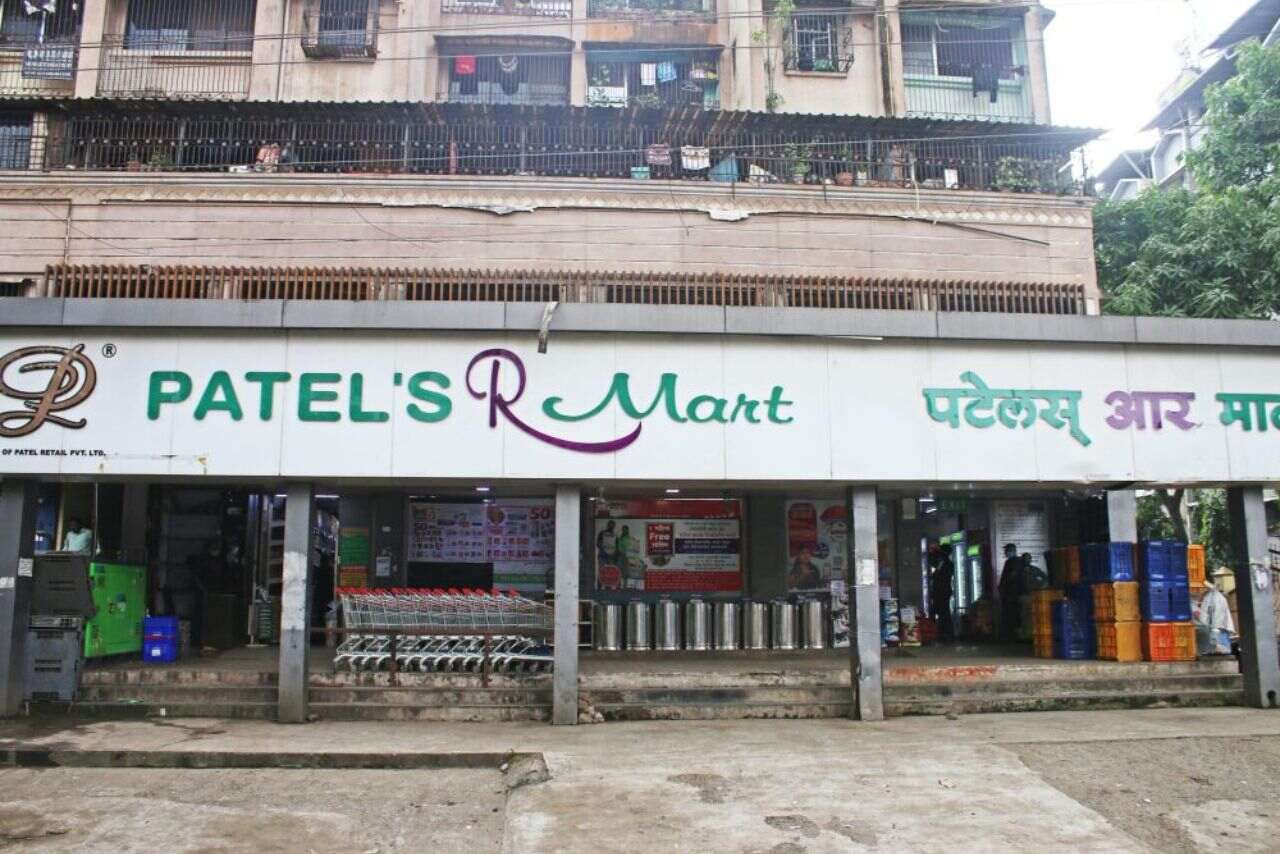
The company’s strategy of geographic concentration is at the root of its retail strategy, rather than any immediate plans for expanding nationwide. Beginning from one grocery shop opened back in 1990, the company has grown to a neighbourhood retail chain with the opening of its 50th store in Thakurli during Q4, followed immediately by the opening of the 51st store in Rasayani in April 2026, taking the total number of outlets to 51 spread across more than 2.29 lakh square feet of retail space.
Time and again, management has stressed the advantages of its cluster strategy. By focusing on the density of suburban and emerging markets in the MMR region, the company expects to optimise its logistics and supply chain operations, thereby achieving better efficiencies and profits from its stores.
Rather than attempting to grow through disparate geographies, it plans to first expand within its current geographies before branching out into neighbouring markets. The subsequent stage of expansion also embodies the same logic. The company intends to expand into the western suburbs of MMR and even in Pune, exploring possibilities for growth in Gujarat as well.
Crossing the Rs 1,000 crore milestone
Financially, FY26 was a landmark year. Income from operations registered an increase of 28.25% to reach Rs 1,059.29 crore, helping the company cross the milestone of the Rs 1,000 crore mark. The company also saw its EBITDA grow by 33.07% to Rs 83.08 crore, while EBITDA margins witnessed a rise of 28 basis points to reach 7.84%.
Patel Retail’s PAT witnessed a massive increase of 54.48%, reaching Rs 39.05 crore, and PAT margins saw a rise of 63 basis points to 3.69%. Even during the fourth quarter, such robust results were recorded. The total income grew by 53.35% year-on-year to Rs 339.55 crore, EBITDA rose by 31.21% to Rs 22.74 crore, and PAT registered a rise of 39.07% to reach Rs 9.98 crore.
These figures reflect how resilient the business model was despite the expenses incurred through the opening of additional stores. In the retail sector, there was a 16.33% growth in sales year-on-year at Rs 429 crore, while bill cut registrations
The DMart-style playbook
One of the interesting highlights during the meeting was the fact that the philosophy of the Patel Retail mirrored those that have traditionally defined success for value retailers. The key themes highlighted by management were maturity of the store economics, controlled expansion and customer value.
Current same-store sales growth sits around 5%, which management considers adequate since close to 68%-70% of retail sales revenues are earned through staple/grocery categories. Discretionary retail categories can experience wild fluctuations in contrast to consistent grocery businesses, which are driven by consumption.
It’s all about building productivity, rather than driving growth at any cost. In addition, there is an effort to improve productivity while ensuring that the stores develop into mature and profitable business operations over time. Newly opened stores incur immediate expenses, whereas revenue increases in subsequent quarters.
Management identified this as one of the factors leading to a dip in quarterly profitability. This focus on operational discipline and controlled expansion is somewhat similar to that of India’s most successful value retailers.
Private labels move to centre stage
With the growth coming from the expansion of stores, private labelling may end up becoming the profit driver. Management emphasized the importance of private labelling as an avenue for boosting profitability and building customer loyalty. These include Patel Fresh, Indian Chaska, Blue Nation and Patel Essentials.
In terms of revenue generation, private labels account for roughly 17.5%. The more important point is that the gross margin for branded items is in the range of 30% to 35% versus only about 15% to 16% for non-branded items. This gross margin disparity explains why private labelling is crucial to the company’s future.
This is another story of how retailers try to take advantage of their strength through private labelling and make things work more economically and differently. The private label strategy can serve as both a profit driver and customer loyalty driver.
Beyond retail: Building an FMCG opportunity
One aspect that makes this particular case study all the more interesting is that private labels are not limited to just in-store displays. As stated by management, the Indian Chaska brand had managed to spread across six states such as Maharashtra, Goa, Gujarat, Uttar Pradesh, Jharkhand, and Bihar. According to them, Madhya Pradesh and Delhi are next on their list.
While having started off with spices in powder form, they have plans to gradually add other categories of products, including spices, seasonings, ginger-garlic paste, purees, snacks, and wheat products. As told by management, the company has managed to earn over Rs 1 crore even though it has been operational for just about 18 months now.
Patel Fresh, on the other hand, continues to operate in its traditional capacity by focusing on flour products and exporting to the Middle East, Australia, and small island nations. The developments imply that private labels could potentially move past just the retail network and become full-fledged FMCGs.
Backward integration provides an edge
In contrast to most pure-play retailers, Patel Retail has an integrated manufacturing and processing business. The capacity installed by its factories at Ambernath and Kutch amounts to more than 1.47 lakh metric tonnes per year. The utilisation of production facilities has also increased from around 45-48% to 50-55%.
Around 60% of revenue is generated by manufacturing and processing operations. This includes export sales worth about Rs 319 crore. Management has stated that about 50% of the revenue from manufacturing and processing operations relates to its own brands and private labels, mainly Indian Chaska.
There are several advantages associated with backward integration. These include supply reliability, better quality management, improved export performance, and margin improvement. As the level of utilisation continues to increase, management expects this business to generate profits.
Inventory, exports and preparing for demand
Another topic where the management shed light for the investors was the higher inventories and increased working capital. The management explained that most of the increased inventories were because the funds raised from the IPO had been put towards working capital and in preparation for export demand.
Unlike quickly manufactured products, many of the agricultural products used by the firm have harvests that occur just once a year. As such, the firm has to make inventory purchases beforehand as per forecasted demand.
Additionally, export activity increases the difficulty. The firm usually has an order book for its export activities that stands between Rs 50 crore and Rs 100 crore. Due to long shipping periods and mixed shipments, this has to be prepared well ahead of time and inventory stocked accordingly. The management highlighted that close to 90% of the receivables have a maturity of less than 6 months and that positive operating cash flows are likely in FY27.
Can margins move higher from here?
The question is whether there will be sustained improvement in profitability. Management believes that EBITDA margins would stay in the 8%-9% range in the future. This belief is based on several reasons, such as increased contribution from the private label product segment, improved utilisation of production capacity, and the stabilization of recently launched stores.
The reduction in debt level has already improved the financial health of the business, as evidenced by the drop in debt/equity from 1.34 before the IPO to 0.34 in the current period. That being said, the company’s management understands the need to focus not only on revenue growth but also on earnings growth.
The next growth phase
It is clear from the earnings call that Patel Retail is trying to blend various models. It has the local connect of a regional player; it has the focus on clusters, the economics of private label operations and, finally, backward integration. Achieving revenues of over Rs 1,000 crore is an important landmark, but the company seems to think that bigger things are yet to come their way.
Growth into new geographies, scaling up private labels and increased manufacturing efficiency may all contribute towards transforming the earnings picture in the future years to come.
While it is not known whether this stock will replicate the success stories of organised players on the size front, it is clear that elements of growth such as disciplined store openings, private label penetration and integration are all evident. If the management continues down the same path as intended, the impact may not only be limited to growth.
Disclaimer: The views and investment tips expressed by investment experts/broking houses/rating agencies on tradebrains.in are their own, and not that of the website or its management. Investing in equities poses a risk of financial losses. Investors must therefore exercise due caution while investing or trading in stocks. Trade Brains Technologies Private Limited or the author are not liable for any losses caused as a result of the decision based on this article. Please consult your investment advisor before investing.
The post Patel Retail Stock: How Can a DMart-Like Strategy and Private Labels Fuel Its Next Growth Phase? appeared first on Trade Brains.
What's Your Reaction?