














































Silver Ends FY26 with Historic 135% Gain; Prices Hit Rs 2.34 Lakh per Kg
Synopsis: A confluence of domestic supply tightening via a DGFT reclassification that made precious metal jewellery imports “Restricted” effective April 1, 2026 and a renewed geopolitical flashpoint between the US and Iran has pushed MCX silver to approximately Rs. 2.34 lakh per kg on the May futures contract, capping a fiscal year in which the […] The post Silver Ends FY26 with Historic 135% Gain; Prices Hit Rs 2.34 Lakh per Kg appeared first on Trade Brains.

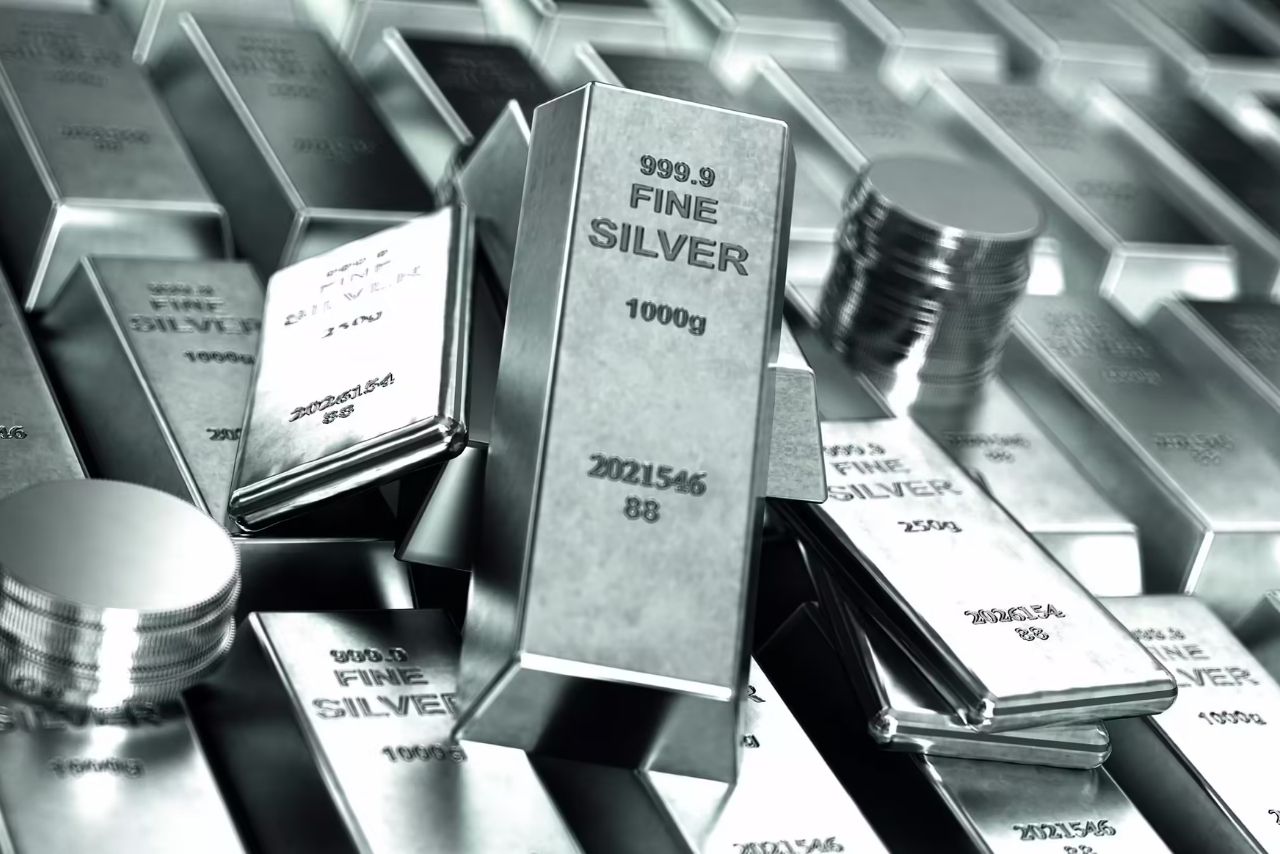
Synopsis: A confluence of domestic supply tightening via a DGFT reclassification that made precious metal jewellery imports “Restricted” effective April 1, 2026 and a renewed geopolitical flashpoint between the US and Iran has pushed MCX silver to approximately Rs. 2.34 lakh per kg on the May futures contract, capping a fiscal year in which the metal gained 135 percent; with physical silver already trading at Rs. 2.50–2.55 lakh per kg in major cities and Tehran rejecting Washington’s latest ultimatum, the structural floor under bullion prices looks firmer than at any point in the last decade.
A precious metals market already running hot on safe-haven demand received two fresh jolts in the opening days of April 2026, one from New Delhi’s trade policy desk, the other from the Strait of Hormuz. The result was a 1 percent intraday jump in silver on the Multi Commodity Exchange, a number that understates the scale of what FY26 delivered for bullion investors as a whole.
The Domestic Policy Shift
The more structurally consequential of the two catalysts is the quieter one. Effective April 1, 2026, the Directorate General of Foreign Trade reclassified the import policy for precious metal jewellery from “Free” to “Restricted.” The practical consequence is immediate: importers now require prior government approval before any shipment can clear customs.
Analysts covering the commodities space have flagged this as structurally bullish for domestic silver and gold pricing, because it constrains the supply channel that historically served as a release valve when domestic prices threatened to diverge from global spot. With that valve now subject to bureaucratic friction, any demand spike has fewer mechanisms to self-correct through increased imports. The timing, arriving just as geopolitical risk premiums are expanding, compounds the effect.
The Geopolitical Overhang
The West Asia dimension is no longer a vague macro risk. US President Donald Trump issued a direct ultimatum to Iran, warning of strikes on power plants and civilian infrastructure if the Strait of Hormuz is not reopened. Tehran has rejected the ultimatum outright. For commodity markets, this exchange represents the kind of unresolved binary that pushes investors toward safe-haven assets by default: when the outcome of a confrontation cannot be modelled, gold and silver absorb the uncertainty premium.
Notably, crude oil dipped marginally in the same session, a divergence that signals traders were holding position rather than actively pricing in an immediate supply disruption at the Strait. Silver and gold, by contrast, attracted the bulk of the flight capital. This crude-bullion divergence is an important read: it tells you the market is hedging geopolitical tail risk, not yet pricing in an oil supply shock.
Futures vs. Physical: The Premium Gap
The MCX May futures contract settling near Rs. 2.34 lakh per kg does not capture what buyers are actually paying. In Delhi, Mumbai, and Chennai, physical silver is currently exchanging hands at Rs. 2.50–2.55 lakh per kg, a premium of roughly 7–9 percent over the futures price. That gap reflects local taxes, logistical friction, and the immediate tightening effect of the new import restrictions.
In normal market conditions, the futures-to-physical premium tends to compress over time as supply adjusts. Under the current import regime, that adjustment mechanism has been deliberately slowed, which means the premium could persist or widen further through Q1 FY27 if retail demand continues to build.
The FY26 Backdrop: A Generational Rally
The intraday 1 percent move deserves to be read against its full context. Over FY26 as a whole, MCX silver futures gained 135.2 percent, rising from approximately Rs. 99,461 per kg on April 1, 2025 to around Rs. 2.34 lakh per kg by the close of the fiscal year.
Gold posted a 67 percent gain over the same period, with prices touching Rs. 1.49–1.50 lakh per 10 grams. These are not incremental commodity moves a 135 percent gain in a single fiscal year for silver, and 67 percent for gold, place FY26 in the company of the most extreme bullion rallies in Indian market history.
The combination of a weakening dollar, elevated global inflation, sustained central bank gold buying, and the Iran-Israel-US conflict supplied the multi-layered demand that drove prices far beyond what consensus estimates had projected at the start of FY26. Whether FY27 can deliver a fraction of that performance depends on whether the geopolitical premium sustains or deflates.
Disclaimer: The views and investment tips expressed by investment experts/broking houses/rating agencies on tradebrains.in are their own, and not that of the website or its management. Investing in equities poses a risk of financial losses. Investors must therefore exercise due caution while investing or trading in stocks. Trade Brains Technologies Private Limited or the author are not liable for any losses caused as a result of the decision based on this article. Please consult your investment advisor before investing.
The post Silver Ends FY26 with Historic 135% Gain; Prices Hit Rs 2.34 Lakh per Kg appeared first on Trade Brains.
What's Your Reaction?