






























































What Would Happen If Reliance and Adani Ever Planned to Merge Their Businesses?
Synopsis: A hypothetical merger between Reliance and Adani would create an unprecedented “Everything Company,” spanning energy, telecom, retail, infrastructure, and digital services, with a market cap of USD 421 billion. While it could unlock synergies, efficiencies, and consumer benefits – legal, competitive, and operational hurdles make such a merger highly impossible. Imagine a single company […] The post What Would Happen If Reliance and Adani Ever Planned to Merge Their Businesses? appeared first on Trade Brains.

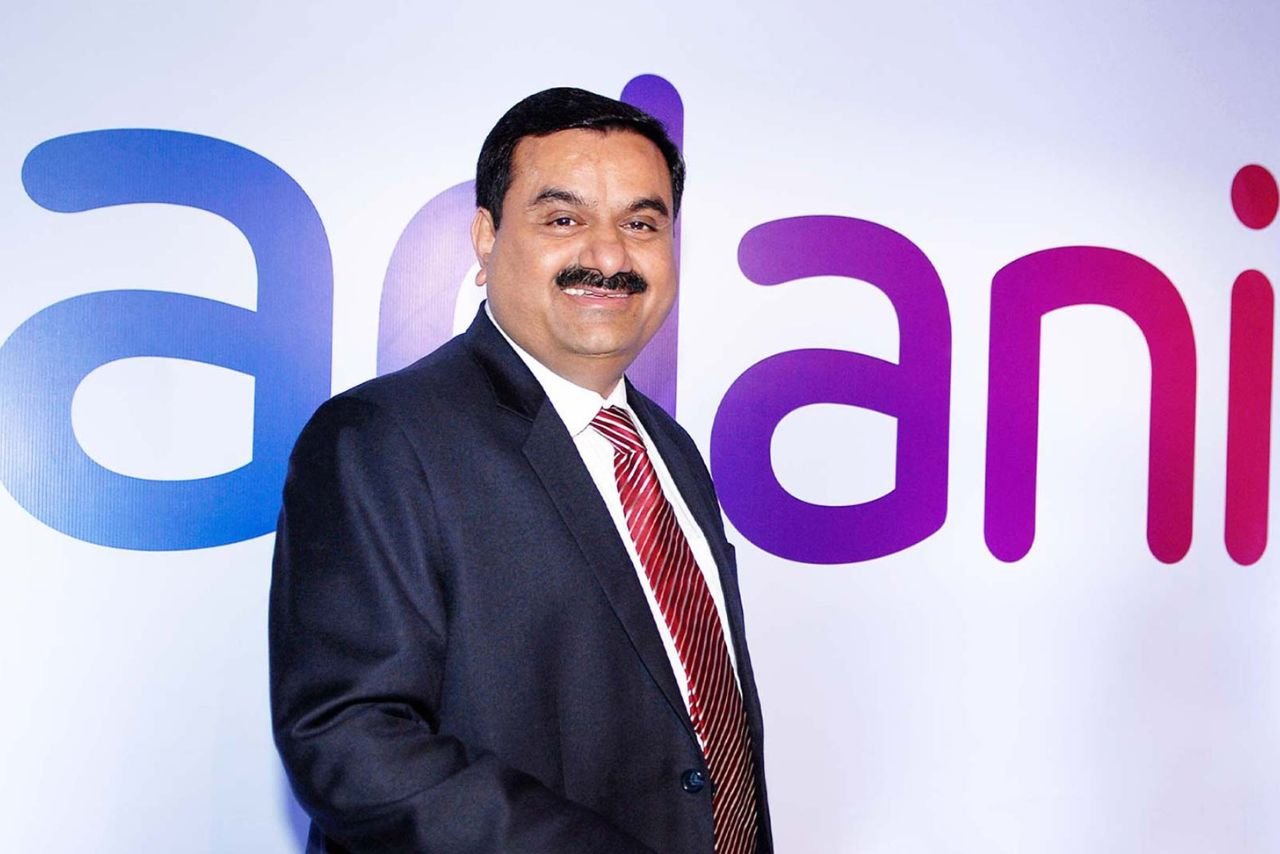

Synopsis: A hypothetical merger between Reliance and Adani would create an unprecedented “Everything Company,” spanning energy, telecom, retail, infrastructure, and digital services, with a market cap of USD 421 billion. While it could unlock synergies, efficiencies, and consumer benefits – legal, competitive, and operational hurdles make such a merger highly impossible.
Imagine a single company that could power your home, deliver your groceries, run the airport you land in, stream your favourite shows, and even handle your investments all at once. Now imagine it being bigger than Palantir Technologies, Coca-Cola, or an investment bank like Morgan Stanley. That’s the mind-bending scale we’re talking about if Reliance and Adani ever merged. While purely hypothetical, this “Everything Company” sparks the imagination: what would it mean for India’s economy, consumers, and businesses if two of the country’s biggest corporate giants joined forces?
Understanding Reliance Group
Reliance Group today stands as one of India’s most influential and diversified business houses, built on the vision of Mukesh Ambani to create scale across industries that touch everyday life. From energy and petrochemicals to telecom, retail, media and financial services, the group has steadily expanded into consumer-facing and technology-led businesses. With a combined listed market capitalisation of about Rs. 23,80,040 crore, Reliance has evolved from a traditional oil-to-chemicals player into a platform-driven conglomerate shaping how Indians produce, consume, communicate and invest.
The group’s listed ecosystem spans a wide range of sectors. Reliance Industries remains the flagship, supported by Jio Financial Services, Network18 Media and Investments, Just Dial, Hathway Cable and Datacom, DEN Networks, GTPL Hathway and Infomedia Press in media, connectivity and digital services. Manufacturing and infrastructure exposure comes through Alok Industries, Reliance Industrial Infrastructure and Sterling and Wilson Renewable Energy. Consumer and entertainment-linked names include Balaji Telefilms and Lotus Chocolate Company.
Beyond listed entities, Reliance Industries houses some of India’s fastest-growing consumer and digital brands. Reliance Retail anchors grocery, fashion and electronics, while Reliance Brands partners global labels like Stella McCartney, Max & Co. and Sephora, which has launched Fenty Beauty in India. In consumer products, Campa has achieved sustained double-digit market share in key markets, alongside Independence foods. Jio dominates telecom with over 50 percent market share, expanding into OTT with Jio Hotstar’s 400 million MAUs.
Understanding Adani Group
Adani Group has emerged as one of India’s most powerful infrastructure-led conglomerates, built around assets that form the backbone of the country’s economy. Under Gautam Adani’s leadership, the group has scaled rapidly across ports, logistics, power, airports, energy transition, cement, gas distribution and media. Its strategy is centred on owning and integrating critical infrastructure, enabling control across supply chains from resources to end consumption. The group’s listed companies together command a market capitalisation of about Rs. 14,48,775 crore, reflecting its dominant position in India’s infrastructure and energy landscape.
The listed universe of Adani Group spans multiple strategic sectors. Adani Enterprises acts as the incubator and growth engine, while Adani Ports and Special Economic Zone anchors the logistics platform. Power and energy transition are represented by Adani Power, Adani Green Energy and Adani Energy Solutions, alongside Adani Total Gas in city gas distribution. The group’s cement and infra footprint includes Ambuja Cements, ACC, Sanghi Industries, Orient Cement, CemIndia Projects and PSP Projects. Media exposure comes through NDTV, completing a portfolio that covers hard infrastructure, utilities and consumer-facing services.
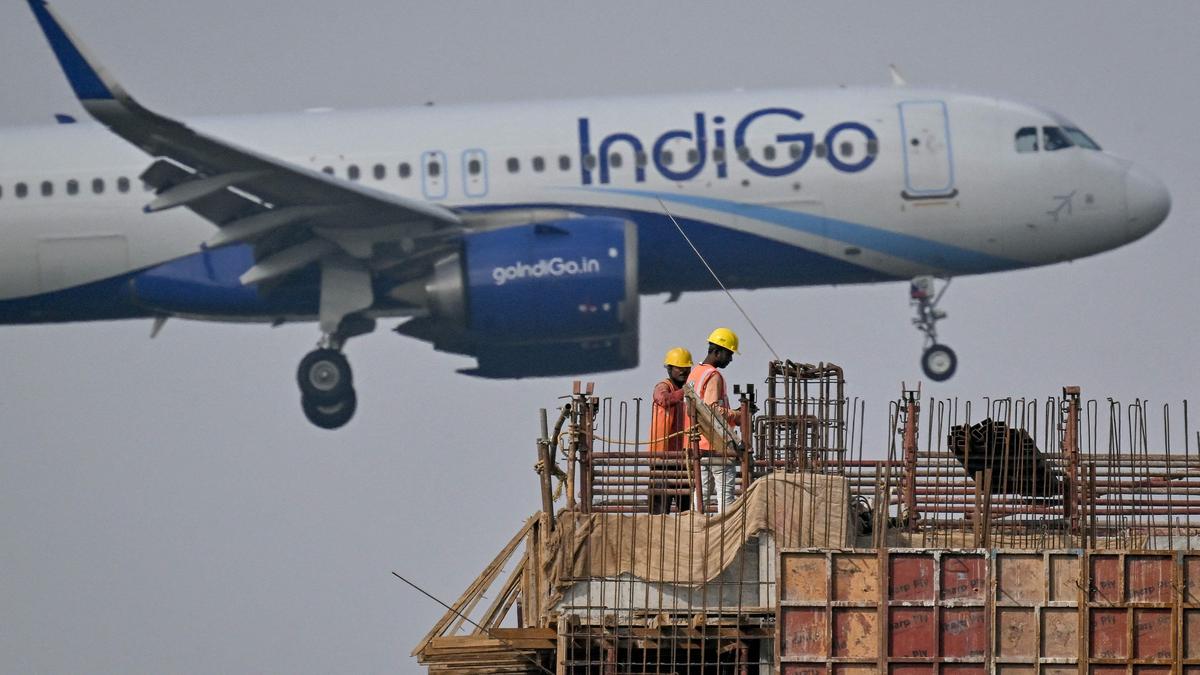
Adani Group’s scale is best understood through the operating platforms housed within its listed companies. Adani Ports and Special Economic Zone operates 15 ports and terminals with a cargo handling capacity of 633 million tonnes per annum, accounting for about 28 percent of India’s total port volumes, and is targeting 1 billion tonnes of throughput by 2030, supported by integrated logistics parks, warehouses and a large transport fleet. Adani Enterprises houses the airports business, which operates eight airports including Mumbai and Navi Mumbai, together accounting for 23 percent of passenger traffic and nearly 29 percent of India’s air cargo. Power generation is anchored by Adani Power with 18,150 MW of operating capacity, projected to rise to 23,720 MW by FY32, while Adani Connex, also under Adani Enterprises, is developing India’s largest AI data centre campus in Visakhapatnam in partnership with Google.
The Reliance & Adani Merger
If Reliance and Adani were to merge, the combined entity would be one of the largest business conglomerates in India and a global heavyweight by market capitalization. The scale of their assets, revenues, and profits would make this merged entity a powerhouse across multiple industries, from energy and telecom to retail, infrastructure, and consumer goods. Investors and markets would immediately take notice of such a dominant presence.
Reliance Group currently commands total assets of Rs. 21,23,710 crore, with a total debt of Rs. 4,08,785 crore, revenues of Rs. 9,90,502 crore, and profits of Rs. 81,452 crore. Its total market capitalization stands at Rs. 23,80,040 crore, reflecting its diverse business portfolio and strong investor confidence.
Adani Group, though smaller in scale, is a major player in ports, energy, and infrastructure. Its total assets are Rs. 7,58,926 crore, total debt Rs. 3,10,449 crore, with revenues of Rs. 2,97,111 crore and profits of Rs. 42,757 crore. The group’s market capitalization currently sits at Rs. 14,48,775 crore.
Combined, the two groups would create a company with total assets of Rs. 28,82,636 crore, total debt of Rs. 7,19,234 crore, total revenues of Rs. 12,87,613 crore, and total profits of Rs. 1,24,209 crore. Its market capitalization would reach Rs. 38,28,815 crore, roughly USD 421 billion. To put this in perspective, this would make it larger than global giants like Netflix, Coca-Cola, McDonald’s, Palantir Technologies, Morgan Stanley, and Goldman Sachs, potentially placing it among the top 20 companies in the world by market capitalization. In fact, even combined revenues of Oracle Corporation and Eli Lilly and Company would fall short compared to this merged group, highlighting the sheer scale and financial power of a Reliance-Adani entity.
The Everything Company
A merger between Reliance and Adani would create enormous opportunities to unlock value across multiple dimensions. Revenue synergies could emerge from combining complementary business platforms. For example, Adani Ports could serve as export terminals for Reliance’s petrochemical and refined products, creating integrated export hubs that improve turnaround times, reduce shipping costs, and expand global market access. Reliance Retail’s product portfolio could also be integrated into Adani Airports’ duty-free and commercial spaces, boosting retail revenue while providing travelers with a seamless shopping experience. Additionally, Jio’s digital and cloud infrastructure could enable smart energy management and IoT-based solutions for Adani’s renewable and conventional power clients, creating new service offerings for industrial and commercial customers.
Cost synergies would be equally significant. Shared infrastructure such as logistics networks, warehousing, and supply chains could reduce operating expenses, while consolidated procurement across chemicals, energy, and consumer products could improve bargaining power and scale efficiencies. Capex efficiencies would arise from integrating petrochemical, refining, and renewable energy investments, allowing the merged group to optimise project costs and timelines. Moreover, Adani’s renewable energy plants could supply green power to Reliance’s energy-intensive chemical and petrochemical operations, lowering carbon footprint and enhancing ESG credentials for both groups.
Technology and data could provide another layer of advantage. Digitisation across retail, energy management, and consumer platforms could improve operational efficiency, enhance customer experience, and enable smarter decision-making. The combined entity could also capitalise on megatrends like data centres, AI adoption, and cloud computing. Adani Connex’s AI data centre campus, when paired with Jio’s digital infrastructure, could create one of India’s largest and most integrated technology ecosystems, driving new business models and network effects.
Impact On Consumer
A merger between Reliance and Adani would significantly affect prices, choices, and service quality across India. Combined, Jio’s telecom and broadband networks and Adani’s energy, ports, and logistics infrastructure could improve coverage and reliability, especially in underserved regions. Consumers might benefit from integrated services, faster delivery, and bundled offerings in digital, retail, and energy sectors, while more efficient supply chains could reduce costs and enhance accessibility for everyday goods and services.
Pricing outcomes could go either way. On one hand, the merged group’s market dominance might enable monopoly pricing, raising tariffs for fuel, power, broadband, or retail products, reducing consumer surplus. On the other hand, scale advantages, cost efficiencies, and lower operational expenses could allow the company to keep prices competitive, boosting affordability. How the entity chooses to leverage its size would be key to whether consumers benefit or face higher costs.
Small businesses and MSMEs could see both opportunities and challenges. The combined group’s logistics, procurement, and retail networks could expand market access. Conversely, concentrated market power could pressure suppliers on pricing and contract terms, increasing dependency. Ultimately, the consumer and supplier impact hinges on how the merged entity balances dominance with competitive incentives, innovation, and regulatory oversight.
What Can Go Wrong?
A merger between Reliance and Adani could create a company so massive that it touches almost every part of daily life from energy, telecom, logistics, retail, to all the digital services. With such dominance, it could control prices, limit consumer choices, and influence supply chains across sectors. The group could become too big to regulate, making it extremely difficult for authorities to enforce fair competition or keep markets balanced, leaving consumers and smaller businesses with few alternatives.
The risks go beyond pricing. Any disruption, like a telecom outage, energy shortfall, logistics delay, or cyberattack, could ripple across the country, affecting millions of people and businesses at once. Its sheer scale makes it too big to fail, meaning even a small operational or financial mistake could trigger widespread economic shocks, highlighting how a single misstep could affect the entire market and national economy.
Smaller businesses and suppliers would also feel the pressure. Dependence on the merged group could reduce bargaining power, tighten contract terms, and increase costs. Monopolistic pricing could make essential goods and services more expensive for consumers. In extreme scenarios, unchecked dominance could slow economic growth, concentrate wealth, and place a huge portion of the market under one corporate giant, leaving the economy highly vulnerable to shocks.
Why It Won’t Happen
A merger between Reliance and Adani is extremely unlikely because of strict regulations around competition. India’s Competition Commission (CCI) keeps a close watch on deals that could reduce competition, and combining two of the country’s largest business groups would immediately raise red flags. There are limits on market share in key sectors, and past cases show the CCI often blocks or heavily modifies mergers that risk giving one company too much power. Approval timelines for such mega-deals can stretch for years, and historically, very few high-profile mergers pass without major conditions.
Government policies and sectoral rules add another layer of complexity. Cross-ownership across telecom, energy, logistics, retail, and finance would likely violate licensing and sectoral regulations. Beyond legal hurdles, there are public interest concerns as such a merger could concentrate too much economic power in one hand, affecting prices, competition, and overall market stability. International investors and trade partners might also raise alarms, as a single entity controlling so much of India’s economy could be seen as risky and monopolistic.
On top of these hurdles, there’s simply no strategic incentive. Reliance and Adani have grown as independent ecosystems, each dominating its own space. Both groups have the scale, capital, and vision to pursue growth on their own. Their priorities, management styles, and business models are different, and there is little reason for them to merge when they are already leaders in their respective industries. All things considered, legal, structural, and competitive realities make a merger between them virtually impossible.
Conclusion
If Reliance and Adani were to merge, the combined entity would dwarf some of the world’s biggest companies. Its market capitalization of roughly USD 421 billion would put it ahead of global giants like Netflix, Coca-Cola, McDonald’s, Palantir, Morgan Stanley, and Goldman Sachs. Even the combined revenues of Oracle and Eli Lilly would fall short of this merged powerhouse.
The sheer scale of a merged Reliance-Adani, spanning energy, telecom, logistics, retail, and digital services, shows both the possibilities and the dangers of such concentration. With so much influence in one place, monopoly concerns, economic vulnerability, and the difficulty of effective regulation quickly arise. In reality, sectoral rules, competition laws, and the fact that both groups are focused on their own growth act as natural checks, making it extremely unlikely that any single company could dominate so much of India’s economy.
Ultimately, while imagining a Reliance-Adani “Everything Company” is fascinating, it exists only in theory. It serves as a reminder of the extraordinary scale Indian corporations have achieved. For now, these two corporate giants will continue to chart their own paths, each shaping India’s economy in their own distinct way.
Disclaimer: The views and investment tips expressed by investment experts/broking houses/rating agencies on tradebrains.in are their own, and not that of the website or its management. Investing in equities poses a risk of financial losses. Investors must therefore exercise due caution while investing or trading in stocks. Trade Brains Technologies Private Limited or the author are not liable for any losses caused as a result of the decision based on this article. Please consult your investment advisor before investing.
The post What Would Happen If Reliance and Adani Ever Planned to Merge Their Businesses? appeared first on Trade Brains.
What's Your Reaction?