













































.png)



Who Are Market Makers and How They Influence India’s Stock Market?
Synopsis: Market makers ensure continuous liquidity and orderly trading in India’s SME stocks through SEBI-mandated obligations such as 5% IPO inventory, three-year quoting, 75% daily presence, ₹1 lakh quote depth, and net-worth norms up to ₹5.5 crore, reducing volatility and improving investor confidence. A market maker is a crucial institutional participant in the capital market […] The post Who Are Market Makers and How They Influence India’s Stock Market? appeared first on Trade Brains.



Synopsis: Market makers ensure continuous liquidity and orderly trading in India’s SME stocks through SEBI-mandated obligations such as 5% IPO inventory, three-year quoting, 75% daily presence, ₹1 lakh quote depth, and net-worth norms up to ₹5.5 crore, reducing volatility and improving investor confidence.
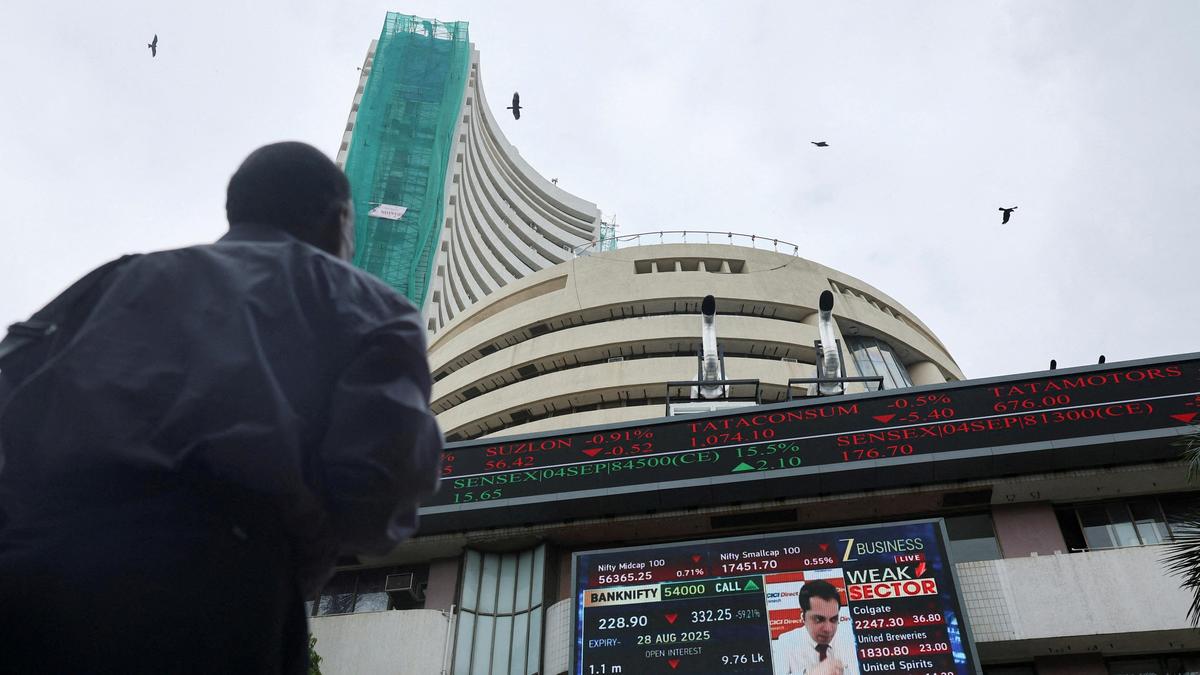
A market maker is a crucial institutional participant in the capital market ecosystem, responsible for ensuring that securities can be bought and sold smoothly without sharp price disruptions. In simple terms, a market maker provides liquidity by being continuously ready to buy and sell a particular stock. In a market like India, where liquidity varies sharply between large-cap, mid-cap, and SME stocks, the role of a market maker becomes especially important in maintaining trust, price continuity, and orderly trading.
Under Regulation 261 of the SEBI (Issue of Capital and Disclosure Requirements) Regulations, 2018, market making is compulsory for SME IPOs and is backed by specific inventory requirements, net worth thresholds, time-bound obligations, and trading limits. These numerical safeguards ensure that liquidity is not incidental but structurally embedded into SME listings from the very first day of trading.
Who Is a Market Maker?
A market maker in India is a SEBI-registered stockbroker who is empanelled with either BSE SME or NSE Emerge and is obligated to provide continuous two-way quotes in a specific SME-listed security. The market maker must begin quoting from the date of listing and continue for a minimum period of three years. In an SME IPO, at least 5 percent of the issue size is compulsorily reserved for the market maker as inventory. For instance, if an SME IPO raises Rs. 40 crore, the market maker must be allotted shares worth a minimum of Rs. 2 crore, which are then used to provide liquidity in the secondary market.
In daily trading, the market maker places both buy and sell quotes around the prevailing market price. If a stock is trading in a range of Rs. 100 to Rs. 102, the market maker may quote a buy price of Rs. 100 and a sell price of Rs. 102.
If no investor is willing to buy or sell at that time, the market maker must step in using its own inventory, ensuring that trades are executed and price discovery continues. The difference between the buy and sell price forms the market maker’s spread, which compensates for inventory risk and continuous quoting obligations.
How Market Makers Affect the Indian Stock Market
The impact of market makers on the Indian stock market is most visible in the SME segment, where trading volumes are structurally low. SEBI mandates that a market maker must provide two-way quotes for at least 75 percent of the trading time in a day, with a minimum quote depth of Rs. 1,00,000. This means that at any given point, investors can execute trades worth up to Rs. 1 lakh at the quoted price without waiting for a counterparty.
Additionally, market makers are required to execute orders at the quoted price and quantity without exception. This guarantee significantly reduces bid-ask gaps and prevents situations where investors are unable to exit their holdings.
Retail investors holding shares worth less than Rs. 1 lakh are also protected, as the market maker must purchase their entire holding in one lot, ensuring exit liquidity even for odd or small positions. Collectively, these numerical obligations reduce volatility, improve confidence, and prevent artificial price freezes in SME stocks.
Their presence enhances investor confidence, especially among retail participants, because investors know they can exit their positions if needed. This improves the overall credibility of the SME platform and encourages more companies to access public markets. While market makers are not mandated in Main Board stocks, where institutional participation and depth naturally provide liquidity, their role in the SME segment indirectly strengthens the broader Indian capital market by supporting smaller enterprises and widening market participation.
Criteria for Being a Market Maker
Not every intermediary can act as a market maker. SEBI has laid down strict eligibility and financial criteria to ensure only capable and regulated entities undertake this role. A market maker must be a SEBI-registered stockbroker and a trading member of the relevant SME exchange (BSE SME or NSE Emerge). They must be independent of the issuer and cannot be related to the promoters or promoter group, ensuring there is no conflict of interest.
As per NSE Circular No. 65/2024 dated October 14, 2024, a market maker handling up to 5 SME companies must have a minimum net worth of Rs. 1 crore. This requirement increases progressively with the number of companies handled, reaching Rs. 2.5 crore for 16–20 companies, Rs. 4 crore for 31–35 companies, and Rs. 5.5 crore for 46–50 companies. These thresholds ensure that market makers have sufficient capital to maintain inventories and absorb trading risks over the mandatory three-year period.
Beyond the initial 5 percent mandatory inventory, SEBI has prescribed upper limits on how much stock a market maker can hold based on the IPO size. For SME issues up to Rs. 20 crore, the buy-quote exemption threshold is 25 percent, with a re-entry level at 24 percent. For IPOs between Rs. 20 crore and Rs. 50 crore, the threshold is 20 percent, while for Rs. 50 crore to Rs. 80 crore issues it is 15 percent. For issues above Rs. 80 crore, the limit is 12 percent.
Once a market maker’s inventory crosses these limits, it is barred from placing further buy orders and can only sell until inventory falls to the re-entry level. Importantly, the initial 5 percent allotment is excluded from these calculations, ensuring that regulatory limits apply only to excess accumulation and not the mandatory liquidity buffer.
Do Market Makers Provide Liquidity for All Stocks?
Market makers do not provide liquidity for all stocks in the Indian market. Their role is stock-specific, not market-wide. In India, compulsory market making is primarily applicable to SME-listed stocks under Regulation 261 of the SEBI (ICDR) Regulations. Main Board stocks are excluded because they generally enjoy adequate liquidity due to higher trading volumes, institutional participation, and analyst coverage.
Even within the SME segment, a market maker is appointed only for specific securities, usually at the time of an IPO. The market maker’s obligation is limited to those designated stocks and does not extend to the entire SME platform or to unrelated companies.
How Are Stocks Selected?
In the SME segment, stock selection for market making is not optional. Every company listing on BSE SME or NSE Emerge is required to appoint a market maker at the time of the IPO. The lead merchant banker must disclose the market maker’s name in the offer document and submit a signed market-making agreement to the exchange. This agreement binds the market maker to provide liquidity for three years and restricts them from purchasing shares from promoters during this period, preventing disguised promoter exits.
The number of market makers per stock is capped at five, ensuring orderly competition and preventing manipulation. The issue size, expected liquidity, and inventory limits determine how actively a market maker can quote, but the obligation to provide continuous liquidity remains non-negotiable.
Broker’s Push for Market Making in Commodity Markets
Recently, brokers have urged Sebi to extend equity-style market-making frameworks to the commodity derivatives segment. Currently, India’s commodity market is heavily dominated by MCX, with limited competition from NSE and BSE. Brokers argue that allowing market makers in commodity contracts such as gold, silver and crude oil, would improve liquidity, narrow bid-ask spreads, reduce trading costs, and foster inter-exchange competition. If approved, this move could deepen commodity markets, benefit traders through better pricing, and reduce concentration risk in India’s commodity trading ecosystem.
A market maker is a cornerstone of liquidity and stability in India’s SME capital markets. By continuously providing buy and sell quotes, market makers bridge the gap between buyers and sellers, reduce volatility, and enhance investor confidence. While their role is limited to specific stocks, primarily SME-listed securities, their impact extends to the broader market by strengthening trust in public listings and supporting the growth of smaller companies. Through a well-defined regulatory framework, SEBI ensures that market making remains transparent, disciplined, and aligned with the long-term integrity of the Indian stock market.
Disclaimer: The views and investment tips expressed by investment experts/broking houses/rating agencies on tradebrains.in are their own, and not that of the website or its management. Investing in equities poses a risk of financial losses. Investors must therefore exercise due caution while investing or trading in stocks. Trade Brains Technologies Private Limited or the author are not liable for any losses caused as a result of the decision based on this article. Please consult your investment advisor before investing.
The post Who Are Market Makers and How They Influence India’s Stock Market? appeared first on Trade Brains.
What's Your Reaction?