







































.png)



Why is Supreme Petrochem’s revenue falling despite being a market leader?
Synopsis: Despite market leadership, Supreme Petrochem’s revenue fell 10% YoY to ₹1,265 crore in Q3 FY26 as styrene monomer prices dropped from USD 1,040 to USD 810/tonne and ABS plant disruptions hit profitability despite higher volumes. Supreme Petrochem, a prominent player in India’s specialty chemicals and petrochemical sector, has recently come under market scrutiny as […] The post Why is Supreme Petrochem’s revenue falling despite being a market leader? appeared first on Trade Brains.

Synopsis: Despite market leadership, Supreme Petrochem’s revenue fell 10% YoY to ₹1,265 crore in Q3 FY26 as styrene monomer prices dropped from USD 1,040 to USD 810/tonne and ABS plant disruptions hit profitability despite higher volumes.
Supreme Petrochem, a prominent player in India’s specialty chemicals and petrochemical sector, has recently come under market scrutiny as its revenue trends show unexpected softness. The company, widely recognized for its leadership in specific chemical segments, continues to operate across multiple product lines and serves a diverse client base, drawing attention from investors and industry analysts alike. This development has sparked conversations about the factors influencing the company’s financial performance in an otherwise competitive market landscape.
Supreme Petrochem Limited, with a market capitalization of Rs. 11,038.03 crore, closed at Rs. 587 per equity share, up by 2.98 percent from its previous day’s close price of Rs. 570 per equity share.
Supreme Petrochem Limited has delivered returns across multiple timeframes, with a 1-month return of -7.86 percent, a 3-month return of -20.77 percent, and a 6-month return of -24.76 percent The stock has delivered a -3.61 percent return in the past 1 year and in the longer frame of 5 years it has delivered a return of 219.30 percent.
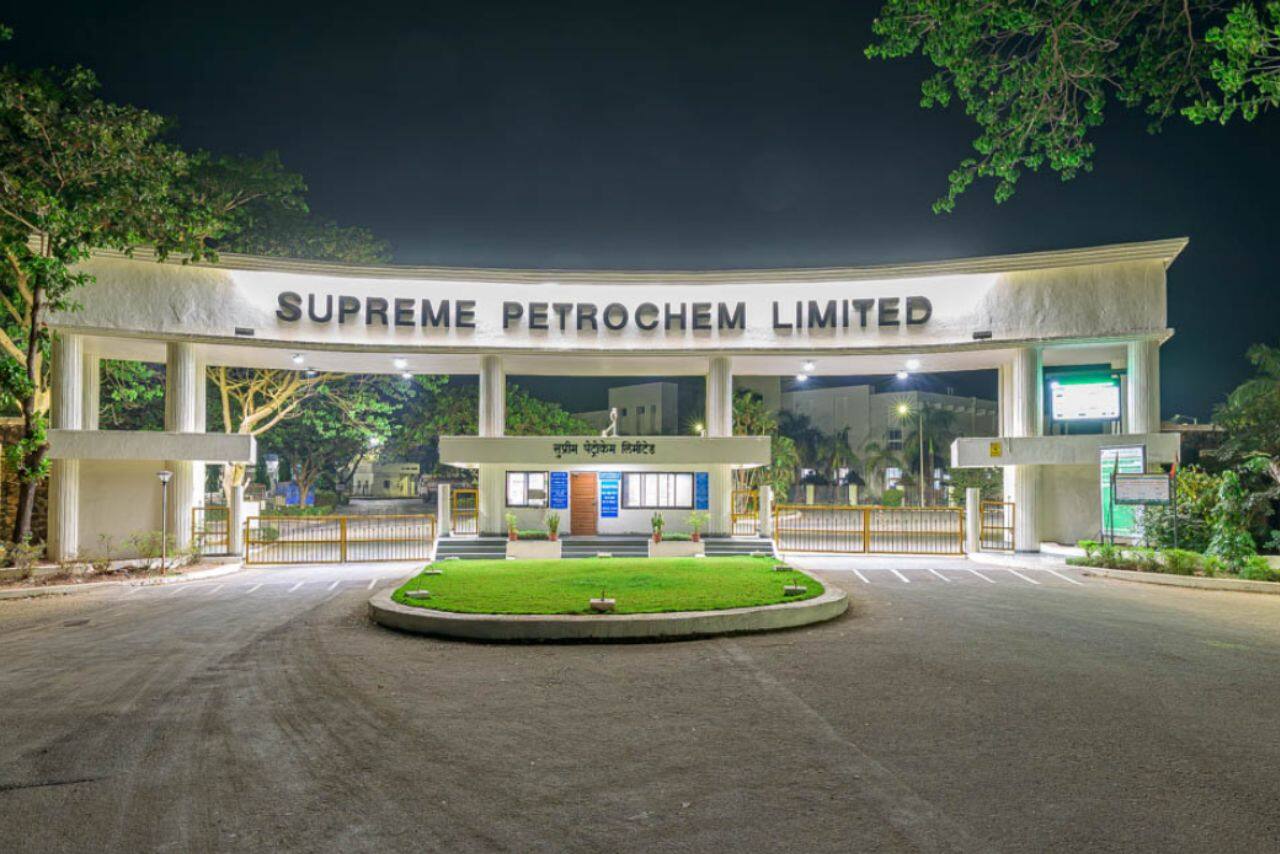
Supreme Petrochem Limited, founded in 1989 and based in Mumbai, manufactures and sells polystyrene, expandable polystyrene (EPS), masterbatches, and extruded polystyrene insulation boards in India and globally. Its products serve diverse applications, including injection moulding, construction, automotive, electronics, packaging, refrigeration, and hobby/model making. The company caters to multiple industries such as automotive, household appliances, electricals, construction, food, and cold storage solutions.
The company’s compounding operations are set to scale further once ABS production resumes, with a total compounding capacity of approximately 60,000 tonnes across its Amdoshi and Xmold facilities. Trading volumes accounted for ~20 percent of total turnover, slightly down from ~22 percent YoY, reflecting a strategic focus on value-added manufacturing rather than bulk trading.
Why Has Revenue Fallen?
The drop has been largely attributed to the sharp fall in Styrene Monomer (SM) prices, which declined from USD 1,040 per tonne in Q3 FY 25 to USD 810 per tonne in December 2025. This commodity price correction has had a direct impact on revenue, even as the company maintained healthy sales volumes of 91,265 MT in Q3, up from 85,537 MT in Q3 FY25.
Financials
In Q3 FY26, the company reported revenue of Rs. 1,265 cr, down 10.0 percent YoY from Rs. 1,405 cr in Q3 FY25, but up 15.0 percent QoQ from Rs. 1,100 cr in Q2 FY26. EBITDA for the quarter stood at Rs. 69 cr, declining 30.3 percent YoY from Rs. 99 cr and down 11.5 percent QoQ from Rs. 78 cr, reflecting margin pressures amid lower profitability.
Net profit fell sharply to Rs. 30 cr in Q3 FY26, a 57.7 percent decline YoY from Rs. 71 cr and a 37.5 percent drop QoQ from Rs. 48 cr. The results indicate a slowdown in earnings despite sequential revenue growth, suggesting rising costs or operational challenges impacting overall profitability.
Over the past five years, the company has demonstrated strong growth, achieving a revenue CAGR of 17 percent, a profit CAGR of 29 percent and a price CAGR of 24 percent, reflecting both its operational performance and market confidence.
A return on equity (ROE) of about 17.4 percent and a return on capital employed (ROCE) of about 22.8 percent, and debt to equity ratio at 0.06 demonstrate the company’s financial position. The stock is currently trading at a P/E of 40.3x higher as compared to industry P/E of 19x.
ABS Plant Operational Challenges
A major highlight for the company was the commissioning of its first ABS (Acrylonitrile Butadiene Styrene) plant with a capacity of 70,000 MTPA in September 2025 at its Amdoshi facility. ABS, an opaque engineering plastic, is widely used in automotive components, consumer appliances, small electrical devices, and toys due to its high impact strength, chemical resistance, UV stability, and color consistency. The ABS line also allows Supreme to manufacture compounds in-house, potentially reducing dependency on imports and improving margins in the future.
However, operations were temporarily suspended in December due to a malfunction in critical proprietary equipment. While the issue is covered under warranty, it has delayed the full-scale utilization of the plant. Management indicated that consultants and equipment suppliers are on-site to restore operations, but no definite timeline for recommencement was provided. Once operational, the ABS plant is expected to contribute significantly to growth, with management projecting that ABS could drive up to 7 percent of revenue growth, assuming commissioning by the end of the financial year.
EPS Demand
The company’s Expandable Polystyrene (EPS) business continued to see moderate growth. Domestic EPS demand grew by approximately 6 percent YoY in Q3 FY26, with India’s EPS market estimated at ~160,000 tonnes per annum.
Meanwhile, imports of polystyrene and recycled materials, particularly from Thailand, continue to impact the pricing environment. The company highlighted that imported recycled polystyrene is primarily used in low-spec applications such as wall panels and photo frames, rather than in appliance manufacturing or ABS, mitigating direct competition.
Future Outlook
Supreme Petrochem continues to maintain a debt-free balance sheet with an investible surplus of Rs. 463 crore and is funding all capital expenditures internally. Depreciation for the ABS and SPC lines has been fully accounted for, with quarterly depreciation at approximately Rs. 27 crore, forming the major component of fixed costs for the new plant. For FY27, the company plans CAPEX of Rs. 250–275 crore, primarily for infrastructure development at Panipat, Amdoshi, and Chennai, along with EPS Phase 2 expansion expected by February–March 2026.
Despite being a market leader with a dominant share in polystyrene and EPS segments, Supreme Petrochem’s revenue has been impacted by external factors such as the decline in styrene monomer prices, temporary disruption at the new ABS plant, and volatile raw material costs. However, operational resilience, a diversified product portfolio, debt-free status, and strategic CAPEX initiatives position the company for improved performance and revenue growth in the coming quarters, particularly as ABS and compounding operations ramp up.
Disclaimer: The views and investment tips expressed by investment experts/broking houses/rating agencies on tradebrains.in are their own, and not that of the website or its management. Investing in equities poses a risk of financial losses. Investors must therefore exercise due caution while investing or trading in stocks. Trade Brains Technologies Private Limited or the author are not liable for any losses caused as a result of the decision based on this article. Please consult your investment advisor before investing.
The post Why is Supreme Petrochem’s revenue falling despite being a market leader? appeared first on Trade Brains.
What's Your Reaction?