


































































Why Was Titan So Slow to Enter the ‘Lab-Grown Diamond’ Market?
Synopsis: Titan stayed away from lab-grown diamonds for years due to weak consumer demand, price pressure, and unclear economics. Despite repeatedly signalling caution, the company made a sudden entry with the launch of beYon in late 2025, marking a sharp shift from observation to action in an industry it had long kept at arm’s length. […] The post Why Was Titan So Slow to Enter the ‘Lab-Grown Diamond’ Market? appeared first on Trade Brains.


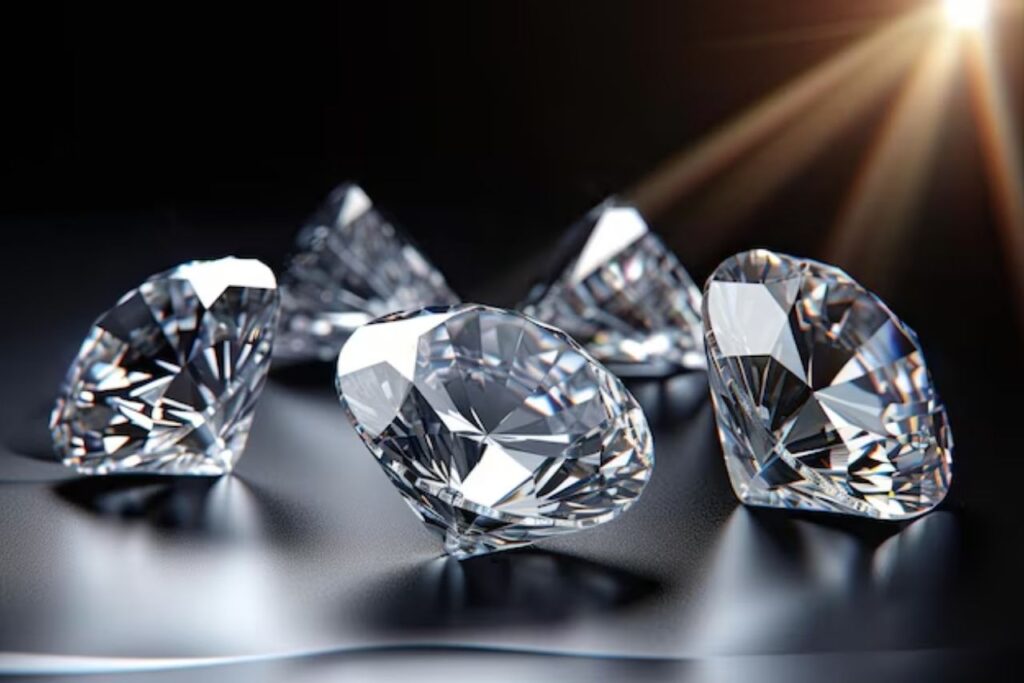
Synopsis: Titan stayed away from lab-grown diamonds for years due to weak consumer demand, price pressure, and unclear economics. Despite repeatedly signalling caution, the company made a sudden entry with the launch of beYon in late 2025, marking a sharp shift from observation to action in an industry it had long kept at arm’s length.
On 26th December 2025, Titan announced that it would launch a new brand, “beYon – from the House of Titan,” with an exclusive retail store in Mumbai on 29th December. The new venture aims to cater to women seeking lifestyle adornments beyond Titan’s traditional portfolio of watches, perfumes, sarees, and handbags.
beYon will offer a curated collection of Lab-Grown Diamond (LGD) jewellery, marking the company’s first meaningful foray into this emerging segment. Titan plans to open a few more stores in Mumbai and Delhi in the near term, signaling a cautious but deliberate expansion into LGDs. This move is notable, as Titan is not the first Tata Group company to explore lab-grown diamonds, Trent had earlier entered the space through its brand Pome, but it is significant given Titan’s leadership in India’s jewellery market.
Titan’s decision to enter the lab-grown diamond segment comes after a prolonged period of staying out of the category, even as lab-grown diamonds steadily gained attention across the jewellery industry. While the segment attracted growing discussion and interest, Titan consistently maintained distance, citing concerns around demand, pricing, and the structure of the market.
The timing of the move, however, marks a clear break from that earlier stance. After years of hesitation, Titan has chosen to step into a segment it had long watched from the sidelines, setting the stage for questions around why now?
Early Observations: A Nascent and Uncertain Market
Even as early as Q2FY25, Titan’s management recognized the potential of lab-grown diamonds but was wary of overestimating demand. Analysis of the market revealed that consumer interest declined sharply beyond the Rs. 1 lakh price point, with most LGD products being sold in the Rs. 50,000 to Rs. 70,000 range. While some high-end consumers might explore larger stones in the Rs. 10-15 lakh range, these cases were limited and difficult to predict. Consequently, Titan saw that the market was largely constrained to sub Rs. 1 lakh buyers, which did not align with the company’s core strategies in the premium jewellery space.
The company also observed that early adopters of lab-grown diamonds tended to be affluent, established diamond buyers who already owned natural diamonds. These customers were comfortable experimenting with LGDs for solitaires and larger stones, but first-time buyers and new entrants in the diamond market largely preferred natural diamonds. For Titan, which has built its brand on trust, authenticity, and value retention, this posed a strategic challenge. Selling LGDs at the lower end of the market could not easily justify a broad launch, while targeting high-value buyers risked a niche offering that might not scale.
Market Size and Commoditization Concerns
In Q1FY26, Titan management highlighted a critical reality check: despite the media hype and the presence of over 50 players and 100 plus stores in India, the LGD market represented less than two percent of the total diamond-studded jewellery market. While growth was expected over time, the current size remained limited. Management emphasized that retail prices for LGDs had been falling, with wholesale prices declining even faster. In India, retail rates hovered between Rs. 30,000 and Rs. 50,000 per carat, significantly lower than previous levels.
This rapid price decline, combined with low differentiation among brands, posed a significant risk of commoditization. Without strong intellectual property or brand-led differentiation, Titan feared that LGDs could become a price-driven market where larger stones and more diamonds would dominate purely on cost advantage. The concern extended to unit economics at the store level, which could be under pressure as new entrants, often backed by private equity, opened additional stores aggressively. Titan was acutely aware that premature entry could jeopardize margins and brand perception, leading to an operational and financial scenario that may not align with the company’s long-term vision.
Understanding the Consumer: Hesitation and Perception
A recurring theme in Titan’s analysis was the consumer perspective. In Q4FY25, management noted that while wholesale prices were falling steadily due to technological and productivity gains, retail adoption remained limited. Customers were still learning about lab-grown diamonds and were often confused about their value, authenticity, and resale potential. Many first-time buyers continued to prefer natural diamonds, viewing them as markers of affluence, status, and long-term value. Titan leadership emphasized that understanding consumer sentiment was paramount: the company needed to gauge what customers truly wanted, how they perceived LGDs, and whether there was a willingness to pay for this new type of product.
The company’s approach to consumer insights was nuanced. Management observed that the first-time buyers in India typically purchase diamond jewellery around Rs. 1 lakh, a threshold at which natural diamonds still hold the strongest appeal. Early adopters of LGDs were primarily those who already owned diamonds worth several lakhs and could afford to experiment. Consequently, the broader mass market had yet to develop sufficient awareness or interest, limiting the scale and pace at which Titan could confidently enter the segment.
From Q1FY26 onwards, Titan observed that early adoption of LGDs was largely restricted to accomplished diamond buyers, who were experimenting with solitaires and larger stones. New entrants to the diamond market continued to favor natural diamonds, perceiving them as more authentic and secure in terms of value retention. The company noted that while early adopters could potentially drive initial sales, scaling beyond this cohort required a broader shift in consumer perception and comfort with lab-grown diamonds.
Q2FY25 transcripts reveal that customer interest dropped significantly beyond Rs. 1 lakh for lab-grown jewellery. For the majority of LGD buyers, products were concentrated below this threshold, while higher-value products catered to a niche segment of affluent customers. This created a structural challenge: expanding into LGDs without eroding revenue or cannibalizing natural diamond sales required careful balancing. Titan’s leadership also noted that the media narrative around LGDs often exaggerated the market’s size and growth potential, which contrasted with the ground reality of limited adoption and cautious consumers.
Competitive Landscape and Industry Dynamics
Throughout 2025, Titan monitored the market dynamics, noting the influx of new entrants and the downward pressure on pricing. In Q4FY25, Titan’s leadership explained that many players had been retailing LGDs at Rs. 50,000 to Rs. 60,000 per carat, but new competitors continued to push prices down to Rs. 30,000 per carat. While lower prices might attract more customers, they also threatened to erode margins and intensify competition. Titan understood that entering prematurely could mean competing in a fragmented market without clear differentiation, making the business proposition risky.
Furthermore, the U.S. market for lab-grown diamonds had been sluggish, forcing suppliers to look for other markets, with India emerging as a potentially convenient alternative. China, another major market, was also not showing significant growth. While these global factors suggested opportunities, Titan’s leadership remained cautious. They recognized that increased investment in LGDs could eventually expand the market, but this was contingent on consumer adoption and the development of a sustainable retail ecosystem.
Strategic Deliberation and Portfolio Considerations
Titan’s approach was also influenced by its existing portfolio of brands, including Tanishq, CaratLane, and Mia. In Q3FY25, management described the situation as a portfolio play: the company needed to observe how LGDs impacted different segments and markets before committing to a larger strategy. Spot checks at various stores indicated that customers were not actively requesting LGDs, often clarifying whether diamonds were natural. This further reinforced the view that the market was still in a nascent stage.
Unit economics, brand positioning, and intellectual property emerged as key decision criteria. Titan’s leadership emphasized that a successful entry required not only consumer interest but also a unique value proposition and sustainable business model. The company had to ensure that it could differentiate its LGD offerings meaningfully in a market prone to commoditization.
The Turn Towards beYon
Despite years of hesitation, Titan has now launched beYon, signaling a willingness to experiment in the LGD space. The brand aims to offer curated LGD jewellery while ensuring a differentiated experience, aligning with the company’s long-standing philosophy of balancing innovation, customer insight, and brand integrity. The timing suggests that Titan believes consumer awareness, market structure, and operational readiness have reached a point where a meaningful entry is possible, all in a measured way.
Interestingly, Titan’s recent move follows its historical caution, the company has consistently emphasized that it would enter the LGD market only when it could offer compelling value, a differentiated intellectual property, and sustainable economics. While beYon represents this first step, the exact rationale behind the timing and strategy remains undisclosed.
Conclusion: A Deliberate, Observant Approach
Titan stayed out of lab-grown diamonds for so long because the business simply didn’t make enough sense. The market was small, prices kept falling, margins looked fragile, and demand was largely limited to a narrow set of existing diamond buyers. Those concerns haven’t magically disappeared. Even today, LGDs remain a category with unresolved questions around scale, differentiation, and long-term economics.
What changed was the cost of staying absent. As more players entered, stores multiplied, and lab-grown diamonds became part of the broader jewellery conversation, Titan risked being seen as missing a category altogether. The launch of beYon looks less like a strong belief in LGDs and more like a defensive step, meant to plug a portfolio gap, stay relevant, and keep control of the narrative.
Disclaimer: The views and investment tips expressed by investment experts/broking houses/rating agencies on tradebrains.in are their own, and not that of the website or its management. Investing in equities poses a risk of financial losses. Investors must therefore exercise due caution while investing or trading in stocks. Trade Brains Technologies Private Limited or the author are not liable for any losses caused as a result of the decision based on this article. Please consult your investment advisor before investing.
The post Why Was Titan So Slow to Enter the ‘Lab-Grown Diamond’ Market? appeared first on Trade Brains.
What's Your Reaction?