














































3,200% Returns to stock crash: What went wrong with AGI Greenpac share?
In just five years, AGI Greenpac became one of India’s most talked-about multibagger stocks, delivering staggering returns and attracting the attention of investors across the country. But what seemed like an unstoppable rise had taken a sharp turn, leaving shareholders wondering what went wrong. From record-breaking gains to a sudden plunge in its share price, […] The post 3,200% Returns to stock crash: What went wrong with AGI Greenpac share? appeared first on Trade Brains.

In just five years, AGI Greenpac became one of India’s most talked-about multibagger stocks, delivering staggering returns and attracting the attention of investors across the country. But what seemed like an unstoppable rise had taken a sharp turn, leaving shareholders wondering what went wrong. From record-breaking gains to a sudden plunge in its share price, the story behind AGI Greenpac’s fall holds important lessons for investors and market watchers alike.
About The Company
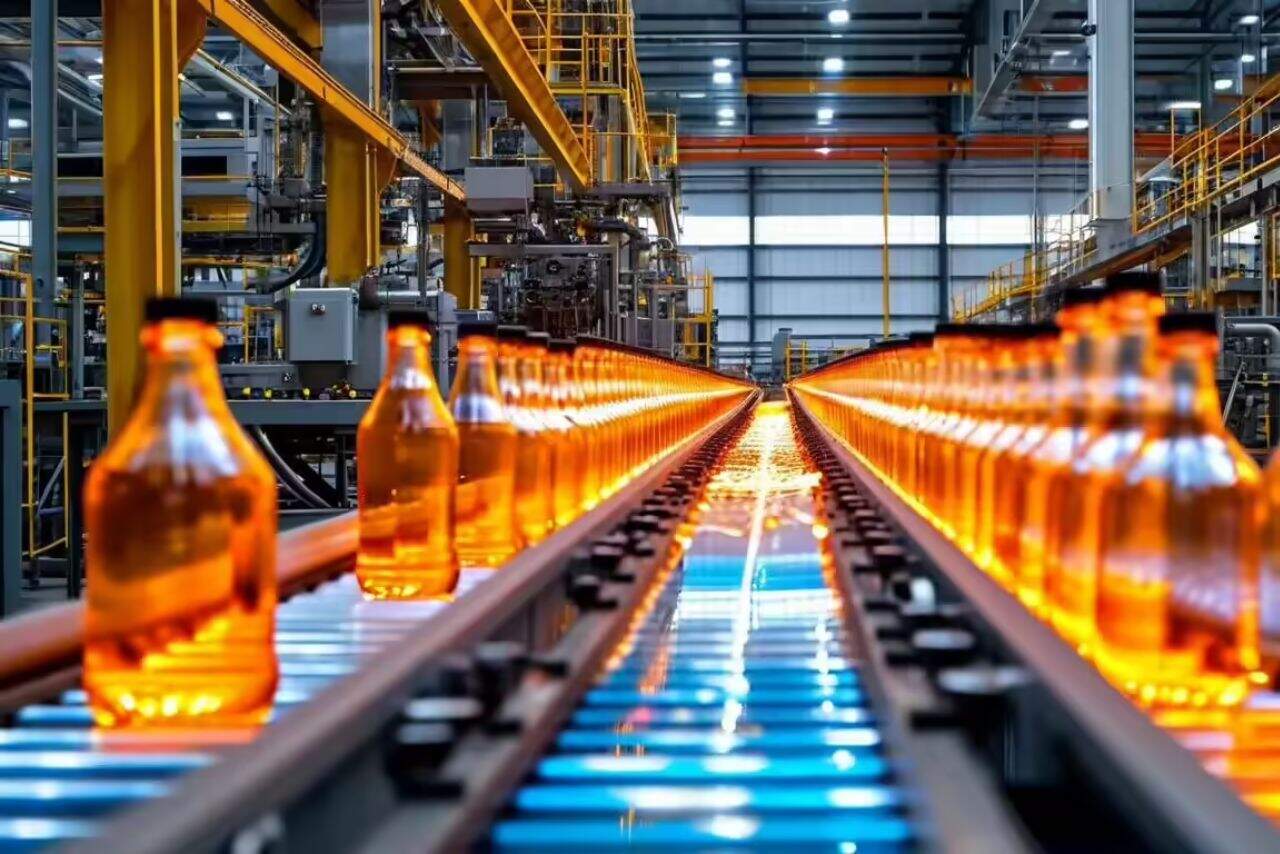
AGI Greenpac Limited is India’s leading manufacturer of container glass, offering a wide range of PET bottles, related products, and anti-counterfeiting security closures. The company operates seven strategically located manufacturing plants across India and serves over 500 globally recognized institutional clients.
AGI Greenpac’s clientele spans multiple sectors and includes some of the world’s most renowned brands, such as Abbott, Bira, Apex, Bacardi, Carlsberg, Dr. Reddy’s, Dabur, Coca-Cola, Hindustan Unilever, Sula Vineyards, Kingfisher, United Spirits, Pernod Ricard, Radico Khaitan, Corona, Budweiser, Kissan, Hoegaarden, Johnnie Walker, Thums Up, Pepsi, Nescafe, and many others.
Its shares are currently trading at Rs. 713, giving it a market capitalization of Rs. 4,618 crore. Over the past six years, the stock had delivered returns of up to 3,200 percent, rising from Rs. 40 to an all-time high of Rs. 1,307 on 20th December 2025. However, in less than a year, the share price has dropped 40 percent to Rs. 730.
What Do They Do?
AGI Greenpac manufactures glass containers through three state-of-the-art plants, catering to leading global and Indian brands. Their products serve a variety of sectors, including beverages, liquor, wine, beer, pharmaceuticals, cosmetics, personal care, and hospitality. The product range includes whisky and spirits, wine and beer, soft drinks, medicines and vials, chemicals, water, food jars, cosmetics such as nail polish, perfume, face creams and foundation, as well as candle jars.
The company also produces security caps and closures using automated, advanced facilities to combat counterfeiting. These products primarily serve the liquor, spirits, pharmaceutical, and cosmetic industries.
AGI Greenpac offers a wide range of PET bottles and related products for industries like FMCG and personal care, including PET bottles, high-density polyethylene (HDPE) bottles, and polypropylene products.
Additionally, the company has entered the aluminum can segment, targeting the high-growth market while leveraging synergies with its existing glass packaging business in the alcohol and F&B sectors.
What Went Wrong with AGI Greenpac?
AGI Greenpac Ltd, a leading player in India’s glass packaging industry, had earlier proposed a resolution plan to take over Hindustan National Glass & Industries Ltd (HNGIL) under the Insolvency and Bankruptcy Code (IBC). The plan, approved by the Committee of Creditors (CoC) in October 2022, was initially seen as a positive step to revive HNGIL, which had been facing financial difficulties. However, what seemed like a straightforward insolvency resolution eventually ran into serious legal hurdles, and the Supreme Court recently declared the plan unsustainable. Understanding exactly what went wrong requires a look at the sequence of events, the legal requirements under the IBC, and how these were overlooked.
The key issue revolves around the need for regulatory approval from the Competition Commission of India (CCI) whenever a resolution plan involves a “combination,” which means the merging or acquisition of one company by another. In 2018, the IBC was amended to include a proviso in Section 31(4) specifically requiring prior approval from CCI in such cases. This was designed to ensure that insolvency resolutions do not result in monopolies or unfair market practices, keeping the market competitive. Essentially, if a company like AGI Greenpac wanted to acquire HNGIL, it first needed to get CCI’s green light before the CoC could approve the resolution plan.
In AGI Greenpac’s case, the plan was approved by the CoC on October 28, 2022. However, prior to this, the CCI had rejected Form I on October 22, 2022, and no further approval (Form II) had been obtained. This means that the CoC effectively approved a resolution plan without the mandatory prior approval from CCI. While the CoC’s approval is crucial under the IBC, it cannot override statutory requirements such as CCI clearance. The Supreme Court highlighted this point clearly, stating that the word “prior” in the proviso to Section 31(4) is unambiguous and must be followed strictly. By skipping this step, AGI Greenpac’s plan failed to meet a fundamental legal condition.
The Supreme Court’s ruling effectively nullified the CoC approval. This meant that all actions taken pursuant to the resolution plan, including any operational or financial steps, were considered invalid. The decision restored the situation to what it was before the CoC approved the plan, often referred to as the “status quo ante.” The court emphasized that ignoring the mandatory requirement for CCI approval would undermine the integrity of the insolvency process and create uncertainty in the regulatory framework.
From a practical standpoint, several things went wrong in this case. First, AGI Greenpac and other stakeholders, including the CoC, appear to have misunderstood or underestimated the mandatory nature of CCI approval. They proceeded as if CoC approval alone was sufficient, perhaps assuming that the CCI approval could be obtained later or that the process could be overlooked. Second, the timing of approvals was critical. Form I had already been rejected, meaning AGI Greenpac could not claim that CCI had given a provisional nod. Without following up with a proper Form II approval, the plan lacked the legal foundation required for completion.
Another issue relates to the interpretation of “prior approval.” The Supreme Court was very clear that the approval must come before the CoC’s sanction of the plan. Any approval after CoC sanction is legally insufficient. In simpler terms, the plan was like trying to cross the finish line before getting the official go-ahead from the regulator, no matter how well-intentioned, it cannot stand. This shows how critical procedural compliance is in insolvency matters.
The ruling also sends a strong signal to other companies and creditors involved in insolvency resolutions. While the IBC gives CoCs significant power to approve resolution plans, this power is not absolute. Regulatory approvals, especially for combinations or acquisitions, are non-negotiable. For stakeholders, this means that due diligence must include not only financial and operational aspects but also strict legal compliance. Skipping even one mandatory step can render an entire resolution plan unsustainable.
For HNGIL, the implications are significant. The quashing of the AGI Greenpac plan means that the company remains in its unresolved financial state, at least temporarily. Creditors who had hoped for a quick resolution will have to wait for a new plan, potentially delaying the recovery of debts. For AGI Greenpac, the setback is not just financial but also reputational, as it highlights a major oversight in adhering to statutory procedures.
Investor optimism had been high because the successful acquisition of HNGIL would have made AGI Greenpac the largest player in the Indian glass packaging industry. The failure to secure the necessary regulatory approvals undermined these expectations, and this legal misstep was a major reason behind the sharp decline in AGI Greenpac’s share price, reflecting market concerns over uncertainty and regulatory risks.
Conclusion
After AGI Greenpac’s bid to acquire Hindusthan National Glass & Industries Ltd (HNGIL) was rejected by the Supreme Court, Independent Sugar Corporation Limited (INSCO) of the Madhvani Group completed the acquisition in late September 2025 under the IBC process for approximately Rs. 2,250 crore, enabling HNGIL to continue operations with plans for modernization.
The AGI Greenpac-HNGIL case is a textbook example of how legal compliance is as important as financial strategy in corporate resolutions. The Supreme Court’s decision underscores that under the IBC, no matter how beneficial a resolution plan may seem, it must strictly follow all statutory requirements, including prior regulatory approvals. The failure to secure CCI clearance before CoC approval was the critical error that led to the plan being declared unsustainable. This case serves as a cautionary tale for all companies participating in insolvency proceedings, showing that procedural lapses can nullify even the most well-structured resolution efforts.
By looking at what happened here, it becomes clear that insolvency resolution is not just about numbers, debt, or business strategy; it is equally about adhering to legal and regulatory protocols. Stakeholders must ensure that every step, from regulatory approvals to creditor sanctions, is properly timed and documented. The market reaction to AGI Greenpac’s misstep was swift, with the share price falling sharply as investors reacted to the uncertainty and the lost opportunity of becoming the largest player in the Indian glass packaging industry.
-Manan Gangwar
Disclaimer

The views and investment tips expressed by investment experts/broking houses/rating agencies on tradebrains.in are their own, and not that of the website or its management. Investing in equities poses a risk of financial losses. Investors must therefore exercise due caution while investing or trading in stocks. Trade Brains Technologies Private Limited or the author are not liable for any losses caused as a result of the decision based on this article. Please consult your investment advisor before investing.
The post 3,200% Returns to stock crash: What went wrong with AGI Greenpac share? appeared first on Trade Brains.
What's Your Reaction?