




















































NSEL Vs Commodity Traders: How the 12 yr battle finally ended in a ₹1,950 Cr settlement
Synopsis: After 12 years of waiting and legal battles, a major settlement is finally giving thousands of investors some relief. The Rs. 1,950 crore deal brings an end to one of India’s longest-running commodity market disputes and helps restore trust in trading platforms. The Indian commodity market has seen many ups and downs, but few […] The post NSEL Vs Commodity Traders: How the 12 yr battle finally ended in a ₹1,950 Cr settlement appeared first on Trade Brains.



Synopsis: After 12 years of waiting and legal battles, a major settlement is finally giving thousands of investors some relief. The Rs. 1,950 crore deal brings an end to one of India’s longest-running commodity market disputes and helps restore trust in trading platforms.
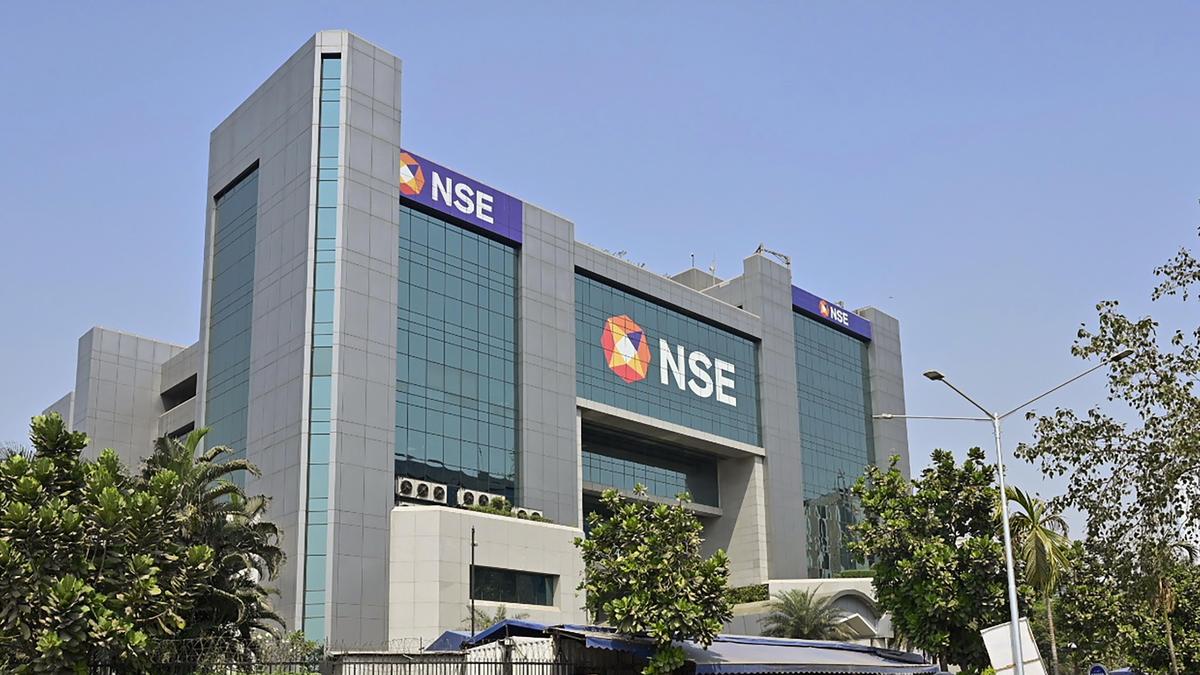
The Indian commodity market has seen many ups and downs, but few have lasted as long or become as complicated as the National Spot Exchange Limited (NSEL) case. What started as an effort to make commodity trading modern and transparent slowly turned into a long dispute involving unpaid investor money, questions about broker behaviour, and confusion over rules.
For thousands of investors, this was not just a financial problem, it meant years of waiting, court cases, and uncertainty. The issue became an example of how things can go wrong when proper checks are missing. Now, after twelve years of legal battles, a major settlement of Rs. 1,950 crore has finally brought the case to an end. For many people, it brings relief and helps restore trust in India’s commodity markets.
Establishment of NSEL
63 Moons Technologies Limited is a global leader in delivering next-generation technology solutions, platforms, and innovations to create digital markets and marketplaces that enhance price discovery and transaction efficiency across various industry sectors. The company focuses on developing technology-driven solutions, user-friendly financial platforms, and digital marketplaces in India and internationally, thereby extending India’s presence in global markets.
The company has established Greenfield financial markets and ecosystem ventures across India, the Middle East, Africa, and Southeast Asia. Its notable exchange platforms include the Multi Commodity Exchange of India Limited (MCX), Singapore Mercantile Exchange (SMX), Indian Energy Exchange Ltd. (IEX), Dubai Gold and Commodities Exchange (DGCX), and Bourse Africa Limited (formerly Global Board of Trade), all of which are recognized as leading institutions in their respective regions.
The National Spot Exchange Limited (NSEL) was created by 63 Moons Technologies (then Financial Technologies India Limited) as a national-level, electronic spot exchange, designed to bridge gaps between farmers, traders, processors, exporters, and investors. The platform aimed to ensure transparency, efficiency, and fair price discovery in commodity markets. By providing a delivery-based online trading mechanism with standardized contracts, NSEL offered farmers an opportunity to sell their produce directly, bypassing the inefficiencies and middlemen of traditional mandis.
Unlike conventional mandis, which were governed by state Agricultural Produce Market Committee (APMC) acts and often affected by information asymmetry, NSEL provided grading and sorting facilities, ensuring farmers received fairer prices for their crops. Contracts were primarily of one-day duration, with actual deliveries typically allowed between two and eight days. This system not only improved farmers’ access to national markets but also enabled warehouse receipt financing, boosting their storage and selling capacity without raising consumer prices.
NSEL positioned itself as the missing link between futures markets and traditional mandis. While futures exchanges helped in price discovery and risk management, the actual delivery of underlying commodities was often negligible. Mandis, in contrast, were inefficient in ensuring fair price realization. NSEL bridged these gaps, drastically reducing entry and exit costs, annual fees, and operational expenses, and offering a platform that integrated modern technology with traditional agricultural trading.
Overview of the NSEL Crisis
The National Spot Exchange Limited (NSEL) was established with the objective of promoting price transparency, improving price realization for farmers, and creating arbitrage opportunities for investors and the trading community. Its purpose was to integrate with existing markets and provide synergy across traditional marketing systems.
As an electronic platform, NSEL aimed to bring together three key participants: commodity sellers, forward buyers, and investors who financed the transactions. Upon settlement, buyers were required to pay the price differential, often at a premium to the spot price, ensuring that investors received their returns. Investors benefited by earning more than standard interest on the capital they provided.
Spot exchanges like NSEL were permitted to offer one-day forward contracts on the condition that members did not engage in short selling and that outstanding positions at the end of the trading day would result in actual delivery.
However, investigations by the Forward Markets Commission (FMC) revealed that NSEL allowed trading without verifying the existence of the underlying commodities, effectively enabling short sales by members. By the end of July 2013, FMC investigations found that several contracts with settlement periods exceeding 11 days were non-transferable specific delivery contracts, violating the Forward Contract Regulation Act, 1952.
This situation escalated when the total unsettled payouts as of 29 July 2013 reached approximately Rs. 5,400 crore, leading to the suspension of trading and indefinite postponement of new contract launches.
Further scrutiny revealed that NSEL had violated the demutualization principle, as it was effectively controlled by the Financial Technologies group promoted by Jignesh Shah. The NSEL crisis involved a complex interplay of borrowers, sellers, and investors. Investigations showed that investors and speculators exploited forward contracts for profit.
Initially, a group of commodity stockists sold warehouse receipts to investors in exchange for immediate payments. These investors subsequently entered into buyback arrangements, returning the commodities to stockists after 25-35 days, ignoring the provisions of the Forward Markets Regulation Act, and earning returns of 12-14 percent. This arrangement allowed stockists to access immediate liquidity while providing investors with higher-than-normal returns.
It emerged that only 24 members, identified as planters, processors, or borrowers, were actively involved in these trades. These members claimed to own processing plants for commodities. For instance, NK Proteins owned a facility for processing castor seeds in Kadi, Gujarat, where the Kadi Castor Seeds contract was settled within an NSEL warehouse located at the plant. Processors like NK Proteins, along with 23 others, executed trades involving selling at T+2 and buying back at T+23, generating substantial returns.
The real issues arose when investors entered buyback arrangements without verifying the existence of underlying stock, effectively selling commodities that may have been fictitious. While demutualization is intended to prevent such conflicts, the Financial Technologies group had vested interests in NSEL, which compounded the problem. The combination of inadequate knowledge of the underlying instruments and lack of transparent information contributed to the Rs. 5,400 crore in unsettled payouts as of 29 July 2013.
Role of Involved Parties
Brokers played a central role in the NSEL saga, often accused of mis-selling contracts with promises of assured returns. The Securities and Exchange Board of India (SEBI) issued show-cause notices to top brokers, including Anand Rathi Commodities, India Infoline Commodities (IIFL), Geofin Comtrade, Motilal Oswal Commodities, and Phillip Commodities, questioning their “fit and proper” status under the Stock Brokers Regulations.
These brokers allegedly modified client codes, conducted multiple trades, misrepresented risks, and funded clients to facilitate NSEL transactions. The Economic Offences Wing (EOW) of Mumbai Police found evidence of hawala transactions, benami trades, and client code manipulation, while the NSEL Investors’ Action Group accused brokers of mis-selling arbitrage products.
Several brokers, including Motilal Oswal, acted under power of attorney to manage clients’ NSEL commodities, opening dematerialized accounts without securing warehouse receipts. Criminal charges of cheating, forgery, and conspiracy were filed against brokers like Amit Rathi, C.P. Krishnan, and Chintan Modi. By February 2019, SEBI declared five major brokerages “not fit and proper” for commodity trading. Finally, in November 2022, SEBI barred these brokerages from registering as commodity brokers for six months, signaling a strong regulatory stance.
FTIL promoters, particularly Jignesh Shah publicly stated on 5 August 2013 that all defaulters had committed to settling dues in front of the FMC and brokers. He was arrested by the EOW on 7 May 2014 but later granted bail as investigations traced the money trail solely to the 22 defaulters, with no direct involvement of Shah or NSEL.
Anjani Sinha, the sacked CEO and MD, initially accepted responsibility in his affidavit but later retracted it during custodial interrogation, alleging coercion by Shah. However, in statements to the Enforcement Directorate, Sinha reaffirmed his first affidavit, underscoring the complex legal battles surrounding the promoters’ role.
Auditors were also implicated. Mukesh P. Shah, a maternal uncle of Jignesh Shah, served as both internal and external auditor for NSEL at different times. Investigations revealed potential insider trading in FTIL shares and involvement in transactions totaling Rs. 1,352 crore, where companies linked to FTIL executed trades and exited without losses. The Mumbai Police indicated that his close association and auditing role compromised the integrity of NSEL operations.
Regulatory bodies and the government faced criticism for delayed action. The Ministry of Consumer Affairs issued a show-cause notice to NSEL on 27 April 2012, to which NSEL promptly responded, yet no immediate action was taken. The FMC recommended sudden closure of the exchange on 12 July 2013, which led to a payment default of approximately Rs. 5,600 crore. Subsequent clarifications by FMC highlighted inconsistencies in regulatory guidance, contributing to the prolonged crisis.
Settlement: Closure After 12 Years
After more than a decade of uncertainty, a resolution was finally achieved. In November 2024, brokers associated with the NSEL Investors Forum proposed a one-time settlement of Rs. 1,950 crore to investors, representing 42 percent of the principal amount of Rs. 4,650 crore. Initial support from the NSEL Investor Action Group (NIAG) was withdrawn due to disagreements over operational expenses and collateral arrangements.
By mid-December 2024, 65 percent of NSEL Investors Forum members approved the settlement, which was subsequently endorsed by the FTIL board. On 6 March 2025, 63 Moons Technologies Limited, NSEL’s parent company, formalized the settlement agreement, ensuring disbursement under the supervision of an escrow agent and monitoring authority. This arrangement released 63 Moons from ongoing legal proceedings while assigning the traders’ rights against defaulters to the company.
By November 2025, the settlement received overwhelming approval, with 92.81 percent of traders by number and 91.35 percent by value voting in favor. A total of 5,682 traders benefited, marking a landmark resolution to India’s longest-running commodity market dispute. The settlement not only provided relief to investors but also restored credibility and stability in India’s commodity trading ecosystem.
-Manan Gangwar
Disclaimer

The views and investment tips expressed by investment experts/broking houses/rating agencies on tradebrains.in are their own, and not that of the website or its management. Investing in equities poses a risk of financial losses. Investors must therefore exercise due caution while investing or trading in stocks. Trade Brains Technologies Private Limited or the author are not liable for any losses caused as a result of the decision based on this article. Please consult your investment advisor before investing.
The post NSEL Vs Commodity Traders: How the 12 yr battle finally ended in a ₹1,950 Cr settlement appeared first on Trade Brains.
What's Your Reaction?