




















































Adani Ports Q4 Estimates: How Has The Hormuz Blockade Affected This Adani Group Stock?
Synopsis: As results approach, investors are watching how the port major performs amid global disruptions and steady cargo trends. While some pressure areas remain, expectations point to stable performance supported by diversification and strong contracts. The upcoming results could offer clearer signals on growth, margins, and overall execution. Adani Ports and Special Economic Zone has […] The post Adani Ports Q4 Estimates: How Has The Hormuz Blockade Affected This Adani Group Stock? appeared first on Trade Brains.

Synopsis: As results approach, investors are watching how the port major performs amid global disruptions and steady cargo trends. While some pressure areas remain, expectations point to stable performance supported by diversification and strong contracts. The upcoming results could offer clearer signals on growth, margins, and overall execution.
Adani Ports and Special Economic Zone has informed exchanges that its Board of Directors will meet on Thursday, April 30, 2026, to consider and approve the audited financial results for the quarter and financial year ended March 31, 2026. The Board will also consider recommending a dividend, if any, for the financial year 2025-26. Here are the estimates from Motilal Oswal investors should consider before the results.
What Are The Expectations?
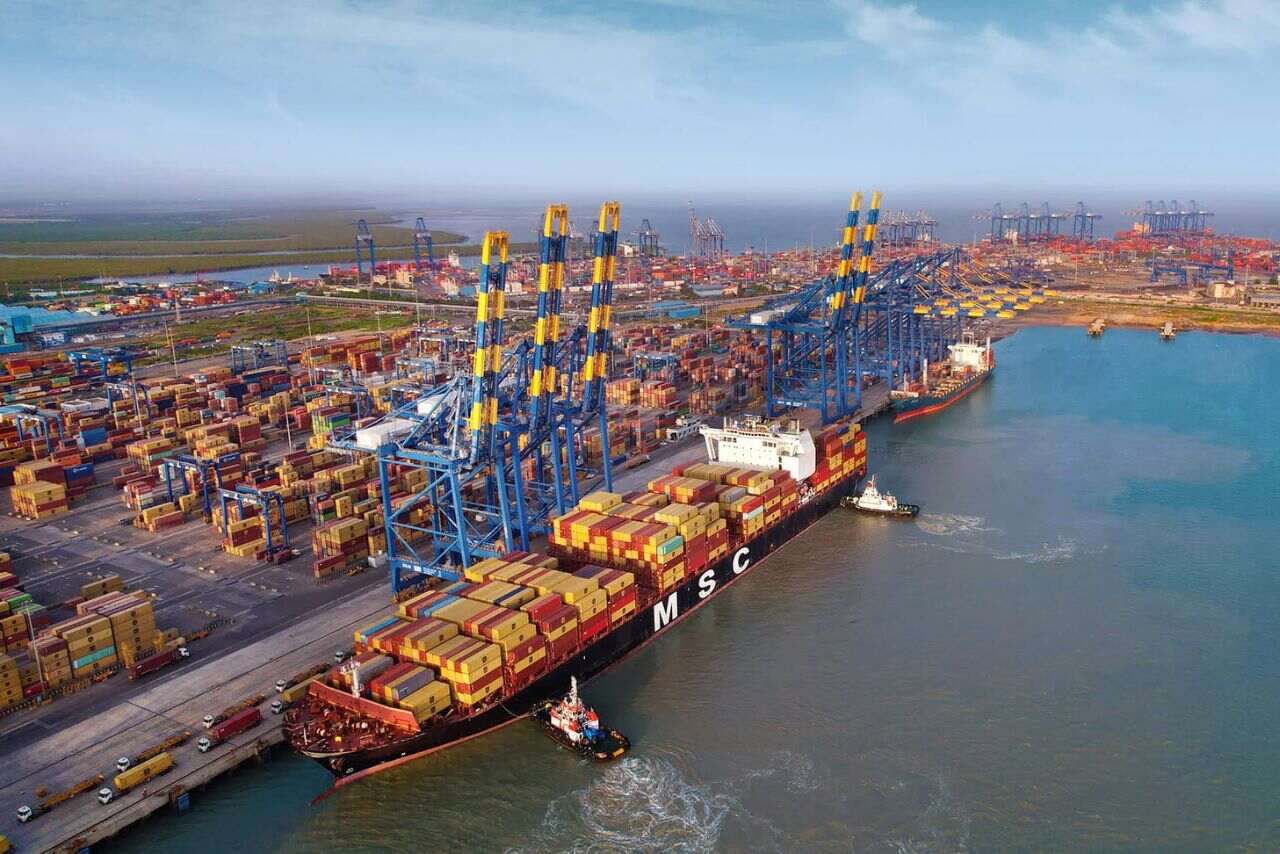
According to Motilal Oswal, global shipping disruptions following tensions around the Strait of Hormuz have led to slower cargo movement, vessel rerouting, and operational inefficiencies across ports. Indian ports, in particular, are witnessing unscheduled cargo inflows due to diverted vessels, which has resulted in congestion and export backlogs. This disruption is significant given India’s dependence on crude imports. However, the impact on Adani Ports and Special Economic Zone (APSEZ) is expected to remain relatively limited due to its lower exposure to liquid cargo.
Motilal Oswal highlighted that liquid cargo contributes less than 10 percent of APSEZ’s overall volumes. Within this segment, crude oil handling accounted for around 6 percent in FY25, which moderated to approximately 5 percent during the first nine months of FY26. Gas volumes continue to remain a small contributor at around 2 percent in both periods. Given this relatively low exposure, the brokerage expects that any disruption in crude or gas shipments is unlikely to materially affect the company’s overall performance. In addition, the ramp-up of the NQXT terminal, supported by a long-term take-or-pay contract of around 40 million tonnes, is expected to offset any near-term weakness in liquid cargo volumes.
On the industry front, all-India major port volumes grew by around 3.5 percent year-on-year in February 2026 and approximately 8 percent year-to-date in FY26. This growth was supported by strong traction in petroleum, container traffic, and coking coal, although the latter was aided by a low base. Non-major ports reported a relatively modest growth of around 3 percent year-on-year, driven mainly by steady container volumes, which increased by about 5 percent year-on-year, while petroleum, oil, and lubricants volumes remained largely flat.
Against this backdrop, APSEZ continues to outperform the broader industry. The company reported volume growth of around 14 percent in the fourth quarter of FY26 up to February and approximately 11 percent growth during the first nine months of FY26. This growth has been primarily driven by strong container throughput, which has increased by nearly 20 percent year-to-date until February. On the other hand, coal volumes have remained under pressure over the past few quarters due to weak demand for imported coal and operational disruptions at Tata Power’s Mundra plant. Despite this, the impact on profitability has been limited, as APSEZ benefits from take-or-pay contracts in its coal cargo segment, which help protect EBITDA even during periods of lower volumes.
Motilal Oswal also noted that APSEZ handled around 40 million tonnes of liquid cargo in FY25, accounting for approximately 9 percent of its total volumes. Within this, crude cargo contributed about 6 percent, while gas accounted for roughly 2 percent. The company also handled approximately 10.6 million metric tonnes at the Port of Haifa, which represents around 2 percent of its total volumes. While geopolitical tensions could create some temporary pressure on these segments, the brokerage believes that the overall impact will remain contained due to their relatively small contribution to total volumes. Additionally, any disruption at the Haifa port is unlikely to materially affect consolidated throughput given its limited share.
From a capacity expansion perspective, the company has recently commissioned the Haldia bulk terminal in March 2026, which has a capacity of around 4 million tonnes per annum. The terminal is supported by a dedicated rail line and an integrated conveyor system, which is expected to improve operational efficiency and support future volume growth.
Looking ahead, Motilal Oswal expects APSEZ to benefit from improving earnings visibility and limited downside risks from ongoing geopolitical tensions. The company’s diversified cargo mix, along with the integration of ports and logistics operations, is helping increase customer wallet share and cargo stickiness. The acquisition and ramp-up of new assets such as NQXT, combined with the expansion of its end-to-end logistics capabilities, are expected to support sustained growth. These initiatives align with the company’s long-term ambition of becoming India’s largest integrated transport utility by 2029, with logistics and marine segments emerging as key growth drivers alongside its core ports business.
What Are The Estimates?
On the financial front, Motilal Oswal expects APSEZ to report net sales of Rs. 8,901.81 crore in Q4FY26, which reflects a decline of around 8.27 percent quarter-on-quarter compared to Rs. 9,704.59 crore reported in Q3FY26. However, on a year-on-year basis, revenue is expected to grow by approximately 4.87 percent from Rs. 8,488.44 crore reported in Q4FY25. EBITDA is estimated at Rs. 5,860.94 crore, with an EBITDA margin of 65 percent, indicating continued strength in operating performance supported by stable contracts and operating leverage.
In terms of profitability, reported PAT is expected to come in at Rs. 2,826.27 crore, which implies a decline of around 7.12 percent quarter-on-quarter compared to Rs. 3,042.93 crore reported in Q3FY26. On a year-on-year basis, PAT is expected to decline marginally by around 6.51 percent from Rs. 3,023.10 crore reported in Q4FY25. Despite the slight moderation in profitability, margins remain strong, with PAT margin estimated at 31.74 percent.
Overall, while global disruptions and segment-specific challenges such as weaker coal volumes persist, APSEZ’s diversified cargo profile, contractual protections, and continued expansion in ports and logistics are expected to support stable financial performance in the near term.
Disclaimer: The views and investment tips expressed by investment experts/broking houses/rating agencies on tradebrains.in are their own, and not that of the website or its management. Investing in equities poses a risk of financial losses. Investors must therefore exercise due caution while investing or trading in stocks. Trade Brains Technologies Private Limited or the author are not liable for any losses caused as a result of the decision based on this article. Please consult your investment advisor before investing.
The post Adani Ports Q4 Estimates: How Has The Hormuz Blockade Affected This Adani Group Stock? appeared first on Trade Brains.
What's Your Reaction?