












































.png)


Budget Day vs Dalal Street: Which Nirmala Sitharaman Budget Saw the Strongest Rally?
Synopsis: The article examines how Indian stock markets reacted to every Union Budget presented by Nirmala Sitharaman from 2019 to 2026, comparing intraday moves, sector trends and policy themes across years. As India’s Union Budget has evolved over decades, only a few finance ministers have had the chance to shape the country’s economic policy through […] The post Budget Day vs Dalal Street: Which Nirmala Sitharaman Budget Saw the Strongest Rally? appeared first on Trade Brains.

Synopsis: The article examines how Indian stock markets reacted to every Union Budget presented by Nirmala Sitharaman from 2019 to 2026, comparing intraday moves, sector trends and policy themes across years.
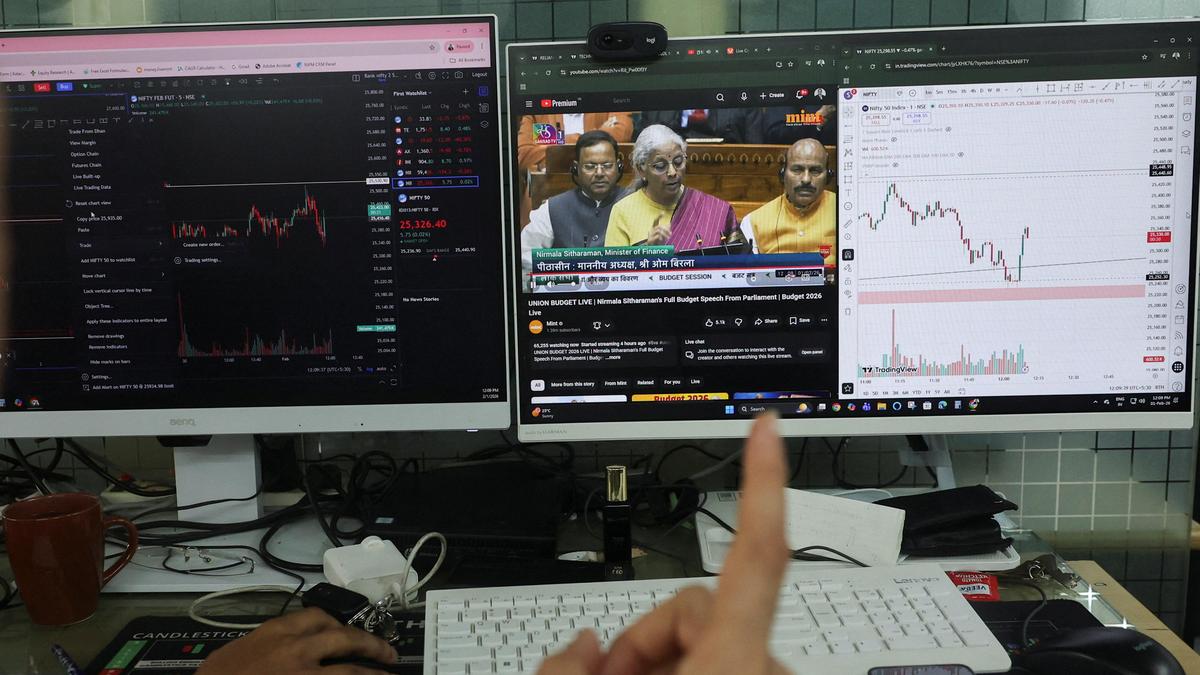
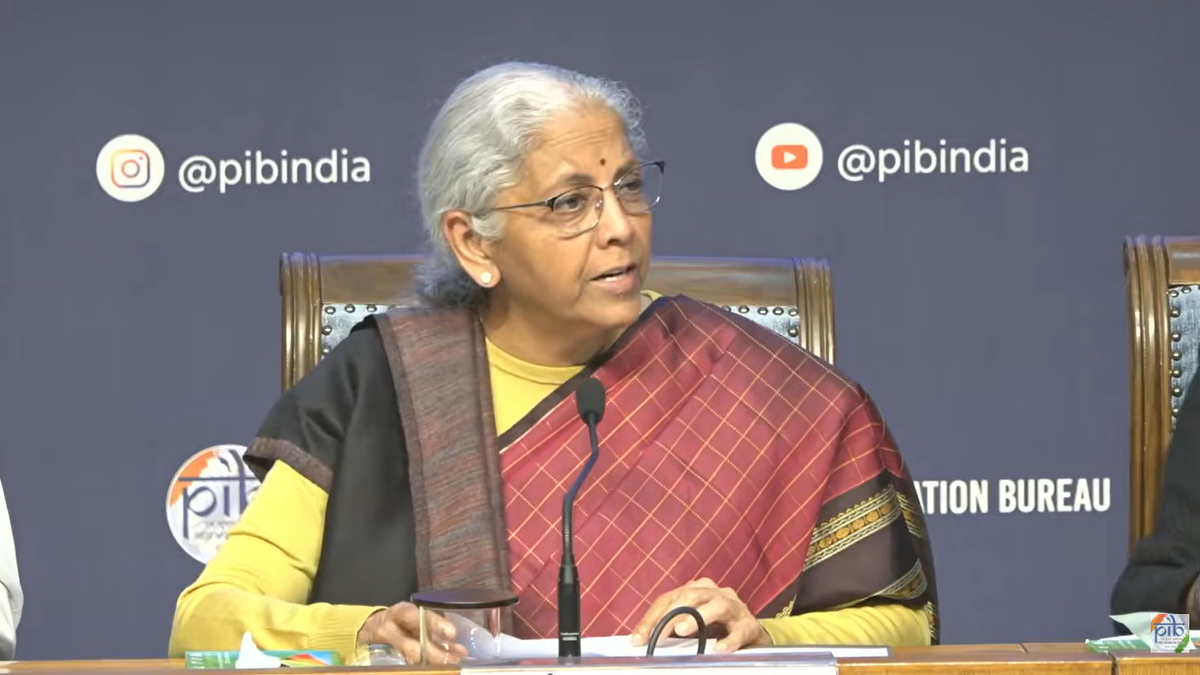
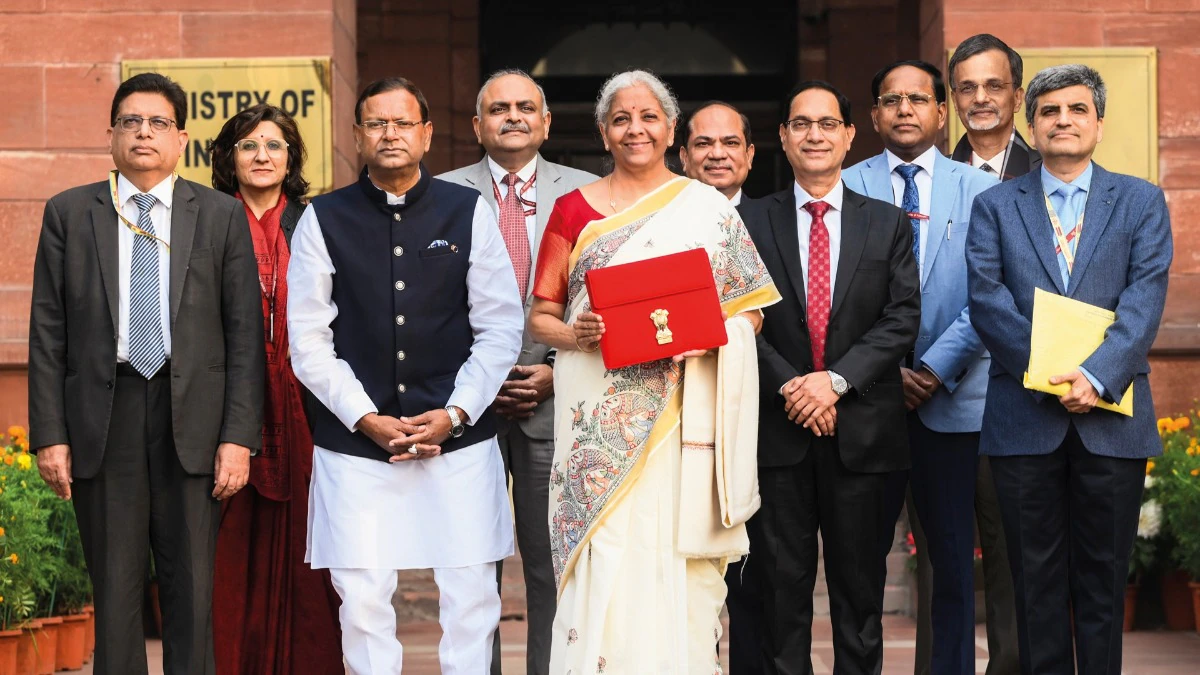
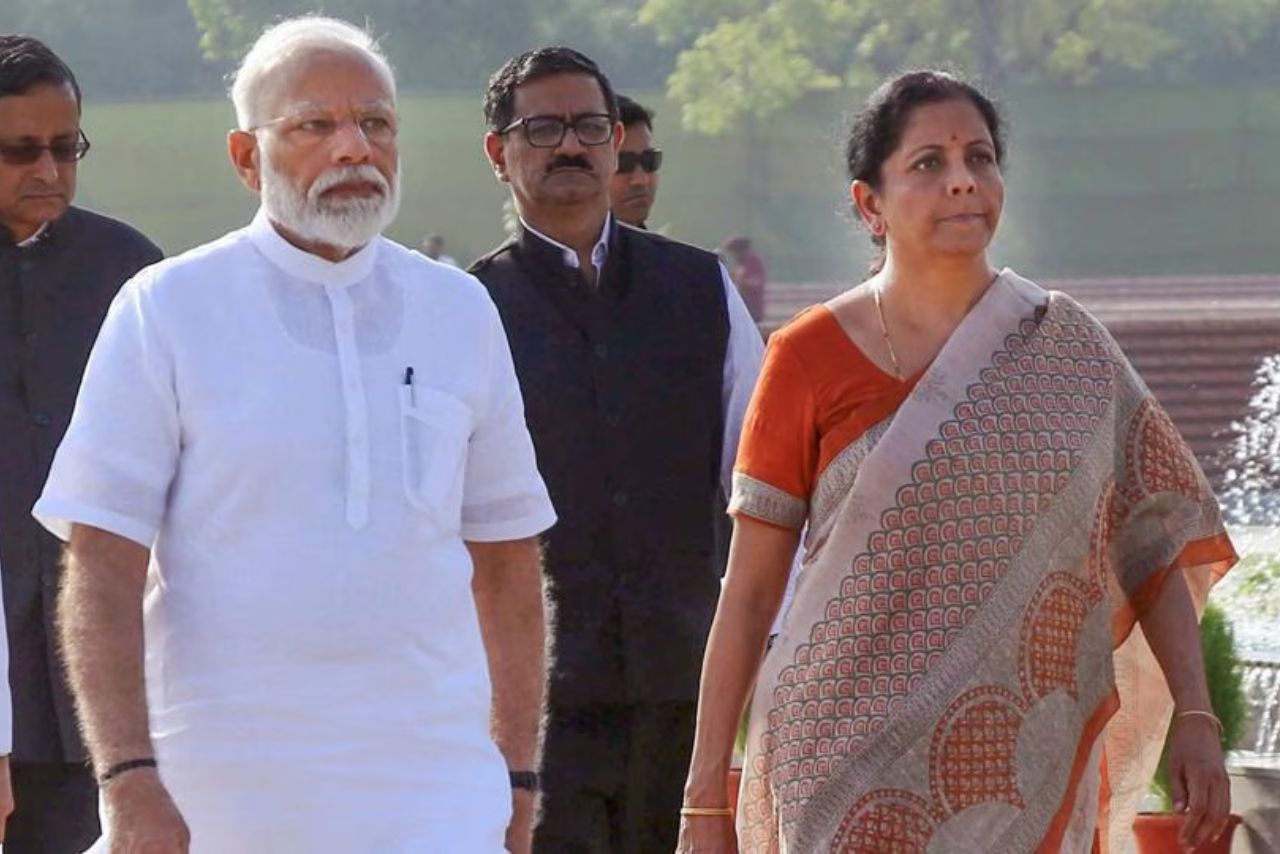
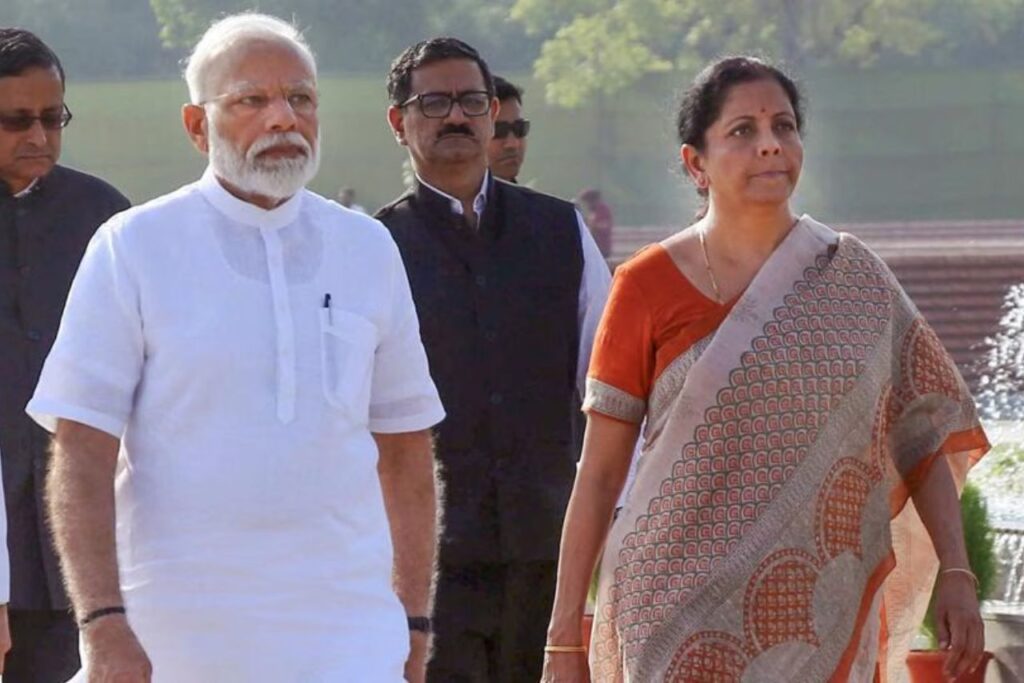
As India’s Union Budget has evolved over decades, only a few finance ministers have had the chance to shape the country’s economic policy through multiple Budget speeches. On February 1, 2026, when Nirmala Sitharaman stood up in the Lok Sabha to present the Union Budget, she was not just announcing taxes and government spending but also strengthening her place in history as India’s longest-serving Finance Minister to deliver consecutive Budgets. Since first presenting the Budget in 2019, she has now delivered nine Budgets in a row, including full and interim ones, all of which are officially counted in government records.
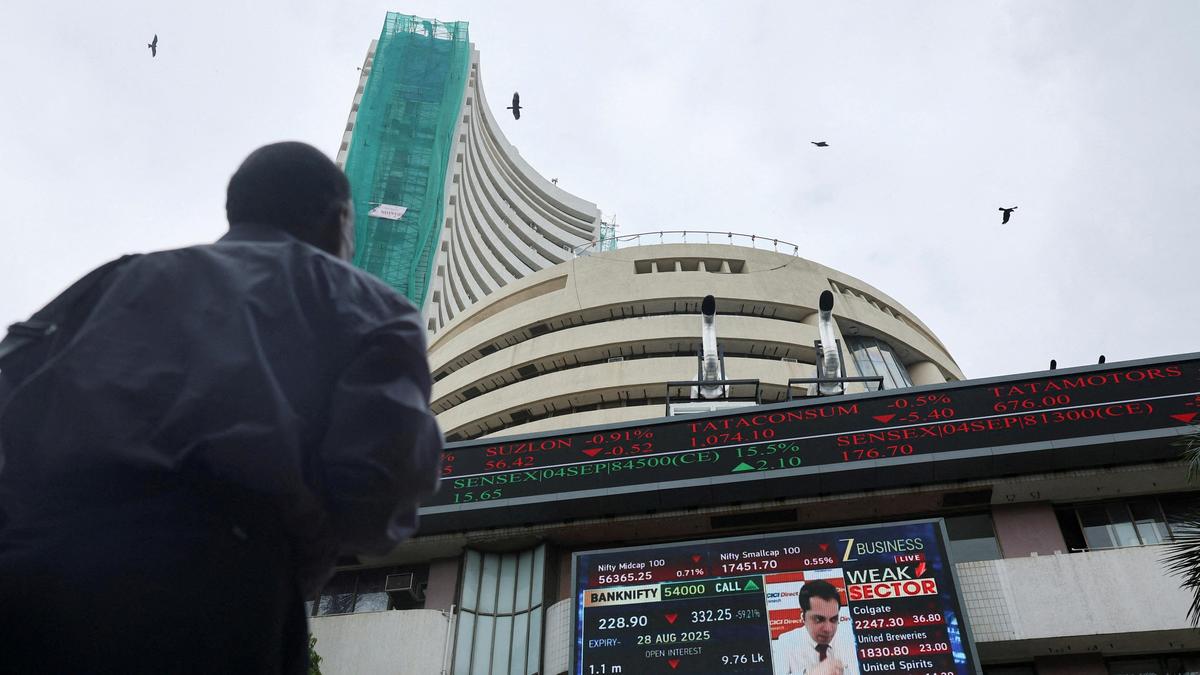
However, Dalal Street reacted negatively to this year’s Budget. On Budget day, Indian equity markets ended sharply lower after a highly volatile session, with the Nifty slipping below 24,900. By the close, the Sensex was down 1,546.84 points, or 1.88 percent, at 80,722.94, while the Nifty fell 495.20 points, or 1.96 percent, to 24,825.45. Market breadth was weak, with 2,299 stocks declining compared to 1,673 advancing.
Broader markets also saw heavy selling, as the Nifty Midcap index dropped 2.2 percent and the Smallcap index declined 2.8 percent. Most sectors ended in the red, led by PSU banks, metals, capital goods and oil and gas, while only the IT sector managed to stay in positive territory, supported by gains in stocks like TCS, Infosys and Wipro.
Against this backdrop of a sharp Budget-day fall in 2026, it becomes even more interesting to look back at past Union Budgets, to understand how investor sentiment has shifted over time.
Union Budget 2019
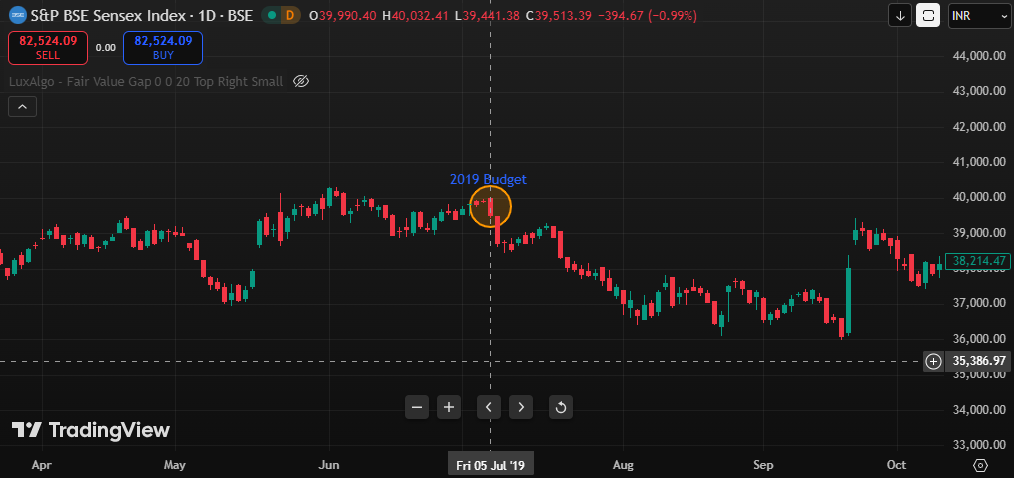
On July 5, 2019, the Sensex opened at Rs. 39,990.40, touched an intraday high of Rs. 40,032.41 and ended the day at Rs. 39,513.39, marking a decline of 0.99 percent. The next trading day, July 8, saw a further fall of 2.01 percent, with the index closing at Rs. 38,720.57. The Nifty 50 opened at Rs. 11,964.75, climbed to a high of Rs. 11,981.75 and closed at Rs. 11,811.15, down 1.14 percent. This was Nirmala Sitharaman’s first Union Budget in the second term of the Modi government, presented on July 5, 2019.
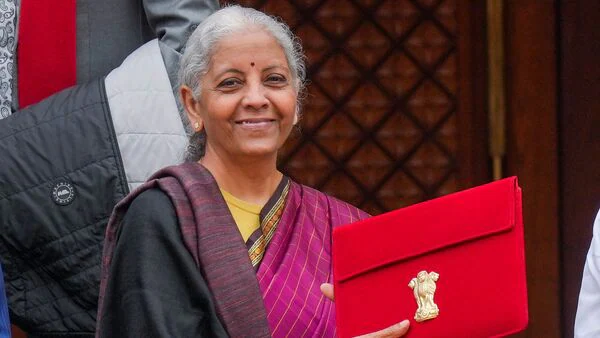
In her maiden Budget, the Finance Minister shifted away from the colonial briefcase tradition and carried Budget documents in a traditional ‘Bahi-Khata’. The government focused on infrastructure development and attracting foreign investment. Taxes for the super-rich were increased, while personal income tax rates for common citizens were kept unchanged, along with additional relief for home loan borrowers to support affordable housing.
Sitharaman expressed confidence that India could become a USD 5 trillion economy in the coming years. She highlighted improvements in transport infrastructure through schemes like UDAN, Sagarmala and BharatMala, announced heavy investment needs for railways, and noted a sharp reduction in NPAs. The Budget also proposed One Nation One Card for travel, a new model rental law, cheaper digital payments, and lower GST for electric vehicles.
Union Budget 2020
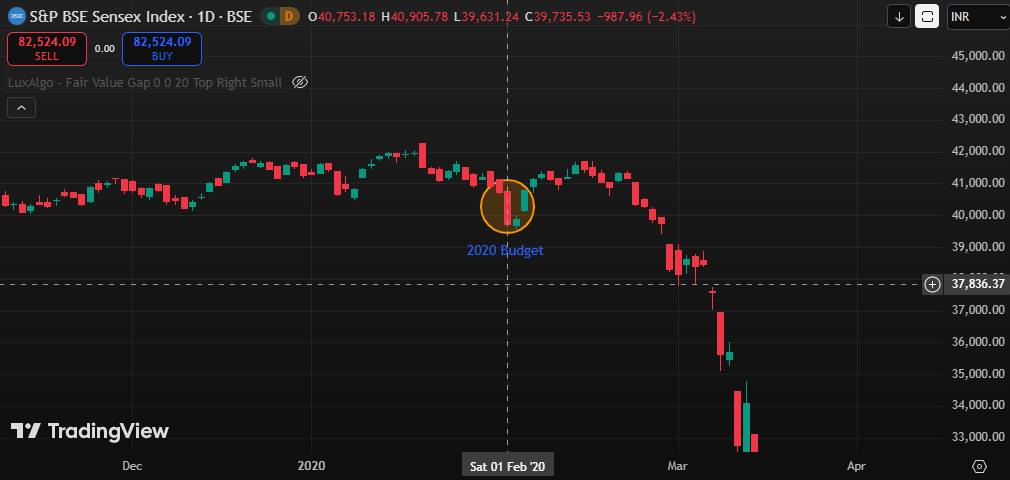
On February 1, 2020, the Sensex opened at Rs. 40,753.18, reached a high of Rs. 40,905.78 but closed sharply lower at Rs. 39,735.53, recording a fall of 2.43 percent. The Nifty 50 started the day at Rs. 11,939, rose to Rs. 12,017.35 and ended at Rs. 11,661.85, down 2.51 percent. This was the second Budget of the Modi-led NDA government’s second term, and at 2 hours and 41 minutes, it became the longest Budget speech in Indian history.
The Budget overhauled income tax slabs, significantly lowering rates for middle-income earners who opted for the new tax regime without exemptions. Healthcare spending was sharply increased, while a major push was given to transport infrastructure through airport expansion, highway monetisation and progress on the Mumbai-Ahmedabad high-speed rail project.
The government announced a 16-point plan for farmers with Rs. 2.83 lakh crore allocation for agriculture and rural development. Manufacturing incentives were introduced for mobile phones, electronics and semiconductors, along with support for data centres and quantum technology. Deposit insurance cover was raised to Rs. 5 lakh, five smart cities were proposed, and the Delhi-Mumbai Expressway target was reiterated.
Union Budget 2021
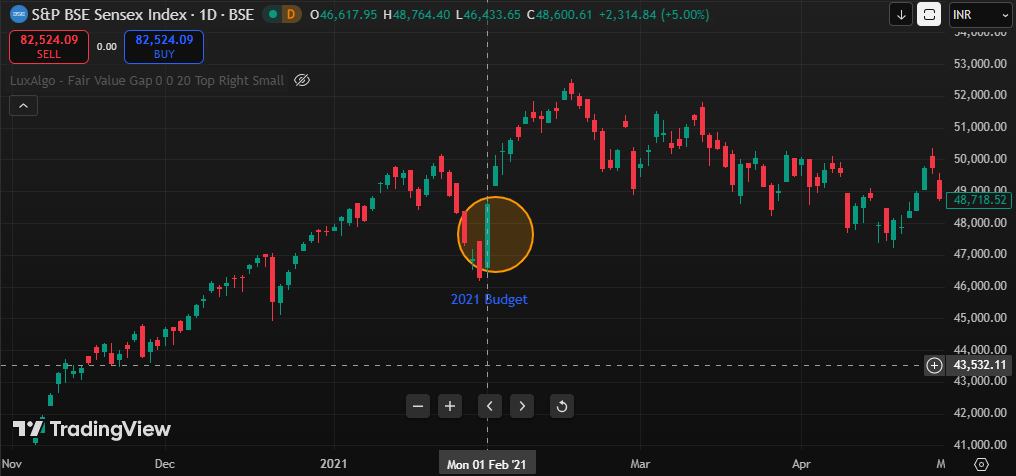
On February 1, 2021, markets delivered a strong rally as the Sensex opened at Rs. 46,617.95, surged to a high of Rs. 48,764.40 and closed at Rs. 48,600.61, up 5 percent. The Nifty 50 opened at Rs. 13,758.60, climbed to Rs. 14,336.35 and settled at Rs. 14,281.20, rising 4.74 percent. Banking and financial stocks led the rally, with IndusInd Bank jumping 14.75 percent, while only three Sensex stocks ended in the red.
The Budget more than doubled healthcare spending and sharply increased capital expenditure to Rs. 5.54 lakh crore to support economic recovery after the pandemic. Importantly, the Finance Minister made no changes to personal income tax, capital gains tax or securities transaction tax, and also did not impose any special COVID tax, which was seen as a major positive by investors. An agri infrastructure cess was introduced on some goods, but customs duties were cut so that consumer prices would not rise. A fuel cess was imposed but offset through a reduction in excise duty, keeping petrol and diesel prices neutral.
The government projected a fiscal deficit of 9.5 percent for the current year and 6.8 percent for 2021-22. Major reforms included the proposed privatisation of two public sector banks, clearing the path for the LIC IPO, raising FDI in insurance to 74 percent, and setting up a Development Finance Institution to boost long-term infrastructure funding.
Union Budget 2022
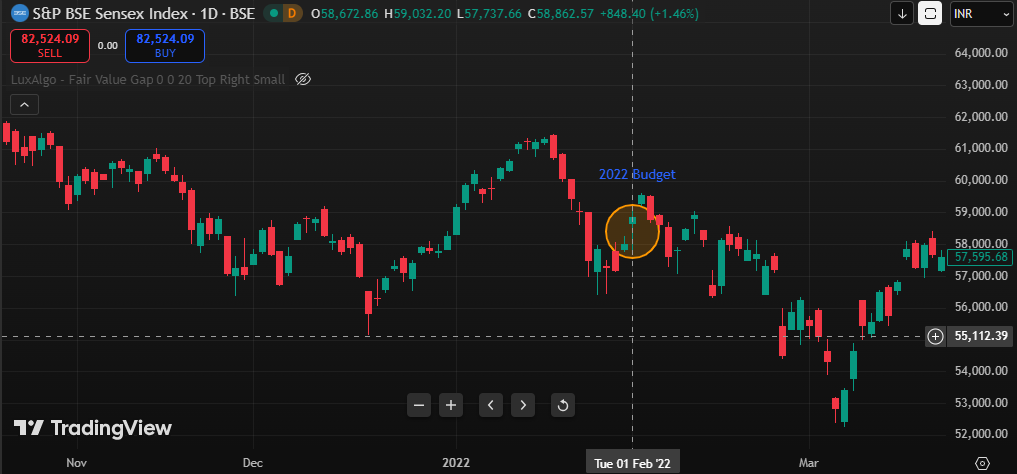
On February 1, 2022, the Sensex opened at Rs. 58,672.86, touched a high of Rs. 59,032 and closed at Rs. 58,862.57, up 1.46 percent. The Nifty 50 started at Rs. 17,529.45, climbed to Rs. 17,622.40 and ended at Rs. 17,576.85, gaining 1.37 percent. The Budget laid out four broad priorities centred on growth, infrastructure, productivity and green development.
A major focus was PM Gati Shakti, which aimed to expand highways by 25,000 km, build multimodal logistics parks, launch cargo terminals, promote local products at railway stations and develop ropeways in hilly regions through public–private partnerships.
The government emphasised inclusive development through farm procurement, support for MSMEs, expansion of rural water and housing schemes, and rollout of core banking in post offices. The Budget also pushed green financing through sovereign green bonds, proposed a new arbitration centre at GIFT City, and announced the launch of India’s Central Bank Digital Currency.
Union Budget 2023
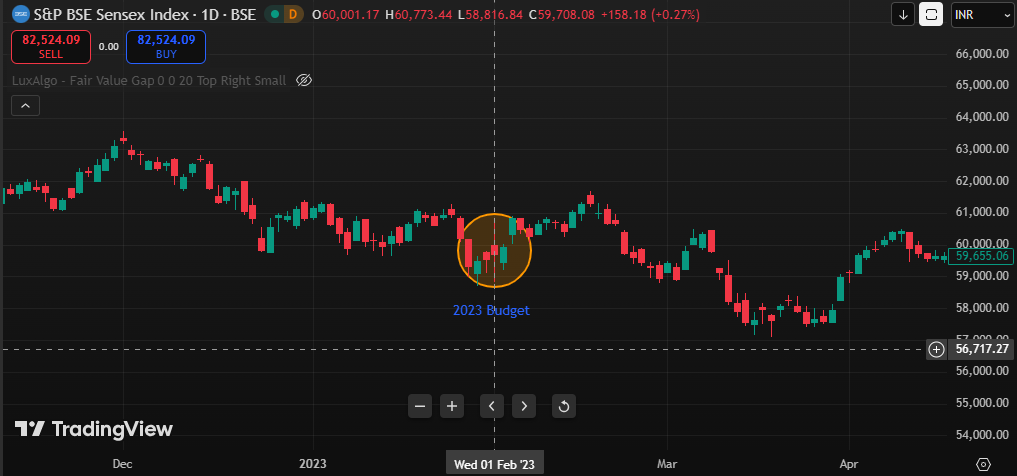
On February 1, 2023, the Sensex opened at Rs. 60,001.17, rose to Rs. 60,773.44 but closed lower at Rs. 59,708.08, falling 0.27 percent. The Nifty 50 opened at Rs. 17,811.60, hit a high of Rs. 17,972.20 and ended at Rs. 17,616.30, down 0.26 percent. Market reaction was mixed as investors weighed tax and customs changes.
The Budget introduced a simplified new income tax regime with fewer slabs, raised the tax-free limit to Rs. 3 lakh and increased rebate eligibility to Rs. 7 lakh. Customs duties were cut on components for TV panels, mobile manufacturing and lab-grown diamonds, while taxes were raised on cigarettes, gold articles and rubber products.
The government allocated Rs. 35,000 crore for energy transition and net-zero projects, while railways received a record capital outlay of Rs. 2.4 lakh crore. PM Awas Yojana allocation was increased by 66 percent, and overall capital spending was raised to Rs. 10 lakh crore, equivalent to 3.3 percent of GDP.
Union Budget 2024
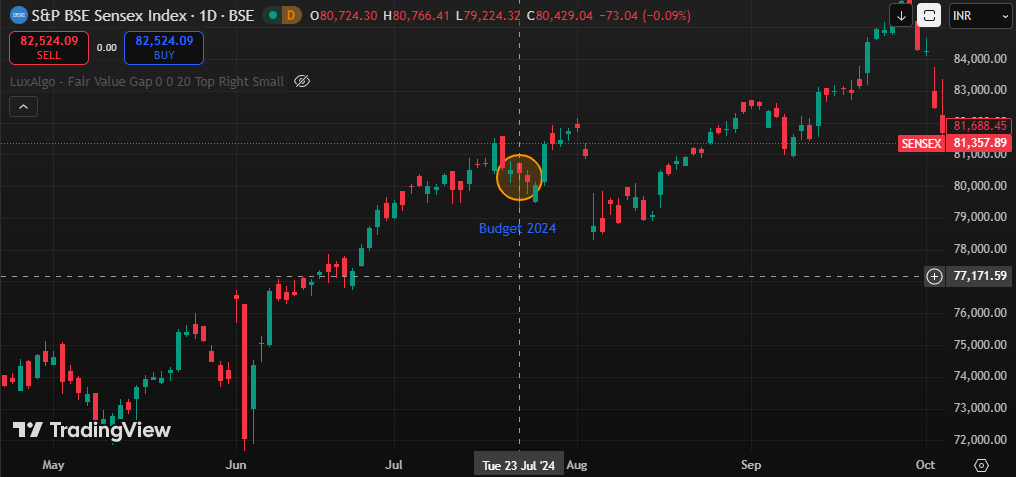
The full Union Budget on July 23, 2024 saw the Sensex open at Rs. 80,724.30, touch Rs. 80,766.41 and close at Rs. 80,429.04, down 0.09 percent. Earlier, the Interim Budget on February 1, 2024 had the Sensex open at Rs. 71,998.78, rise to Rs. 72,151.02 and close at Rs. 71,645.30, declining 0.15 percent. On the July Budget day, the Nifty opened at Rs. 24,568.90, hit Rs. 24,582.55 and ended at Rs. 24,479.05, down 0.12 percent.
This was the first Budget of Modi 3.0, focused on employment, skilling and agriculture. The government announced five new skilling schemes covering 4.1 crore youth, including wage support for first-time formal employees and internships in top 500 companies. Three employment-linked incentive schemes were also launched.
Agriculture received Rs. 1.52 lakh crore, with plans to expand natural farming to one crore farmers. The government pledged housing for three crore families, simplified FDI rules, announced student loan support, allocated funds for Andhra Pradesh, Bihar and proposed regional development through the Purvodaya initiative.
Union Budget 2025
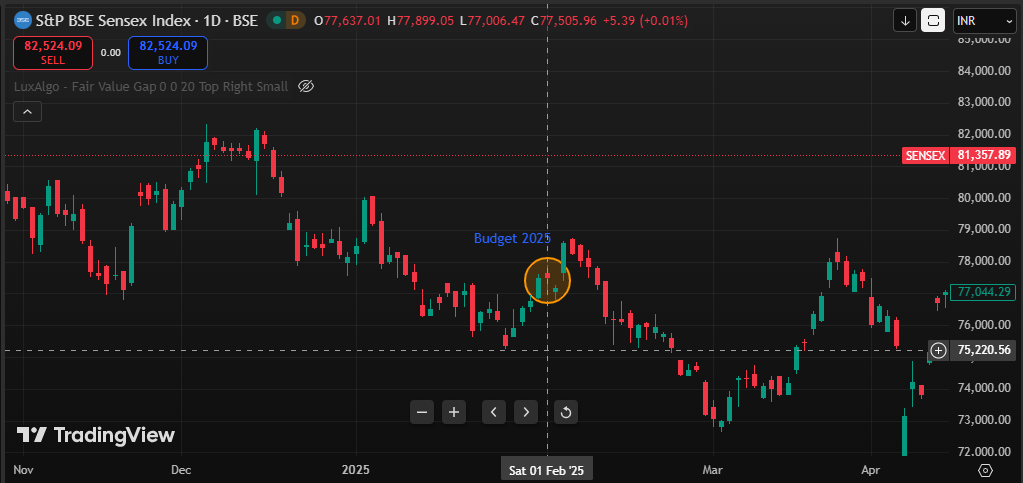
On February 1, 2025, the Sensex opened at Rs. 77,637.01, touched a high of Rs. 77,899.05 and closed at Rs. 77,505, falling 0.01 percent. The Nifty 50 opened at Rs. 23,528.60, reached Rs. 23,632.45 and ended at Rs. 23,482.15, down 0.11 percent. The Budget focused on tax relief, innovation, urban development and job creation.
Major income tax relief was provided by raising rebate eligibility to Rs. 12 lakh under the new regime and revising slabs. TDS thresholds were increased, especially for senior citizens and rental income, reducing compliance burden. Customs duties were cut on life-saving medicines, EV battery components and surimi, while duties on flat-panel displays were raised.
The government announced Rs. 10,000 crore each for urban infrastructure and startup incubation, along with a Rs. 20,000 crore fund for private-sector research and innovation. A special scheme for the footwear and leather sector was launched with a target of creating 22 lakh jobs and boosting exports beyond Rs. 1.1 lakh crore.
Looking back at all of Nirmala Sitharaman’s Budgets, it is clear that market reaction has varied widely depending on expectations, economic conditions and global sentiment at the time. Some Budgets triggered sharp selling, like in 2019, 2020 and 2026, while others saw only mild moves, as in 2023, 2024 and 2025. The standout year remains 2021, when the Sensex jumped around 5 percent on Budget day, making it the strongest Budget-day rally under Sitharaman so far. In the end, a Budget can influence sentiment for a day, but longer-term market direction depends more on earnings, policy stability and the broader economy.
Disclaimer: The views and investment tips expressed by investment experts/broking houses/rating agencies on tradebrains.in are their own, and not that of the website or its management. Investing in equities poses a risk of financial losses. Investors must therefore exercise due caution while investing or trading in stocks. Trade Brains Technologies Private Limited or the author are not liable for any losses caused as a result of the decision based on this article. Please consult your investment advisor before investing.
The post Budget Day vs Dalal Street: Which Nirmala Sitharaman Budget Saw the Strongest Rally? appeared first on Trade Brains.
What's Your Reaction?