







































Chemical Stocks That Supply to Defence Companies for Missile Manufacturing
Synopsis: India’s missile boom isn’t just about BrahMos and Akash, but rather it’s about the chemicals powering them. And the real opportunity may lie deeper in the supply chain. Discover the hidden defence stocks most investors are missing. Everyone is talking about BrahMos, but nobody is discussing what’s inside it. Operation Sindoor didn’t just change […] The post Chemical Stocks That Supply to Defence Companies for Missile Manufacturing appeared first on Trade Brains.

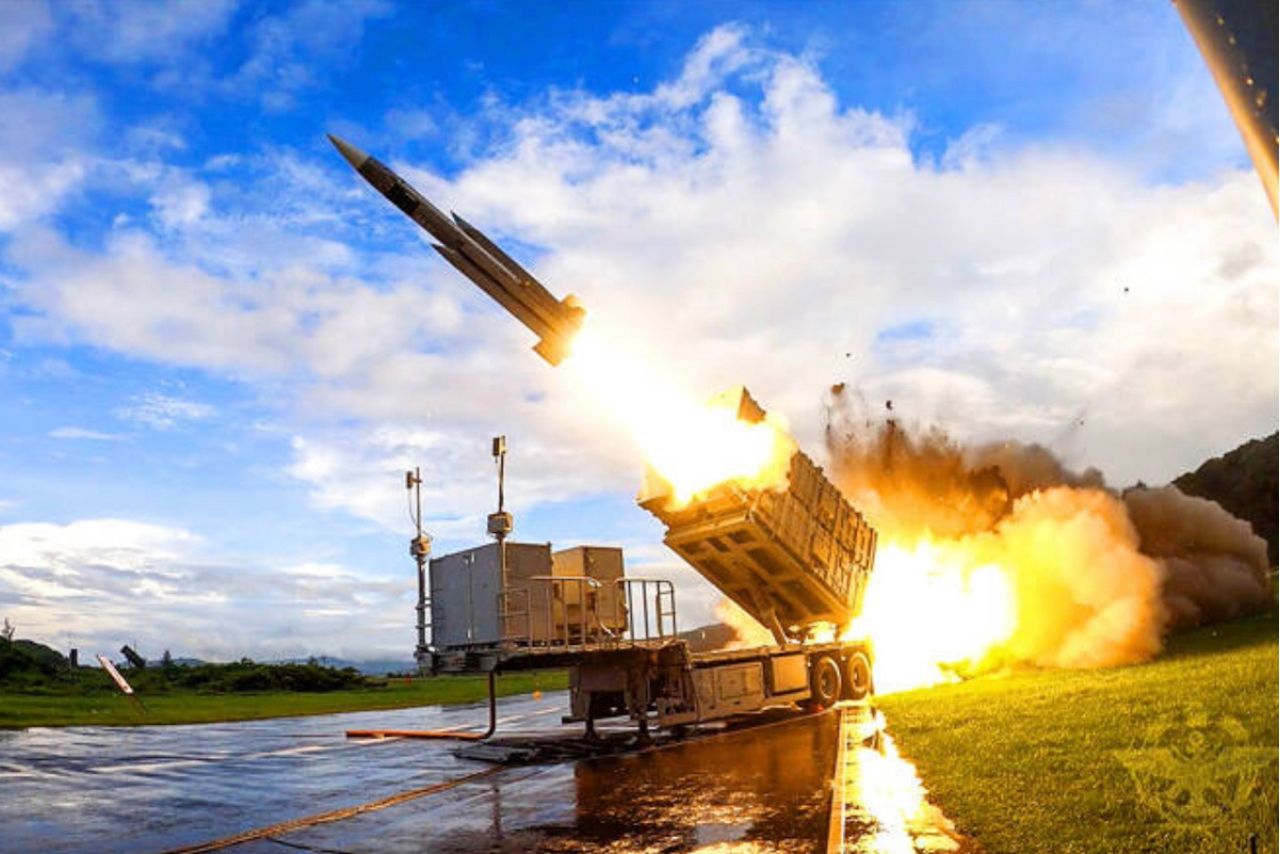
Synopsis: India’s missile boom isn’t just about BrahMos and Akash, but rather it’s about the chemicals powering them. And the real opportunity may lie deeper in the supply chain. Discover the hidden defence stocks most investors are missing.
Everyone is talking about BrahMos, but nobody is discussing what’s inside it. Operation Sindoor didn’t just change India’s military approach; it sparked an entire industry that most investors and analysts are ignoring. When India’s indigenous missiles flew in May 2025, and the world watched them perform, the focus turned to the platforms, like the Akash interceptors and the BrahMos cruise missile. But here’s the important question: what actually powers a missile? The answer is chemistry. Specifically, defence chemicals, and India has one of the most overlooked industrial opportunities of the decade.
The Fuel Behind the Fire
Think of a missile like a very complicated firework. It has a body, a brain, and a heart. The body is metal, the brain is electronics, but what about the heart? That’s pure chemistry. Without the right chemicals mixed in just the right way, a BrahMos is simply an expensive metal tube: no fuel, no propellant, no explosive, no missile.
Each BrahMos missile draws its power from a solid rocket booster filled with composite propellant, typically a blend of Ammonium Perchlorate and HTPB. Similar chemistry is present in other systems like Pinaka, Agni, and Akash. For the warhead, engineers use high-energy explosives such as RDX, HMX, or TNT, often mixed into PBX formulations.
The exact formulas remain confidential, but the key point is this: India now manufactures these energetic materials domestically. Defence chemicals aren’t just another component—they’re central to India’s indigenous missile industry.
India’s defence production reached a record Rs 1,50,590 crore in FY25, an 18 percent increase from the previous year and nearly 90 percent higher than FY20. Exports hit Rs 23,622 crore, which is a 34-fold rise from a decade ago. Missiles, radars, and naval systems are being sent to more than 100 countries. Yet, almost nobody is monitoring the companies supplying the essential chemicals for this entire boom.
Why Operation Sindoor Changed Everything
In May 2025, India deployed its indigenous systems, BrahMos, Akash, and an integrated air defence grid, in a real-world combat scenario. It was neither a test nor a simulation, but rather real targets, and those systems worked, and precisely the world took an eye on it to see how capable these warheads were.
The outcome was a surge of serious buyer interest. The Philippines is negotiating for nine additional BrahMos batteries, in addition to the $375 million (Rs 3,300 crore) deal already delivered. Indonesia signed a Rs 3,800 crore BrahMos export agreement. Two other undisclosed nations placed orders worth about $450 million combined. Vietnam is reportedly finalizing a $700 million deal. Saudi Arabia, the UAE, and Argentina are in active talks.
What matters for the chemicals story is that every single BrahMos battery exported creates downstream demand across the entire chemical supply chain. Propellant, explosive filler, initiator systems, pyrotechnics, i,e., a complete missile requires all of these from multiple suppliers, manufactured to very strict standards, and aren’t one-time purchases. Missiles get used and need to be replaced, warheads are consumed, and propellant is expended. Each export order is a recurring chemical order for years to come.
The Defence Minister himself stated that Operation Sindoor’s success is expected to increase exports to Rs 30,000 crore by March 2026, and the government’s long-term target is Rs 50,000 crore by 2029. Goldman Sachs projects 32 percent annual earnings growth for India’s private defence firms between FY25 and FY28. That growth story is built, molecule by molecule, on defence chemicals.
In this, we will discuss some of the companies that have a direct and indirect way of contributing to this ecosystem. By indirect means, while no direct defence linkage is disclosed, these companies operate in chemical segments structurally relevant to aerospace materials. Any incremental localisation of defence-grade fluoropolymers would position such players as potential beneficiaries, though current revenue exposure remains unclear.
Solar Industries India
Solar Industries has emerged as India’s largest private energetic materials manufacturer with increasing exposure to defence. Founded in 1995, Solar Industries is now one of the largest commercial explosives companies in the world, with manufacturing in nine countries and a vast presence in over 90 countries.
On the defence side, Solar manufactures a wide range of products. HMX (High Melting Explosive), RDX (Research Department Explosive), and TNT, which are the core high explosives used in missile warheads, artillery, and grenades. Their composite propellants are used for BrahMos boosters, Pinaka rockets, Akash missiles, and even ISRO’s PSLV strap-on motors. The company received Technology Transfer (ToT) approval from DRDO for the mass production of BrahMos solid propellant boosters back in 2018, making it one of the earliest private sector players to enter this specialized area.
Solar Industries, through its subsidiary Economic Explosives Limited (EEL), is developing some advanced explosives, such as HEMEX. The company says HEMEX delivers more power than traditional TNT formulations. While they haven’t revealed exactly where these new materials will be used, like specific missile warheads, it’s clear they’re targeting modern defense requirements.
The company has a robust order book worth over Rs 21,000 crore, of which the majority of the orders belong to the defence segment. That’s a strong indicator they’re committed to military explosives and propellant systems. Additionally, Solar Group recently signed a major agreement with the Maharashtra government to set up a large defense and aerospace hub in Nagpur, planning to invest around Rs 12,700 crore over the next several years.
Premier Explosives
If Solar is the king of high explosives, Premier Explosives Limited, located in Secunderabad, is the leading provider of solid propellants. Founded in 1980, Premier is the first and only private Indian company qualified to manufacture solid propellants for the country’s defence and space programs. For propellants used in missiles like QRSAM, MRSAM, BrahMos, Akash, Astra, and the Agni series, if you want an Indian-made, privately manufactured propellant, there is only one option.
Premier’s MD T.V. Chowdary confirmed in a recent earnings call that any BDL or BEL production of QRSAM, for example, must use Premier’s propellant, as there is no alternative supplier.
The company also manages the solid propellant plant at ISRO’s Sriharikota launch facility and DRDO’s Solid Fuel Complex at Jagdalpur under Government-Owned, Contractor-Operated (GOCO) contracts. It recently received an order from BrahMos Aerospace for propellant casting and assembly of BrahMos boosters and has secured a series of international export orders for rocket motors and defence explosives.
Defence and space now make up 84 percent of Premier’s revenue, up from just 55 percent in FY22. The company is investing Rs 864 crore in a new manufacturing facility in Rayagada, Odisha, which is one of the largest investments in its history, to be constructed in three phases over ten years.
Indirect play
Rashtriya Chemicals & Fertilisers
Rashtriya Chemicals & Fertilisers Limited (RCF) may not feature “defence” in its marketing, but it is a critical, invisible supporter of India’s missile program. RCF, a Government of India PSU operating out of Trombay and Thal in Maharashtra, RCF.
The company produces nitric acid and other industrial chemicals that are essential precursors in explosive and propellant manufacturing. While defence is not a disclosed business vertical, such upstream chemical capacity forms part of the broader energetic materials ecosystem that supports India’s defence industry.
Anupam Rasayan India
Anupam Rasayan operates in fluorination chemistry and high-performance specialty chemicals, areas that are becoming increasingly important in aerospace and advanced materials. They have recently secured a Rs 1,697 crore Letter of Intent with a US multinational to supply high-performance polymers, primarily for aerospace and defence.
They haven’t disclosed exactly where these materials will be used, but advanced fluorinated polymers typically go into high-temperature composites, insulation, and other aerospace applications. With India advancing projects like the AMCA (Advanced Medium Combat Aircraft), and global aerospace companies seeking suppliers beyond China, Anupam Rasayan’s strength in fluorochemicals positions them at the center of these developments. They are emerging as a key player in the high-performance materials that underpin defence and aerospace.
Gujarat Fluorochemicals
Gujarat Fluorochemicals Limited leads India’s fluoropolymer industry. They’ve been in the business for over 30 years, focusing deeply on the science of fluorine. Their product range is broad, such as PTFE, PVDF, FEP, FKM, etc. Whether it’s aerospace equipment, high-temperature seals, corrosion-resistant components, or advanced electronics, you’re likely to encounter these materials.
GFL’s reach goes beyond India. They operate multiple plants nationwide and even own a fluorspar mine in Morocco, allowing them to control their raw materials from the source. While they don’t openly discuss specific defense contracts, it’s well understood in the industry that fluoropolymers are essential in modern aerospace and defense technologies. Additionally, GFL is increasing PVDF production for electric vehicle batteries, placing them at the intersection of advanced materials and the growing demand for cleaner energy.
Why This Story Is Structural, Not Cyclical
Many people argue that defense investment stories are unpredictable and cyclical. You receive a big order, complete it over a few years, and then wait for the next one, but this argument does not apply here.
India has set a requirement of 68 percent local content for all new defense purchases. The defense budget is Rs 6.81 lakh crore for FY26, which is a 9.5 percent increase compared to last year. The goal is to achieve Rs 3 lakh crore in domestic production and Rs 50,000 crore defence exports by 2029. Additionally, two dedicated Defense Industrial Corridors are being developed in Uttar Pradesh and Tamil Nadu, with a combined investment of over Rs 91,000 crore and the potential to create 50,000 jobs.
The SRIJAN portal lists more than 30,000 items for local production. Additionally, BrahMos has been tested in real combat, which is the strongest selling point in a market where buyers prefer to avoid risks.
Each of these factors creates ongoing, growing, long-term demand for the chemicals that support India’s defense systems. When a country purchases a BrahMos battery, it commits to buying propellants and warhead chemicals for that system’s entire operational life. The missile gets the attention while the chemicals secure the contract.
In summary, India’s defense narrative has received significant media coverage. The platforms are prominent, export deals are announced with enthusiasm, and the geopolitical implications are widely discussed. But the chemicals that drive that narrative remain largely unnoticed.
Following Operation Sindoor, the world is not just acknowledging India’s military capability; they are purchasing it, and with each missile sold leads to ongoing chemical orders.
Every new battery deployed by a foreign military builds long-term supply chain relationships with Indian chemical companies. Businesses and investors who recognize the defense chemicals value chain early will gain the most from this long-term growth period. However, the investor must strictly conduct their due diligence before investing, and he/she should properly understand the value chain of this industry.
Disclaimer: The views and investment tips expressed by investment experts/broking houses/rating agencies on tradebrains.in are their own, and not that of the website or its management. Investing in equities poses a risk of financial losses. Investors must therefore exercise due caution while investing or trading in stocks. Trade Brains Technologies Private Limited or the author are not liable for any losses caused as a result of the decision based on this article. Please consult your investment advisor before investing.
The post Chemical Stocks That Supply to Defence Companies for Missile Manufacturing appeared first on Trade Brains.
What's Your Reaction?