












































Crisil Share: How Is it Scaling Its Research, Analytics and Solutions (RAS) segment?
Synopsis: Crisil’s transformation from a ratings-focused entity to an analytics-driven firm highlights the rising importance of its RAS segment. Strong FY26 growth, margin expansion, AI integration, and global diversification position RAS as a scalable growth engine. This strategic shift enhances resilience, client engagement, and long-term value creation beyond the cyclical ratings business. The transformation journey of […] The post Crisil Share: How Is it Scaling Its Research, Analytics and Solutions (RAS) segment? appeared first on Trade Brains.

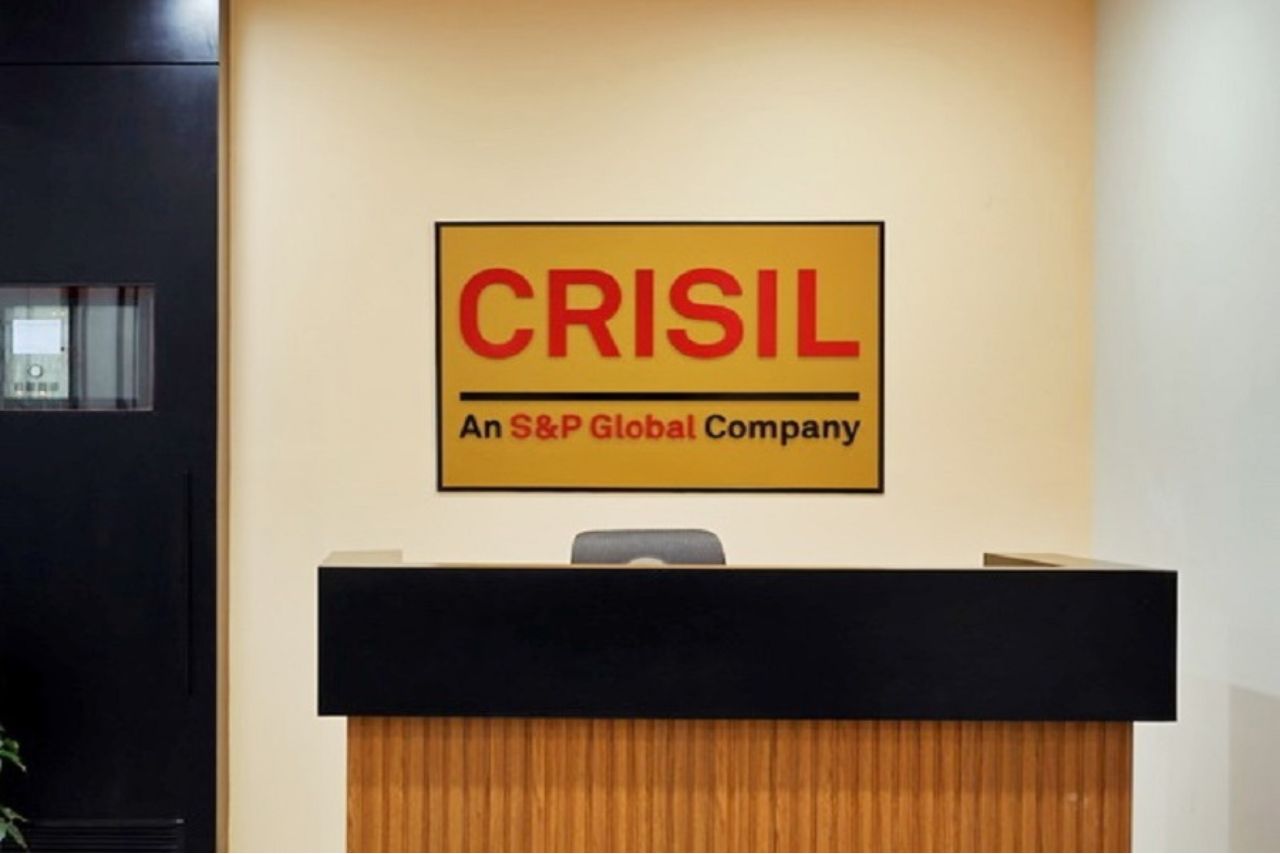
Synopsis: Crisil’s transformation from a ratings-focused entity to an analytics-driven firm highlights the rising importance of its RAS segment. Strong FY26 growth, margin expansion, AI integration, and global diversification position RAS as a scalable growth engine. This strategic shift enhances resilience, client engagement, and long-term value creation beyond the cyclical ratings business.
The transformation journey of Crisil from India’s first credit rating agency to becoming an analytics giant is the result of a strategic change in direction, which focuses on increasing emphasis on the RAS segment. Although rating is fundamental to the business model of Crisil, the recent analyst discussion brings out the point that RAS is now gaining more importance in terms of scalability, technology-driven solutions, and global reach. The reasons behind this are structural changes in customer requirements, AI, and Crisil’s proprietary domain expertise.
The Strategic Shift from Ratings to Analytics-Led Growth
Over the years, Crisil has been building its brand through the ratings service, gaining advantage from fluctuations in the cycles of bonds’ issuances and credit growth. Nevertheless, such fluctuations, evidenced by the steady rate of bonds in 2025 and a decline of 12% in Q1 2026 because of the geopolitical situation, have made the company recognise the importance of diversifying its business.
The RAS division is a representation of the strategy of diversification. While ratings depend strongly on cycles of bond issuances, RAS has steady demand, as it provides continuous needs of customers in risk solutions, analytics, and insights. As noted by the management, the strategy does not mean replacing ratings with another service but rather expanding the wallet share of the client.
Strong Financial Momentum Backed by Scalable Demand
The financial performance of the RAS division demonstrates its increasing importance. For the first quarter of FY26, the division posted a YoY increase of 34.9% in revenue, achieving an income of Rs 735.6 crore.
The division also saw a much higher growth rate of 66.9% for its segment profit, with the margin rising from 18.3% last year to 22.7%. This large margin expansion can be attributed to operating leverage, which is a measure of scalability.
With the rising revenue level, the additional cost for providing analytics and technology solutions will become more affordable, particularly with digital platforms and AI support. Throughout the entire year of FY25, revenue expanded by 9.4% to Rs 2,572.4 crores, with the margin increasing to 22%.
Multi-Engine Growth Across Global and Domestic Businesses
A multi-engine approach is another critical characteristic of the RAS division of CRISIL. Growth does not depend on one business model, but it is spread across three verticals that include Crisil Coalition Greenwich, Crisil Integral IQ, and Crisil Intelligence.
The advantage of the Crisil Coalition Greenwich unit lies in its strong collaboration with worldwide corporate and investment banks, which is particularly evident during turbulent market times when the demand for benchmarking and insights grows significantly.
At the same time, the CRISIL Integral IQ unit targets risk, regulatory, and transformation services for worldwide financial institutions. Lastly, CRISIL Intelligence concentrates on analytics, consulting, and data-driven solutions both for local and international clients. In this way, Crisil leverages the different cycles of demand, such as capital markets transactions, regulatory needs, and digital transformation.
Deepening Client Engagement and Expanding Wallet Share
Another key mechanism for growing RAS is increasing client engagement. Crisil works with more than 11,400 clients in over 40 countries, such as international investment banks, asset management firms, and financial organizations in India.
The objective here is not only to add new clients but also to capture additional wallet share from current clients. An example would be a large international bank which uses the services of Coalition Greenwich for benchmarking and whose services could also be sold by Integral IQ or Crisil Intelligence.
This is a smart tactic, as it takes advantage of existing relationships and client trust. As Crisil’s leadership states, the ideal scenario is for each client to have numerous services along the chain, thus increasing per-client income.
Expanding into New Geographies and Client Segments
In addition to strengthening existing partnerships, Crisil is moving forward to explore new territories and markets. With the inclusion of Canada via PriceMetrix, Crisil is now focusing more on wealth management, which is a rapidly growing niche worldwide.
Similarly, apart from exploring the major global banks, Crisil is looking for business in regional banks as well as in the private markets. The private markets and regional banks constitute untapped markets, and with the help of Crisil’s expertise and analytics solutions, these areas can yield good results for the company. Geographically, Crisil is moving toward West Asia and Asia, thus increasing diversification and revenues.
AI as a Core Differentiator in Scaling RAS
An important characteristic of the RAS of CRISIL involves their extensive use of generative AI. Instead of keeping AI as a separate activity altogether, the company is incorporating it into its domain-led approach.
Products such as GenEye Credit and DeepMind, which extracts loan data, and Crisil i360 demonstrate how AI is being productised. Similarly, the Myron AI is a product from Crisil that helps businesses deploy AI-based processes quickly.
As far as the benefits of AI are concerned, these can be seen at several levels, including quick turnaround, better insights, enhanced client experience, and revenue generation capabilities. The most important thing about Crisil’s use of AI is that the company makes sure that the process is done responsibly.
Leveraging Operating Leverage and Business Mix for Margin Expansion
Expansion of the RAS segment margin is not only dependent on growth in revenues but is also facilitated by a favorable change in the business mix and operational efficiencies.
Apart from that, operating leverage is another critical driver. As platforms and artificial intelligence tools become more widespread, the marginal cost of serving additional clients reduces.
Thus, Crisil can continue earning profits despite making heavy investments in high-margin segments such as artificial intelligence, recruiting talented individuals, and exploring other geographies. As can be seen, it forms a positive feedback loop where higher revenue translates into improved margins, which are then used for investments.
Resilience Amid Macro Uncertainty and Industry Shifts
The overall macro environment around the world continues to be unpredictable, with political risks and economic instability affecting client behaviour. However, such environments always increase the demand for insight, risk assessments, and analytics – an area RAS has strengths in.
According to Crisil, even amid uncertainty, there is robust client engagement and no drop-off in projects. Instead, the necessity of gaining greater insights during turbulent times can be a demand pull for RAS services.
Also, diversification among the clients’ types like regional banks and alternative markets reduces the impact on revenue of reduced discretionary spend by global banks.
Building a Future-Ready Growth Engine
In essence, the growth of the RAS division can be linked to the strategic intent of CRISIL – its desire to shift from being a rating agency to become a global leader in analytics.
Crisil currently has more than 5,000 employees and a growing digital base that positions it favourably to leverage data into insight generation.
The focus on domain-driven AI, cross-selling, international expansion, and client-centricity makes RAS more than just an additional activity; it is the backbone of its growth plans.
Conclusion: Beyond Ratings, Towards Scalable Intelligence
Crisil moving forward from ratings is an indication of the way in which the entire ecosystem of financial services is transforming. With increasing amounts of data analysis, decision-making and complexities, there will be growing opportunities for businesses that offer analytics, insights, and risk management solutions.
RAS, with its impressive financials, scalability, and innovations through AI technologies, is well equipped to capitalise on such opportunities. Whereas ratings would serve as stability, it is through RAS that Crisil will achieve transformation into a global insights business.
Disclaimer: The views and investment tips expressed by investment experts/broking houses/rating agencies on tradebrains.in are their own, and not that of the website or its management. Investing in equities poses a risk of financial losses. Investors must therefore exercise due caution while investing or trading in stocks. Trade Brains Technologies Private Limited or the author are not liable for any losses caused as a result of the decision based on this article. Please consult your investment advisor before investing.
The post Crisil Share: How Is it Scaling Its Research, Analytics and Solutions (RAS) segment? appeared first on Trade Brains.
What's Your Reaction?