













































Grid Acquires Kakinada I Transmission SPV to Build ₹1,618 Cr Green Hydrogen Grid Corridor
Synopsis: A government-owned transmission major has completed the acquisition of a project special purpose vehicle after emerging as the successful bidder under the tariff-based competitive bidding route, taking on a 765kV corridor built to evacuate power for green hydrogen and green ammonia projects in Andhra Pradesh. The headline deal value of about Rs.20.5 crore is […] The post Grid Acquires Kakinada I Transmission SPV to Build ₹1,618 Cr Green Hydrogen Grid Corridor appeared first on Trade Brains.

Synopsis: A government-owned transmission major has completed the acquisition of a project special purpose vehicle after emerging as the successful bidder under the tariff-based competitive bidding route, taking on a 765kV corridor built to evacuate power for green hydrogen and green ammonia projects in Andhra Pradesh. The headline deal value of about Rs.20.5 crore is administrative rather than commercial, with the real capital commitment arriving once construction begins.
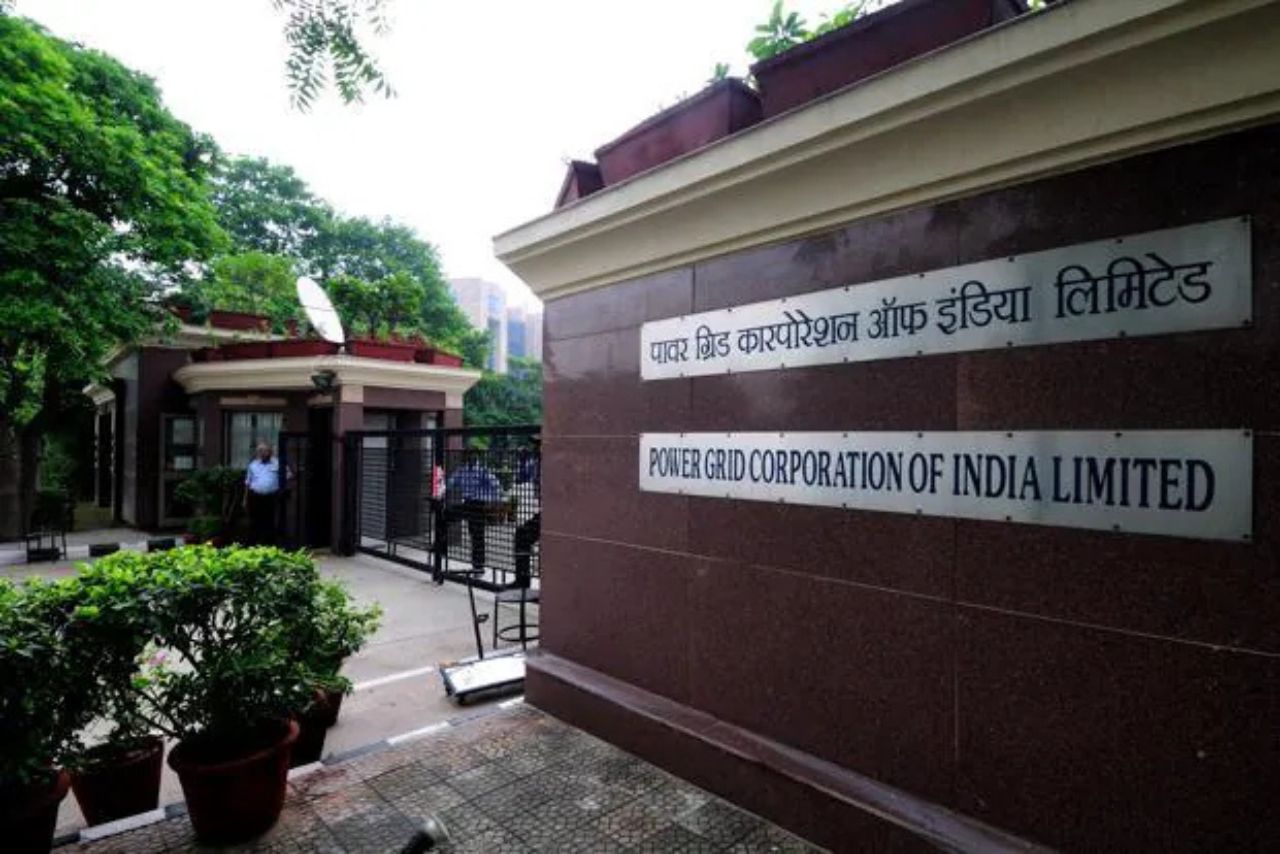
A leading state-run power transmission utility came into focus after announcing the acquisition of a project SPV set up to build new transmission infrastructure for an emerging green energy cluster. The company disclosed the development in a regulatory filing dated June 29, 2026, confirming it had taken over the SPV from the bid process coordinator following a competitive bidding process under the Ministry of Power’s tariff-based framework.
With a market capitalization of Rs. 2,64,881.20 crore, the shares of Power Grid Corporation of India Limited were trading at Rs. 284.85 per share, down 0.49 percent from its previous closing price of Rs. 286.25 apiece. It is trading at a P/E of 16.58.
Power Grid acquired 100 percent of Kakinada I Transmission Limited (KITL) from PFC Consulting Limited, the bid process coordinator that had incorporated the SPV in February 2025 specifically to carry the project through to award. The transaction closed on June 29, 2026, for an aggregate consideration of approximately Rs. 20.50 crore, comprising 10,000 equity shares at par value of Rs. 10 each plus the assets and liabilities already booked in KITL as of the acquisition date. That figure is subject to revision once audited accounts for the company are finalised, a standard adjustment clause in SPV handovers of this kind.
The headline number understates what the deal actually represents. KITL has recorded no turnover since incorporation, and the Rs. 20.5 crore consideration reflects little more than the paid-up capital and pre-development costs the SPV has accumulated. The real financial exposure sits ahead: building a new 765/400kV gas-insulated switchgear substation, a STATCOM installation, and associated 765kV transmission lines is a project that typically runs into several hundred crore of capital expenditure depending on line length and terrain.
Revenue only begins once the Central Electricity Regulatory Commission grants KITL a transmission license and approves the tariff structure, both of which remain pending. Until then, the asset generates no return.
This is the standard sequence for Tariff Based Competitive Bidding projects, and Power Grid runs a steady pipeline of similar wins. The structure lets the company lock in long-term, regulated tariff revenue once an asset is commissioned, with the bidding process itself determining the tariff rather than a cost-plus formula. For a utility with a transmission network exceeding 200,000 circuit kilometres already, a single sub-station-and-line package of this scale barely moves the needle on consolidated numbers, but the cumulative effect of dozens of such TBCB wins across years is how Power Grid has sustained its asset base growth even as organic order inflow in any one quarter looks unremarkable.
Investors tracking these filings should treat the consideration figure as a bookkeeping entry rather than a deal size worth extrapolating from. The more useful number, once disclosed, will be the total project cost for KITL’s construction phase, since that figure determines both the capital outlay and the eventual regulated tariff base. No such cost estimate appears in this filing, and Power Grid has not indicated a commissioning timeline beyond noting that the acquisition followed the schedule set by the bid process coordinator. Approvals for the transmission license and tariff adoption from the CERC remain the next gating items before KITL can begin earning revenue.
Strategic Context
The Kakinada project ties into a broader trend playing out across coastal Andhra Pradesh, where the state government has positioned the region as a hub for green hydrogen and green ammonia manufacturing, drawing on proximity to port infrastructure and renewable generation capacity in the surrounding districts. Transmission evacuation infrastructure is typically the binding constraint on how fast such industrial clusters can scale, since manufacturing capacity tends to outpace grid connectivity in early-stage green energy zones.
Power Grid picking up this corridor early, ahead of full commercial operation at the hydrogen projects it serves, fits a pattern the company has followed elsewhere: securing evacuation rights before downstream demand fully materialises, which reduces execution risk relative to projects awarded after generation capacity is already built.
The choice of a 765kV line and GIS substation rather than a lower-voltage configuration also signals that the planners behind this corridor expect substantial load growth in the Kakinada cluster, not a single isolated facility. Gas-insulated switchgear costs considerably more per bay than conventional air-insulated equipment, and developers generally reserve it for sites where land is constrained or where reliability requirements are unusually high, both common conditions near port-adjacent industrial zones. None of this changes the near-term earnings picture for Power Grid, but it does indicate the company expects the underlying demand cluster to justify the higher upfront spend once the asset is commissioned.
Business Overview
Power Grid’s near-term growth case rests on converting its TBCB project pipeline, including this Kakinada award, into commissioned, tariff-earning assets, with execution timelines and regulatory approvals from the CERC determining how quickly that translates into revenue. The company also continues to expand its borrowing headroom to fund this pipeline; its board approved raising the overall borrowing limit to Rs. 2.2 lakh crore in late June 2026, alongside a $500 million external commercial borrowing plan, signalling the scale of capital still required across its under-construction portfolio.
Incorporated in 1989 and listed on both the NSE and BSE, Power Grid Corporation of India is a Maharatna central public sector enterprise under the Ministry of Power, operating roughly half of India’s interstate power transmission network alongside consultancy and telecom businesses. For the quarter ended March 2026, the company reported consolidated net profit of Rs. 4,546.33 crore, up 9.7 percent year-on-year, even as revenue from operations declined 5 percent to Rs. 11,665.61 crore. For the full year ended March 2026, revenue stood at approximately Rs. 47,684 crore and net profit at around Rs. 16,060 crore. The Government of India holds a 51.34 percent promoter stake in the company.
Disclaimer: The views and investment tips expressed by investment experts/broking houses/rating agencies on tradebrains.in are their own, and not that of the website or its management. Investing in equities poses a risk of financial losses. Investors must therefore exercise due caution while investing or trading in stocks. Trade Brains Technologies Private Limited or the author are not liable for any losses caused as a result of the decision based on this article. Please consult your investment advisor before investing.
The post Grid Acquires Kakinada I Transmission SPV to Build ₹1,618 Cr Green Hydrogen Grid Corridor appeared first on Trade Brains.
What's Your Reaction?