




































































How Boeing and Airbus Survived an Industry Designed to Kill New Entrants?
Synopsis: Boeing and Airbus did not dominate by outcompeting rivals, but by surviving an industry hostile to new entrants. Massive capital needs, long development cycles, strict certification, and sticky airline loyalty wiped out competitors over decades, leaving commercial aviation as a rare duopoly built on endurance, trust, and scale. From the outside, building a passenger […] The post How Boeing and Airbus Survived an Industry Designed to Kill New Entrants? appeared first on Trade Brains.

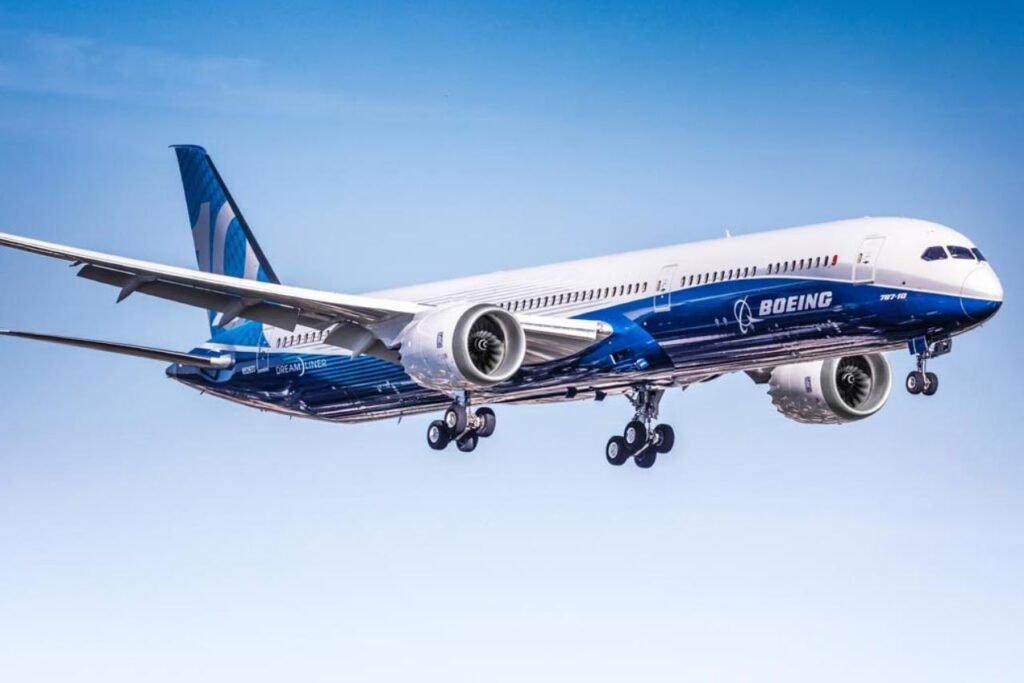
Synopsis: Boeing and Airbus did not dominate by outcompeting rivals, but by surviving an industry hostile to new entrants. Massive capital needs, long development cycles, strict certification, and sticky airline loyalty wiped out competitors over decades, leaving commercial aviation as a rare duopoly built on endurance, trust, and scale.
From the outside, building a passenger aircraft can seem like a straightforward challenge of money and engineering talent. But once you step inside the industry, it quickly becomes clear that this is a business where time, trust, and survival matter just as much as technology. Many capable companies have walked in confident and walked out broken. Why is commercial aviation one of the most unforgiving industries for new entrants?
A Two-Player Market
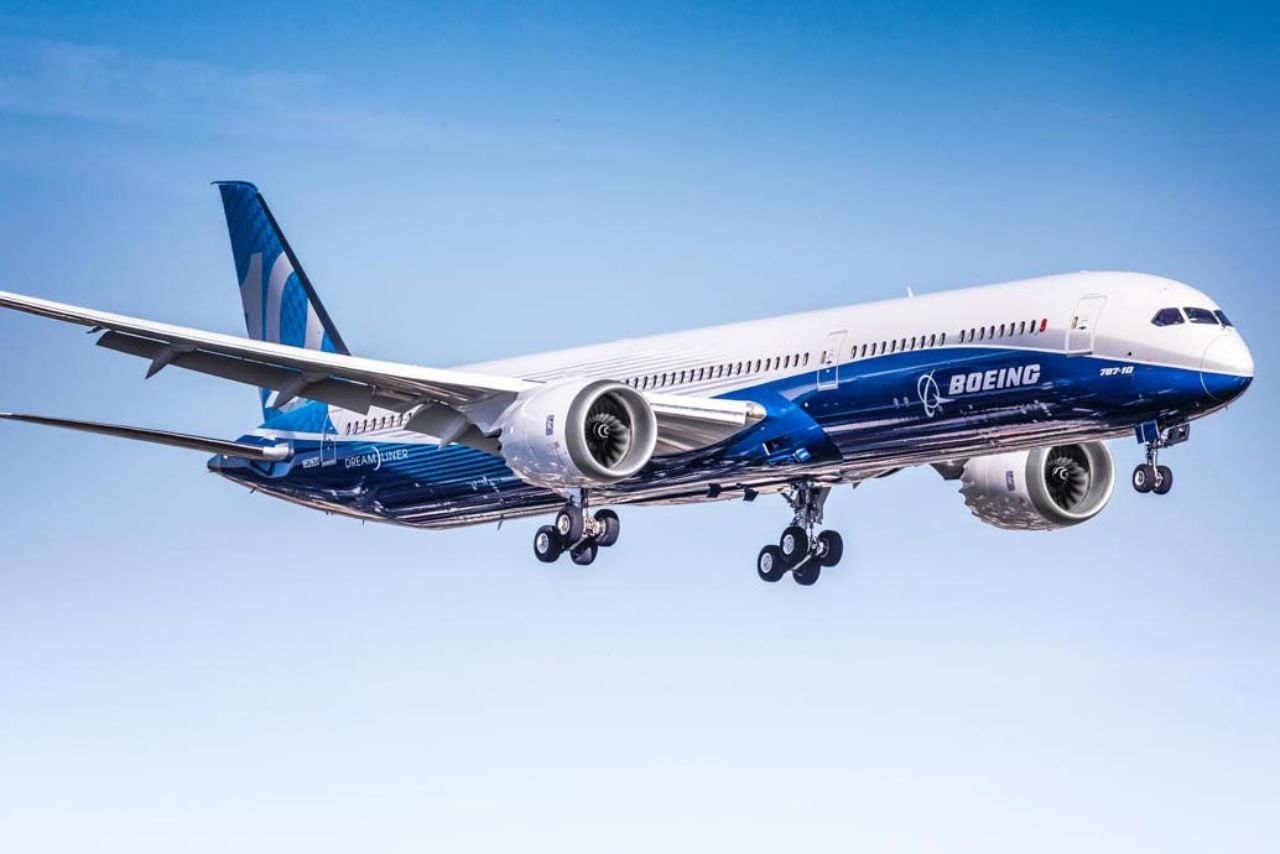
By the 1990s, the global commercial aircraft industry had effectively narrowed down to just two major players. Boeing, which began operations in 1916, emerged as the sole remaining US manufacturer of large passenger jets. Across the Atlantic, Airbus was created in 1970 as a European consortium, bringing together French, German, British, and Spanish firms to challenge Boeing’s dominance.
Both companies have long relied on substantial government backing, a support system almost essential in an industry where the stakes are immense. For example, following the COVID-19 pandemic, the US established a USD 17 billion loan fund to support Boeing, reflecting its strategic importance and the necessity of preventing its collapse.
Despite forming a duopoly, Airbus and Boeing compete fiercely rather than colluding. Boeing held a dominant position for decades, but Airbus made an aggressive push in the 1980s and 1990s, overtaking Boeing by 2019 to become the world’s largest aerospace company by revenue. Innovation played a key role in this shift. The Airbus A320 introduced a fully digital cockpit and improved fuel efficiency, challenging Boeing to accelerate production of the 737 MAX, a decision that ultimately contributed to significant design and software problems.
This rivalry also drives heavy price competition, often squeezing manufacturer margins while benefiting airlines. Together, the A320 and 737 families make up nearly half of all passenger planes in operation worldwide, a reality no other competitor has managed to change despite numerous attempts.
The Economics of Making a Plane
Developing a new commercial aircraft today routinely comes with a staggering price tag of USD 20 to USD 30 billion. To put this in perspective, when Boeing introduced the 747 in 1965, it invested over USD 1 billion, far more than the company’s valuation of USD 375 million at the time, essentially betting the entire firm on a single new model. From initial design to final delivery, creating a plane can take nearly a decade.
The financial challenges don’t stop at the upfront costs. Manufacturers often lose money on each plane they build, making profitability a constant struggle. Between 1970 and 2010, Boeing’s average net profit hovered around just five percent, and in recent years, losses have been frequent.
Profitability is far from straightforward. Adding a few extra seats to a jet might seem like an easy way to boost revenue, but even a single additional seat alters weight distribution and fuel efficiency, triggering extensive testing and re-certification. There’s no quick fix or rapid iteration in this industry.
This complexity sets passenger aircraft apart from other types of planes. Fighter jets, for instance, are lighter and simpler, designed for one or two seats and non-commercial use. Passenger planes, by contrast, are massive, intricate, and must meet rigorous commercial standards.
These challenges also explain why entirely new designs are rare. The Airbus A320, launched in 1987 and now the backbone of many Indian airlines, was Airbus’ first model in its A320 family. Subsequent versions are largely incremental updates, each costing only a fraction, roughly 10 to 20 percent of a full clean-sheet design.
Regulations, Safety, and Certification Challenges
Safety and certification form a critical part of an aircraft’s lifecycle. For a large airliner, testing alone can take around five years, during which billions are spent without generating any revenue. The stakes are high and any oversight could be a matter of life and death. A stark example occurred in 2024, when Boeing had to halt production of the 737 MAX immediately after Alaska Airlines experienced a near-crash.
The approach of updating decades-old planes, while saving time and costs, can also create safety challenges. The 737 MAX, for instance, was built as a derivative of the original 737 from the 1960s. Boeing’s strategy to modernise this legacy design introduced significant compromises, as older systems could not always accommodate the latest technologies.
Supply Chains and the Impossible Entrant Challenge
A defining feature of commercial aviation is its exceptionally sticky supplier ecosystem. Modern airliners are composed of millions of parts that must work seamlessly together, and Airbus and Boeing have spent decades cultivating networks of hundreds of major suppliers and thousands of smaller ones. Engine manufacturers like GE and Rolls-Royce invest billions to develop new engines, placing their bets on specific aircraft programs.
For newcomers, replicating this intricate system is virtually impossible, especially under strict safety regulations. The most capable suppliers are already deeply tied to Airbus and Boeing, who have spent decades earning their trust. As Airbus CEO Guillaume Faury pointed out, assembling a plane accounts for just 7 percent of its total value, while creating a reliable supplier network is the far more challenging and critical task.
Sales, Leasing, and Airline Loyalty
Selling aircraft to airlines like IndiGo is a highly intricate process. A single narrow-body plane, such as the Airbus A320neo, lists for roughly USD 110 million, and the overall market is relatively small, at most, around 1,000 units are delivered in a strong year. Purchase decisions take years and are heavily relationship-driven, covering price negotiations, customizations, training, and more.
Most airlines don’t buy planes outright. Around 58 percent of commercial aircraft are leased, and there are practical reasons for this. Predicting passenger demand a decade into the future is extremely challenging, and markets can shift dramatically within a single product cycle.
Airbus, for example, faced massive losses with the A380 due to misjudging air travel trends. Rapid depreciation further discourages outright ownership. Because of these uncertainties, airlines frequently cancel orders; globally, 352 cancellations occurred in 2023 alone. To mitigate this, manufacturers often overbook orders, anticipating that some will be dropped. Leasing offers flexibility, allowing airlines to adjust capacity without worrying about resale value.
Airline loyalty further reinforces market barriers. Fleets are usually standardized around a single plane type. IndiGo’s fleet is almost entirely Airbus A320s, and in 2023, the airline placed a record order for 500 more, the largest single purchase in aviation history. Similarly, Southwest Airlines operates only Boeing 737s. Standardizing fleets reduces training and maintenance costs, as cockpits, systems, and spare parts differ between models. This continuity also reassures airlines that Airbus or Boeing will reliably meet their needs, while newer entrants face high switching costs and must offer significant advantages to convince carriers to change.
Everyone Else Failed
Over the years, numerous countries have attempted to challenge the Airbus-Boeing duopoly, and most have fallen short. Canada’s Bombardier, for example, developed the technically impressive CSeries jet but faced staggering development costs that nearly pushed the company into bankruptcy. Intense price competition and US tariffs forced Bombardier to sell the program to Airbus in 2018, exiting the passenger aircraft market entirely.
Brazil’s Embraer has carved out a niche in small regional jets but struggles with larger commercial aircraft. In 2018, Boeing agreed to acquire 80 percent of Embraer’s commercial division, which could have helped the company scale. However, by 2020, amid the 737 MAX crisis and the pandemic, the deal was canceled, leaving Embraer without a clear path forward.
China’s Comac, backed heavily by the state, is attempting to break into the market with its C919. While the jet is technologically capable, it lacks international certification and still depends on Western engines and avionics. So far, only one non-Chinese airline, Indonesia’s TransNusa, operates the C919. Even companies with decades of fighter jet expertise have failed to compete: Lockheed Martin, a leader in military aircraft, exited commercial aviation in 1981 after its L-1011 TriStar incurred losses of USD 2.5 billion.
The list of unsuccessful challengers is long, spanning Japan’s Mitsubishi, Russia’s UAC, and other advanced military aircraft manufacturers, such as Fokker and other well-known ones. Despite technical capabilities and resources, breaking into this market has proven nearly impossible.
The dominance of Boeing and Airbus is less a story of victory and more a story of survival. Commercial aviation is an industry where mistakes linger for decades, capital is locked up for years, and trust is earned one aircraft at a time. Technology alone is never enough. Success demands patience, political backing, resilient supply chains, and deep, long-term relationships with airlines and lessors. Most challengers underestimated just how unforgiving this ecosystem is. Boeing and Airbus did not win by being the smartest or fastest, but by enduring when others ran out of money, time, or credibility.
Disclaimer: The views and investment tips expressed by investment experts/broking houses/rating agencies on tradebrains.in are their own, and not that of the website or its management. Investing in equities poses a risk of financial losses. Investors must therefore exercise due caution while investing or trading in stocks. Trade Brains Technologies Private Limited or the author are not liable for any losses caused as a result of the decision based on this article. Please consult your investment advisor before investing.
The post How Boeing and Airbus Survived an Industry Designed to Kill New Entrants? appeared first on Trade Brains.
What's Your Reaction?