
































Madhusudan Kela Stock With a Hard-to-Replicate Distribution Moat to Keep on Your Radar
Synopsis: While most investors chase the next AI hardware story, one distribution business has quietly built something harder to replicate: a nationwide network connecting global tech brands to India’s smallest towns. Here’s why that infrastructure matters more than any single product cycle. Every AI PC, every server upgrade, every gaming peripheral sold in India eventually […] The post Madhusudan Kela Stock With a Hard-to-Replicate Distribution Moat to Keep on Your Radar appeared first on Trade Brains.


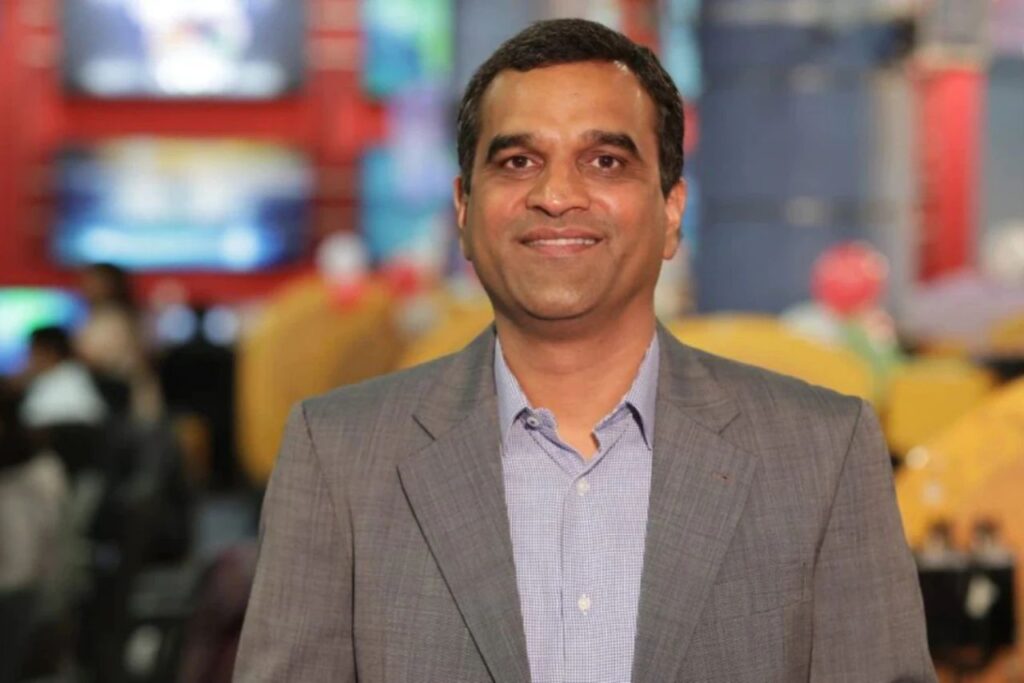
Synopsis: While most investors chase the next AI hardware story, one distribution business has quietly built something harder to replicate: a nationwide network connecting global tech brands to India’s smallest towns. Here’s why that infrastructure matters more than any single product cycle.
Every AI PC, every server upgrade, every gaming peripheral sold in India eventually passes through someone’s warehouse before it reaches a store shelf. That “someone” is rarely visible to retail investors, yet the business of moving technology from global factories into Indian hands has quietly become one of the more durable plays on the country’s digitisation story. One such distributor offers a useful lens into why scale and reach, not just product hype, can be the real source of a competitive edge.
With a market capitalization of Rs. 4,955 crore, the shares of Rashi Peripherals Limited were trading at Rs. 752 per share, with a 52-week range of Rs. 827 to Rs. 275.60, and it is trading at a P/E of approximately 18x. Ace investor Madhusudan Kela holds a 2.44% stake in the company, a signal that the company’s growth thesis has attracted attention well beyond retail circles.
Nearly Four Decades On The Ground
Building a distribution network isn’t something that happens in a couple of funding rounds. This one has taken 37+ years to put together a footprint that now spans 55 branches, 71 warehouses, 50 service centres, and presence across 700+ locations in over 800 districts. Rashi Peripherals aims to eventually cover. That kind of physical and operational depth, built brick by brick over decades, is not something a well-funded new entrant can simply buy its way into. Time itself becomes a barrier to entry.
Brand Relationships That Compound Over Time
Rashi Peripherals distributes for 82 global technology brands, including names like Dell, HP, Lenovo, Intel, AMD, NVIDIA, Samsung, ASUS, Google, Qualcomm, and Western Digital, several of which it has worked with for over five years. These aren’t transactional tie-ups; they involve co-investment in market entry, channel training, and long-term brand building in India.
For a global OEM looking to scale in the country, an established distributor with existing warehousing, billing infrastructure, and last-mile reach in Tier-2 and Tier-3 markets is far more valuable than starting from scratch. That stickiness works both ways, reinforcing the distributor’s position with every renewed partnership.
A Channel Ecosystem That’s Expensive To Walk Away From
With over 10,300 partners and B2B customers, and roughly 618 million units distributed to date across 18,479 SKUs, the ecosystem here has genuine network effects. Channel partners who’ve built years of billing history, credit terms, and inventory rhythm with one distributor don’t switch lightly; doing so means renegotiating everything from logistics timelines to after-sales support. That friction is exactly what creates durable, recurring revenue rather than one-off transactions.
Beyond Boxes: Selling Solutions, Not Just Products
What separates a logistics operator from a genuine value-added distributor is the layer of services wrapped around the product: pre-sales consulting, solution design, warranty management, financing support, and post-sales diagnostics.
This was on full display recently, with new distribution tie-ups covering enterprise servers and storage, an expanding presence in AI infrastructure through partnerships tied to high-performance computing solutions, and even entry into education technology. Rashi Peripherals also ran an 8-city AI Bootcamp engaging over 2,500 developers and 300+ CXOs, seeding future enterprise demand well before it shows up as revenue.
Financial performance reflects the strength of the business
A broad portfolio spanning enterprise computing, consumer peripherals, networking gear, and lifestyle tech, including a recent India launch of a premium wearable health brand, allows greater wallet share per customer without a proportional rise in acquisition cost. This scale shows up in the numbers: consolidated revenue for FY26 came in at ₹15,827 crore, up 14.9% year-on-year, while EBITDA grew a sharper 52.8% to ₹459 crore, lifting margins to 2.90% from 2.18% a year earlier.
Profit after tax rose 34.6% to ₹282 crore. Over a three-year window, revenue has compounded at 18.7% annually and profit at an even stronger 31.8%, while the balance sheet has stayed disciplined, with net debt to equity at just 0.43x and a CRISIL AA-/Stable rating.
Riding India’s Broader Digitisation Curve
Rising enterprise IT spending, expanding AI infrastructure deployment, growing cloud adoption, and deeper technology penetration into smaller cities all point to distribution infrastructure becoming more valuable, not less, over the coming years.
A recently formed semiconductor subsidiary with operations in both India and Singapore has already logged 131% growth, albeit off a small base, hinting at optionality beyond the core personal computing and enterprise business, which itself is split roughly 58% to PES (Personal Computing and Enterprise Solutions) and 42% to LIT (Lifestyle and IT Essentials ) between enterprise solutions and lifestyle IT products.
Conclusion
Technology trends will continue to evolve, but the infrastructure required to distribute those technologies across a country as large and diverse as India cannot be built overnight. Rashi Peripherals has spent nearly four decades creating a nationwide network of branches, warehouses, service centers, channel partners, and global technology relationships that collectively form a significant competitive moat.
As India’s digital economy expands and demand for enterprise technology, AI infrastructure, cloud solutions, and premium consumer electronics continues to rise, the company’s distribution ecosystem could remain one of its strongest long-term competitive advantages.
Disclaimer: The views and investment tips expressed by investment experts/broking houses/rating agencies on tradebrains.in are their own, and not that of the website or its management. Investing in equities poses a risk of financial losses. Investors must therefore exercise due caution while investing or trading in stocks. Trade Brains Technologies Private Limited or the author are not liable for any losses caused as a result of the decision based on this article. Please consult your investment advisor before investing.
The post Madhusudan Kela Stock With a Hard-to-Replicate Distribution Moat to Keep on Your Radar appeared first on Trade Brains.
What's Your Reaction?