



































.png)







Petrodollar at Risk: Is the India–US Trade Deal Trump’s Last Bet to Save the Dollar?
Synopsis: The U.S.-India trade deal, cutting tariffs and boosting imports, could reshape markets and strengthen the dollar amid a weakening petrodollar system. By tying India closer through trade, investment, and technology, the U.S. seeks a new anchor for global dollar demand, reducing reliance on energy and risky monetary policies. In a significant overnight development, the […] The post Petrodollar at Risk: Is the India–US Trade Deal Trump’s Last Bet to Save the Dollar? appeared first on Trade Brains.

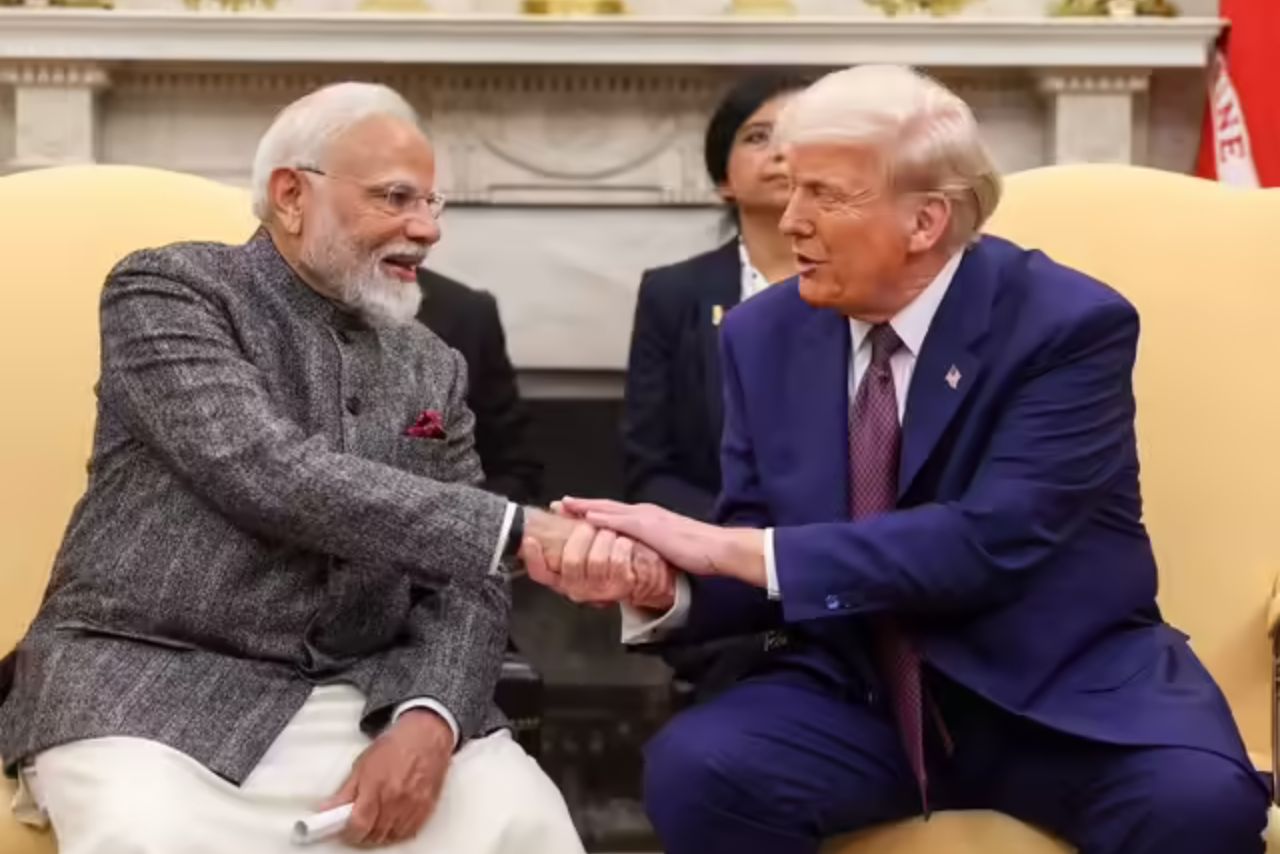
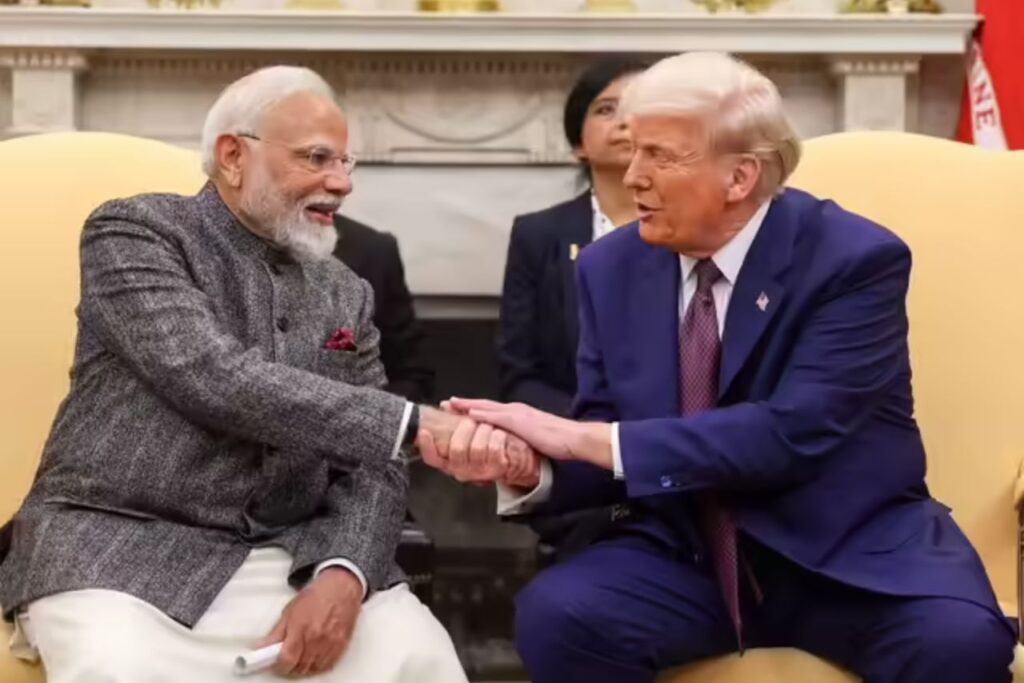
Synopsis: The U.S.-India trade deal, cutting tariffs and boosting imports, could reshape markets and strengthen the dollar amid a weakening petrodollar system. By tying India closer through trade, investment, and technology, the U.S. seeks a new anchor for global dollar demand, reducing reliance on energy and risky monetary policies.
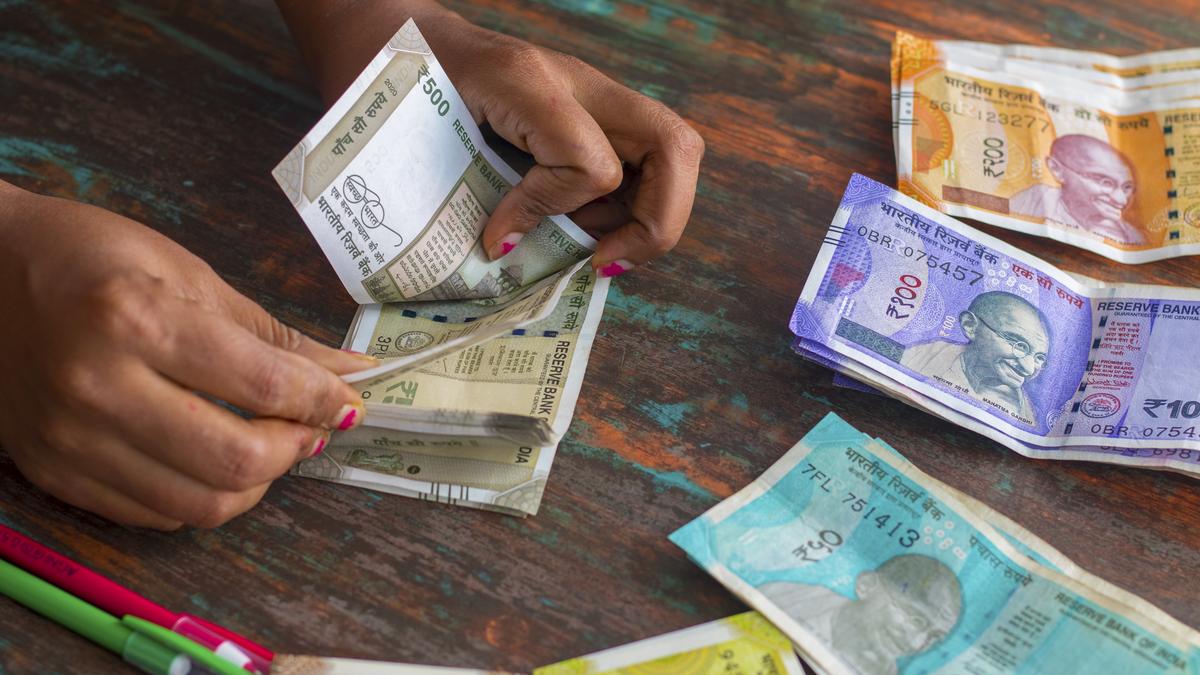
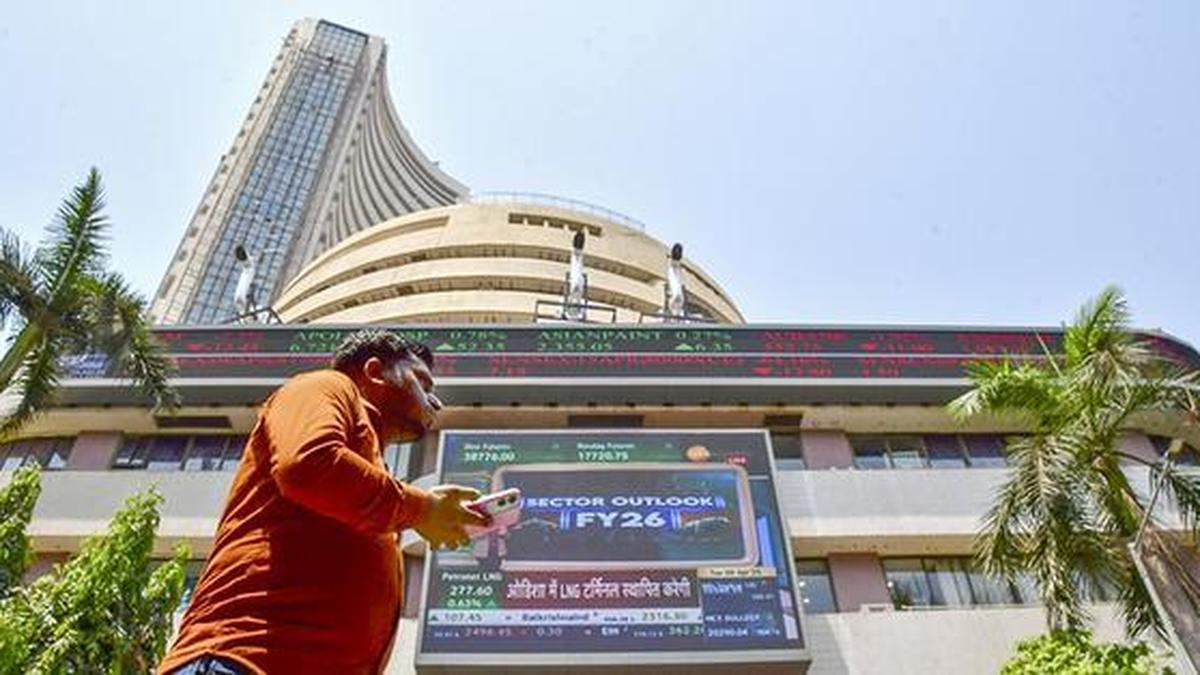
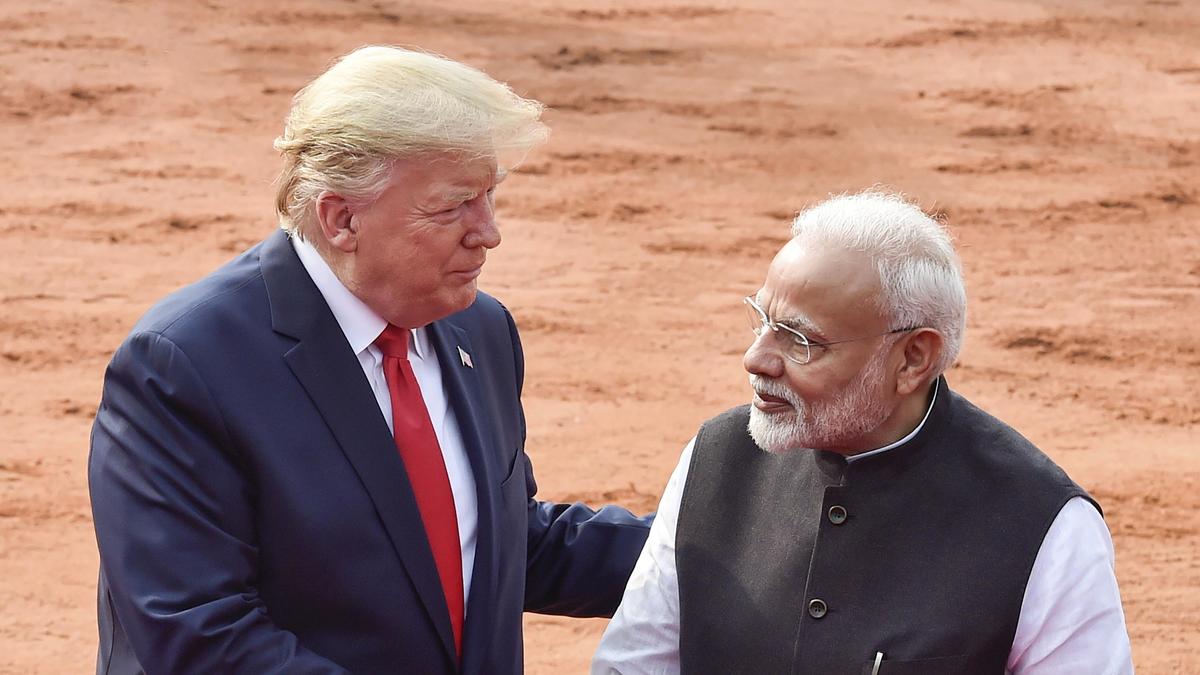
In a significant overnight development, the United States and India have reached a trade agreement that could end months of uncertainty and provide a much-needed boost to markets, according to brokerages ahead of Tuesday’s trading session. The deal includes a rollback of US tariffs on Indian goods from 50 percent to 18 percent and a commitment from India to increase imports from the US by USD 500 billion, while also reducing its dependence on Russian oil. Analysts from BofA and Citi suggest that this agreement could reshape market dynamics and position India as a major beneficiary of the “China + 1” manufacturing strategy.
Citi noted that the deal could spark immediate foreign capital inflows, potentially improving India’s Balance of Payments position. The reduction in tariffs is expected to benefit labour-intensive sectors, including textiles, gems and jewellery, and engineering goods, which have faced growth challenges in recent months.
The agreement also provides greater clarity for high-growth industries such as semiconductors and mobile phones, streamlining trade flows for critical components. Data centres and global capability centres may also gain from the enhanced protections for India’s service exports and digital infrastructure.
In terms of energy, India plans to shift away from Russian crude, increasing imports from the US and Venezuela following the removal of penalties on Russian oil, as reported by BofA.
Beyond trade and market impacts, the deal raises a larger question: is this agreement primarily aimed at strengthening economic ties, or is it part of a broader strategy to reinforce the global role of the US dollar?
Why India suddenly matters so much to the dollar
India’s growing importance on the global stage has made it a key partner for the United States, especially in efforts to maintain the dollar’s dominance in world trade. India is one of the fastest-growing major economies. It is also a major consumer and importer of crude oil and consumes nearly 5.5 Million barrels per day. In 2018 India imported 95 percent of its total oil consumption.
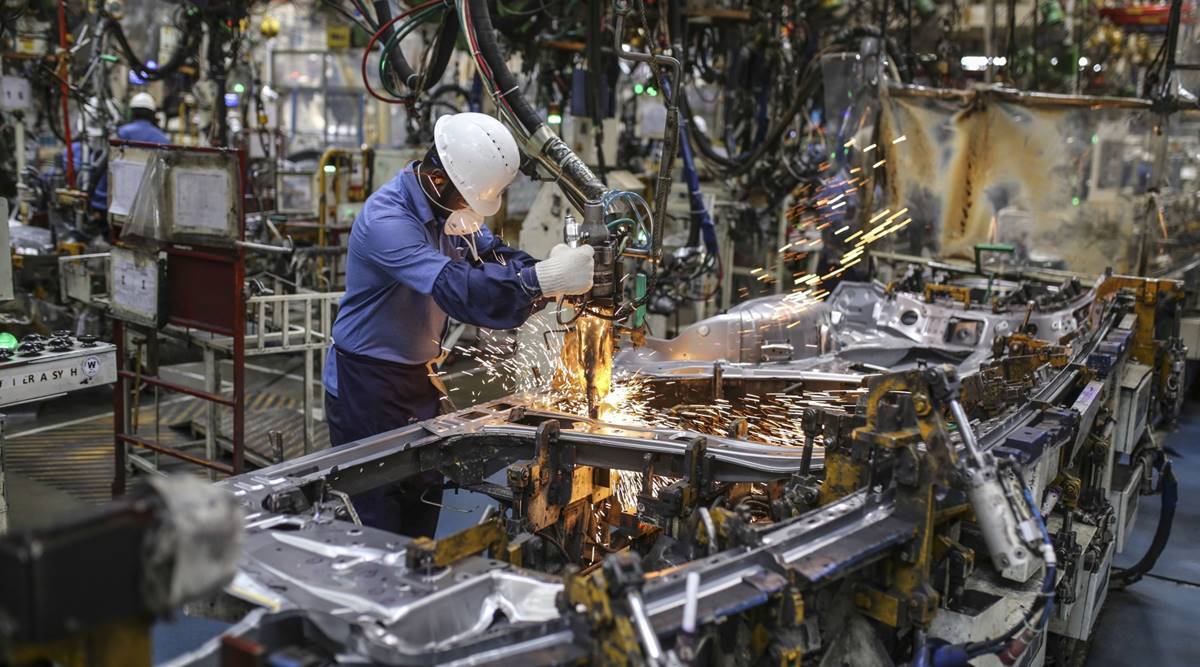
Beyond energy, India is increasingly seen as a manufacturing alternative to China, supporting the “China + 1” strategy that multinational companies are adopting to diversify supply chains. Labour-intensive sectors such as textiles, gems and jewellery, and engineering goods stand to gain from this shift. India is also emerging as a tech and digital powerhouse, with over 1 million people employed in IT and software services, alongside growing investments in data centres, semiconductors, and mobile technology.
At the same time, India is taking a larger role in regional geopolitics, balancing ties with the US, Europe, and China, while acting as a stabilising force in the Indo-Pacific region. If the United States wants the dollar to remain central to global trade, it cannot afford to lose India to a China or EU-led economic orbit. The recent trade deal with the US, therefore, is not only about boosting commerce but also about securing a strategic partnership that reinforces the global position of the dollar.
Petrodollar Not The Talk of The Town Anymore
The petrodollar system, one of the most influential monetary arrangements in modern history, was established in the 1970s after the collapse of the Bretton Woods framework. Under Bretton Woods in 1944, the US dollar became the anchor of the global monetary system, pegged to gold while other currencies were fixed to the dollar. This arrangement aimed to provide global financial stability after World War II and cemented the dollar as the world’s reserve currency.
In 1971, US President Richard Nixon ended the gold standard to curb inflation, as foreign central banks had grown reluctant to hold a depreciating dollar and were converting reserves into gold. The petrodollar system emerged as an alternative, ensuring the dollar remained central to global trade. Under this system, Gulf Cooperation Council (GCC) states, including Saudi Arabia and Kuwait, agreed to price oil in dollars and to reinvest revenues into US Treasury securities in exchange for military protection and access to advanced weaponry.
For decades, this arrangement guaranteed global demand for dollars, recycled oil revenues into US debt markets, and gave the United States significant geopolitical leverage. Oil and gas, as well as their downstream and upstream products, created a vast dollar-denominated value chain.
However, the system is now under strain: the dollar’s share of global reserves has fallen from 71 percent to 56.3 percent since 2008, central banks have been buying over 1,000 metric tons of gold annually, and China has reduced its US Treasury holdings from USD 1.3 trillion in 2013 to USD 682 billion by late 2025, while expanding yuan-based trade. If the petrodollar weakens, the US will need new anchors for dollar demand, and India could be one of them.
India as a new ‘dollar pillar’
With the traditional oil-based dominance of the dollar facing increasing pressure, India is emerging as a potential new pillar for US financial strategy. The recent India-US trade deal could help strengthen the dollar in several ways. By boosting trade settled in dollars, the agreement ensures that more commercial transactions between the two countries support the greenback. At the same time, the deal is likely to attract increased investment from US companies into India, particularly in technology, manufacturing, and energy sectors, reinforcing financial and business links.
The agreement also aligns India more closely with Western markets, providing an alternative to growing Chinese and Russian influence in Asia and the Global South. Strategic cooperation in high-growth industries such as semiconductors, digital infrastructure, and mobile technology will further deepen economic integration, creating dollar-denominated value chains that benefit both countries.
In essence, Washington appears to be shifting from relying solely on oil to maintain dollar dominance, toward building “strategic trade-dollar alliances.” India, with its rapidly growing economy, large energy imports, and rising technological footprint, has become a key partner in this approach. By tying India more tightly to the dollar through trade, investment, and technology, the US may secure an important anchor for its currency at a time when traditional petrodollar mechanisms are under stress.
Gold, Silver and What They Signal?
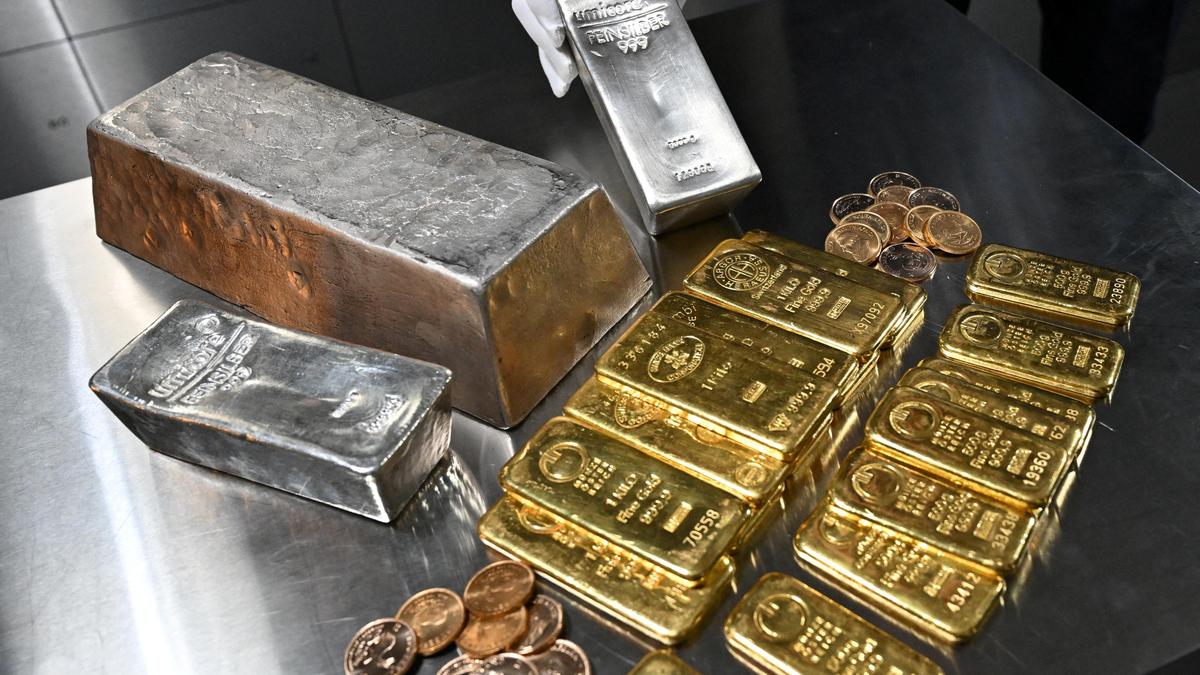
Metals like gold and silver are now telling an important story about confidence in the global financial system. Gold prices have surged strongly in recent years, with bullion rising around 65 percent in 2025 alone, driven by macroeconomic uncertainty and rising safe‑haven demand.
Governments and central banks have increasingly looked to gold as a reserve asset rather than relying solely on the US dollar, reflecting concerns about currency volatility and geopolitical risks. For example, In October, gold made up about 14.7 percent of India’s total foreign exchange reserves, the highest level in decades, as the value of India’s holdings reached over USD 100 billion.
Central banks around the world have continued to buy large amounts of gold, with global reserves rising to historically high levels as nations diversify their holdings. This shift suggests that many countries see gold as a safer store of value compared with dollar‑denominated assets, and it is widely interpreted as part of a broader de‑dollarisation trend.
India itself remains one of the world’s largest consumers of gold, with strong physical demand even at record prices. Its trade, investment, and currency decisions therefore matter for global gold flows and for broader confidence in the dollar system. If the US can keep India economically aligned, it indirectly reduces the momentum behind gold‑led de‑dollarisation.
Venezuela and energy as the old pillar
Venezuela, with some of the world’s largest proven oil reserves at around 303 billion barrels, has long been a key part of the traditional petrodollar system. Its reserves offered not just energy but significant financial leverage in global markets. However, in recent years, Caracas began experimenting with alternatives to the U.S. dollar.
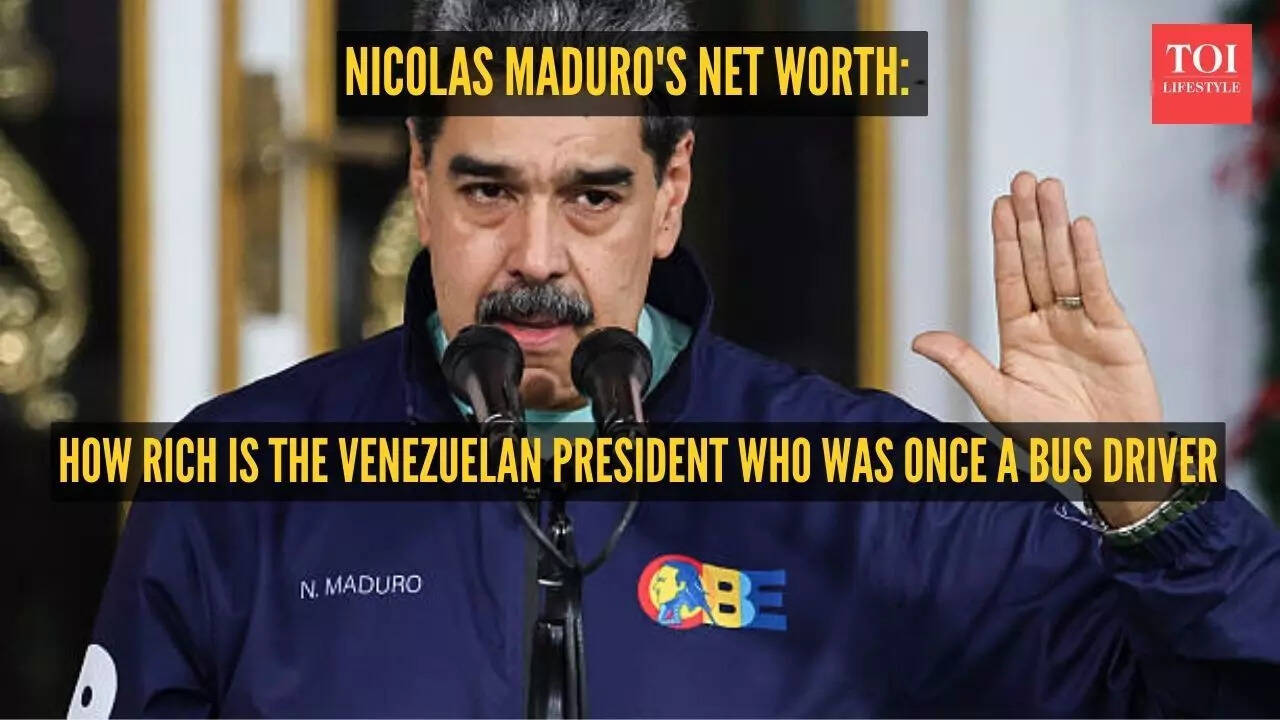
In 2017, President Nicolás Maduro announced that oil and other commodities could be priced in currencies such as the Chinese yuan, Japanese yen, Russian ruble, and Indian rupee. State oil company PDVSA also reportedly paid some suppliers in yuan and used euros to settle contracts when access to dollars was limited.
These moves were more than symbolic, representing a structural challenge to dollar dominance. By 2023, roughly 20 percent of global oil trade was conducted in currencies other than the U.S. dollar, with JPMorgan reporting 12 major commodity contracts settled in non-dollar currencies that year, up from just two between 2015 and 2021.
The dramatic capture of Nicolás Maduro underscored the financial and strategic symbolism of Venezuela’s energy resources. Re-engaging with Venezuela may help stabilise oil‑dollar links, but with global energy trade fragmenting, relying solely on the petrodollar is increasingly risky.
If energy can no longer single-handedly secure the dollar, large emerging markets like India become the next line of defence. With the traditional oil-dollars link weakening, the U.S. can’t rely on energy alone. Deals with major emerging markets like India create new channels for dollar demand, supporting the currency globally.
Rates, equities and the AI bubble
President Trump has pushed for aggressive cuts to interest rates, aiming to stimulate growth and lift financial markets. Lower rates make borrowing cheaper for businesses and consumers, which often drives up stock prices. This is particularly true for technology and artificial intelligence sectors, where companies rely on cheap financing to fund expansion and innovation. The US equity market is already highly valued, and additional monetary stimulus could push valuations even higher, raising concerns about a bubble.
However, there is a paradox. While rate cuts can boost equities, they also tend to weaken the US dollar because lower interest rates reduce the appeal of dollar-denominated assets for foreign investors. In other words, the very tool intended to support markets could undermine the dollar’s global strength.
This is where the India-US trade deal becomes important. By strengthening economic, tech, and financial ties with a big emerging market like India, the United States can boost demand for dollars without having to push its own markets too hard with big rate cuts. In this way, making India a strong trade partner is a safer and more reliable way to support the dollar than just using monetary policy.
President Trump is facing a tricky situation that almost looks like a loop. He wants a strong U.S. dollar, but pushing for big interest rate cuts could actually weaken it. He also wants the stock market to keep growing, especially in tech and AI, yet easier money could make an already high-valued market even more stretched, raising the risk of a bubble. At the same time, he wants to keep the petrodollar system stable, but global energy trade is changing. Countries like Russia and China are trading more in other currencies, which reduces automatic demand for dollars.
In short, every tool he uses, rate cuts, market support, or energy leverage, comes with trade-offs that could undermine his goals. In this situation, the India-US trade deal may be a way out. By creating a strong economic and trade partnership with India, the U.S. can support the dollar and its global influence without relying only on risky monetary moves.
Disclaimer: The views and investment tips expressed by investment experts/broking houses/rating agencies on tradebrains.in are their own, and not that of the website or its management. Investing in equities poses a risk of financial losses. Investors must therefore exercise due caution while investing or trading in stocks. Trade Brains Technologies Private Limited or the author are not liable for any losses caused as a result of the decision based on this article. Please consult your investment advisor before investing.
The post Petrodollar at Risk: Is the India–US Trade Deal Trump’s Last Bet to Save the Dollar? appeared first on Trade Brains.
What's Your Reaction?