
















.jpg)

































Redington Stock: 4 Key Risks Investors Must Know Before Investing in India’s Largest iPhone Distributor
Synopsis: Redington Limited, a leading technology distributor in India, connects global brands like Apple to thousands of resellers. However, heavy reliance on Apple, the rise of brand-owned stores, thin profit margins, and high operating costs pose significant risks. Any disruption in volumes, supply, or client strategy could materially affect the company’s earnings. Redington Limited has […] The post Redington Stock: 4 Key Risks Investors Must Know Before Investing in India’s Largest iPhone Distributor appeared first on Trade Brains.

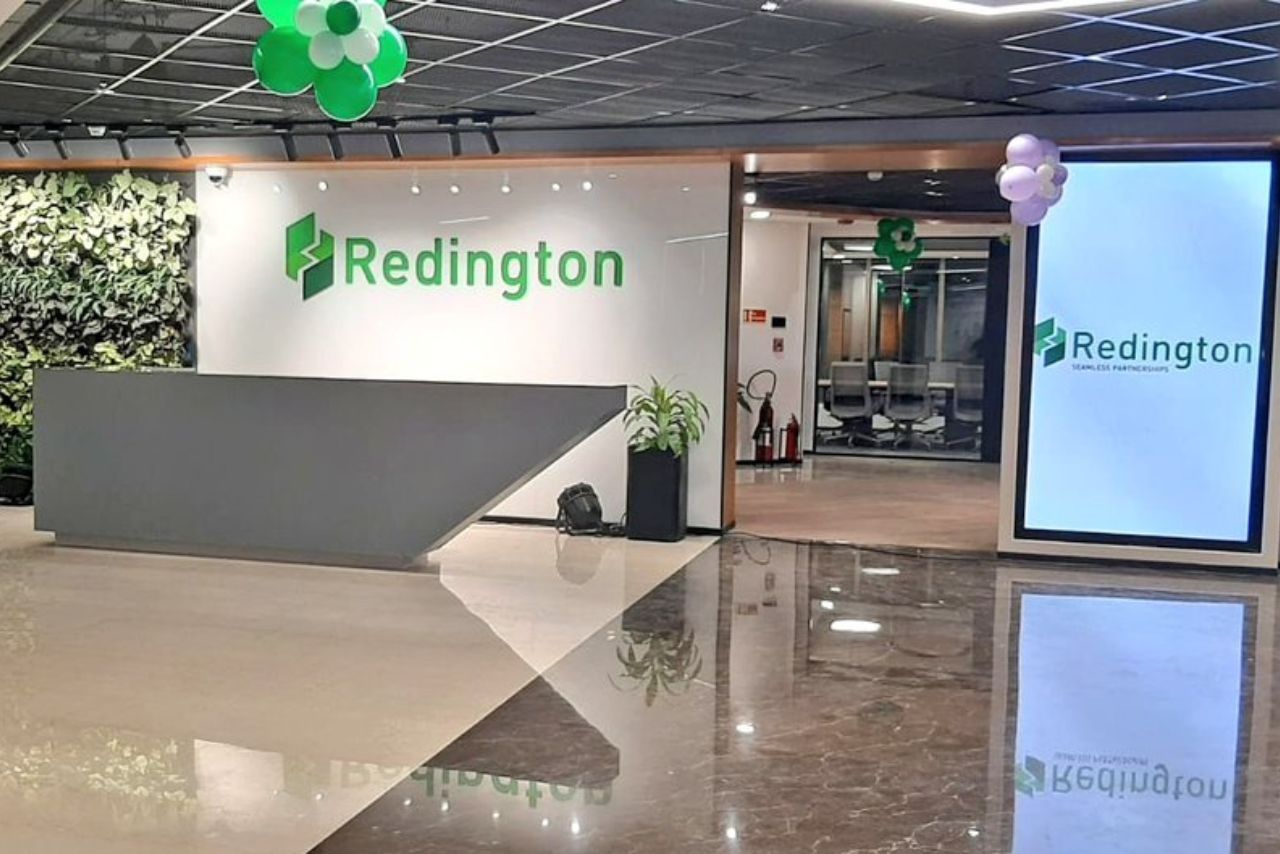
Synopsis: Redington Limited, a leading technology distributor in India, connects global brands like Apple to thousands of resellers. However, heavy reliance on Apple, the rise of brand-owned stores, thin profit margins, and high operating costs pose significant risks. Any disruption in volumes, supply, or client strategy could materially affect the company’s earnings.
Redington Limited has long been a key player in India’s technology distribution space, connecting global brands with businesses nationwidebill. With partnerships ranging from Apple to Dell and a network of over 70,000 resellers, the company has grown rapidly. But what are the risks involved with Apple’s leading vendor in India?
Redington Limited, a Fortune India 500 company, is one of India’s leading technology solutions providers, with operations spanning over 40 countries. The company works closely with more than 450 global brands and has a network of over 70,000 channel partners, enabling it to reach businesses of all sizes. Redington focuses on helping organizations adopt new technologies and drive digital transformation, offering solutions across IT and IT-enabled services, Telecom, Lifestyle, Solar, and Enterprise segments.
Over the years, Redington has built strong partnerships with some of the world’s most recognized technology companies, including Apple, Microsoft, Google, Dell, HP, Lenovo, Samsung, Oracle, Cisco, Acer, Huawei, IBM, and many more. Through these collaborations, the company acts as a bridge between innovation and practical adoption, helping businesses access the latest technology efficiently.
As of now,Redington has a market capitalization of Rs. 20,568.49 crore, with its shares trading at Rs. 263.10. With its extensive reach, diverse brand partnerships, and wide distribution network, the company continues to play a central role in shaping India’s technology ecosystem and supporting businesses in their digital journeys.
What Are The Key Risks Involved?
Brands Shifting To Own Stores
One of the key risks for Redington is the growing trend of global brands opening their own retail stores in India. Apple, for example, has been expanding its direct-to-consumer presence aggressively. In 2023, the company launched its first stores in Mumbai’s BKC area and in Delhi’s Saket. These were followed by new stores in Bangalore’s Hebbal area and Pune. In December 2025, Apple opened its fifth store in Noida, and the company is planning another outlet in Mumbai in early 2026, with Hyderabad expected to follow in 2027. By selling directly to customers, Apple reduces its dependence on distributors and channel partners like Redington.
Apple’s retail expansion is not just about sales but also about enhancing customer experience. The company focuses on personalized services, in-store support, and community-driven activities, aiming to build stronger customer relationships. By handling sales and customer engagement in-house, Apple can capture a larger share of profits while controlling the brand experience, which could limit the growth opportunities for distributors.
Samsung is following a similar path, opening new stores in India such as the Vimaan Nagar store in Pune and its first experience store in Indore. According to Aditya Babbar, Vice President of Samsung’s MX Business, the company has invested heavily in equipping its stores with advanced technology to showcase AI features and other innovations. As more brands push to sell directly through their own outlets, distributors like Redington face the risk of losing a significant part of their revenue that comes from supplying these brands to traditional retail channels.
High Reliance on Apple
Another major risk for Redington is its heavy dependence on Apple for revenue. In Q3FY26, Apple accounted for 33 percent of the company’s total revenue, up from 30 percent in the same quarter last year. By comparison, other major clients like Samsung, Dell EMC, and HP together contributed just 16 percent, while Lenovo made up around 10 percent. Financial analysts often consider any single client contributing more than 20 percent of revenue as a “high concentration risk,” and Apple alone represents a third of Redington’s top line.
This dependence means that any change in Apple’s business strategy could directly impact Redington. For instance, if Apple decides to sell more products through its own stores or faces supply chain disruptions, Redington could see a significant drop in revenue. Similarly, delays or weak demand for a new iPhone model, like what happened during COVID-19 or other supply shortages, could hit Redington’s quarterly earnings hard. The company currently does not have another client of similar scale to offset such a risk, making its financial performance closely tied to Apple’s success.
Razor Thin Margins
Redington operates on very slim profit margins, which is typical for a distribution business. In FY2025, the company reported an operating margin of 2.5 percent and a net margin of 1.8 percent, up from 1.4 percent the previous year, partly due to proceeds from the divestment of Paynet.
Despite this improvement, margins have moderated in Q1 FY2026 because of an increase in low-margin, high-value deals in its TSG business across India and West Asia, along with a large one-time receivable in Turkey. The distribution model, which relies on handling large volumes of products with small markups, naturally keeps profits thin and makes the business highly sensitive to changes in sales or costs.
Because of these razor-thin margins, Redington depends on consistently high sales volumes to generate meaningful profits. Any dip in demand, delay in a product launch, or disruption in supply chains can directly hurt the bottom line. Even small setbacks in key products or markets can have an outsized impact on earnings, making profitability particularly vulnerable despite the company’s wide reach and extensive client base.
High Operating Costs
According to a report by IIDE, running a large distribution network comes with high operating costs, and Redington is no exception. To stay competitive, the company invests heavily in “Grade A” automated warehouses and specialized logistics through its subsidiary ProConnect. These investments require significant upfront capital, making fixed costs very high. Maintaining such infrastructure is essential for supporting major clients like Apple, HP, and Dell, but it also keeps expenses elevated.
The report also highlights pressure on working capital. Redington often has to pay its vendors almost immediately, while its more than 40,000 resellers may have 30 to 60 days of credit. This creates a gap that forces the company to hold large amounts of cash or borrow short-term funds, increasing interest expenses and adding further strain on profitability.
IIDE further notes that Redington faces competition from both global and local players. International distributors like Ingram Micro and Tech Data, as well as regional companies such as Compuage, Savex, and HCL Technologies, compete for the same clients. This dual pressure, combined with high operating costs, could affect the company’s profits in the future if it does not find ways to optimize costs and improve efficiency.
In conclusion, while Redington Limited has established itself as a key link between global technology brands and India’s vast reseller network, several risks could challenge its growth and profitability. Heavy reliance on Apple for a third of its revenue exposes the company to client-specific risks, especially as brands increasingly push for direct-to-consumer sales through their own retail outlets. Coupled with razor-thin margins, even minor disruptions in demand, supply chains, or product launches can significantly impact earnings.
Moreover, high operating costs from maintaining automated warehouses, specialized logistics, and extended working capital requirements add further pressure on profitability. Intense competition from both global and local distributors increases the urgency for Redington to optimize its operations and diversify its client base. Investors and stakeholders should therefore weigh the company’s strong market position against these vulnerabilities when assessing its long-term prospects.
Disclaimer: The views and investment tips expressed by investment experts/broking houses/rating agencies on tradebrains.in are their own, and not that of the website or its management. Investing in equities poses a risk of financial losses. Investors must therefore exercise due caution while investing or trading in stocks. Trade Brains Technologies Private Limited or the author are not liable for any losses caused as a result of the decision based on this article. Please consult your investment advisor before investing.
The post Redington Stock: 4 Key Risks Investors Must Know Before Investing in India’s Largest iPhone Distributor appeared first on Trade Brains.
What's Your Reaction?