






























Namo eWaste vs Eco Recycling: Which E-Waste Stock Is Better for Long-Term Growth?
Synopsis: India’s e-waste recycling industry is experiencing rapid growth due to stricter regulations and increased electronic consumption. Two key players are benefiting with distinct strategies: one focuses on scaling processing capacity and mineral recovery, while the other has developed an integrated ecosystem for e-waste management and reverse logistics, illustrating the balance between scale and service […] The post Namo eWaste vs Eco Recycling: Which E-Waste Stock Is Better for Long-Term Growth? appeared first on Trade Brains.

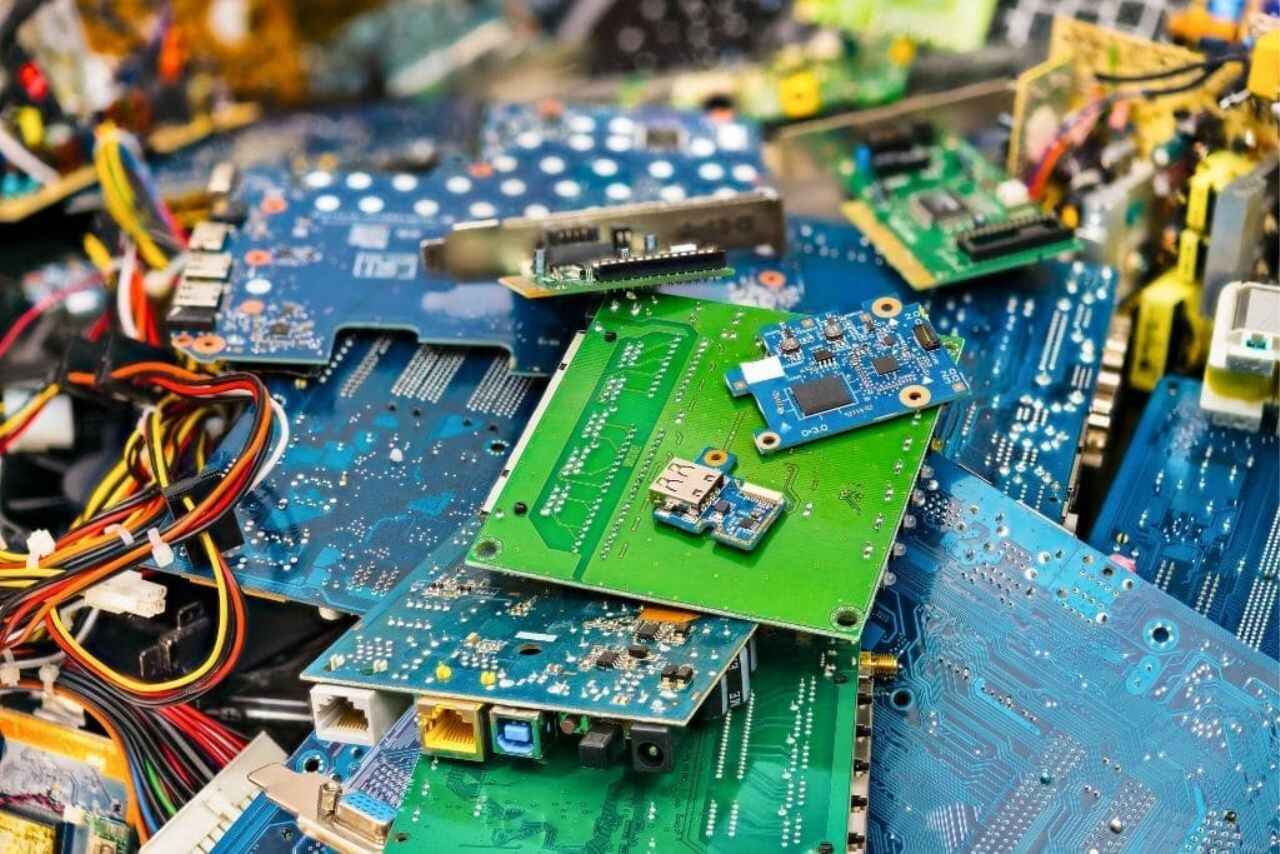
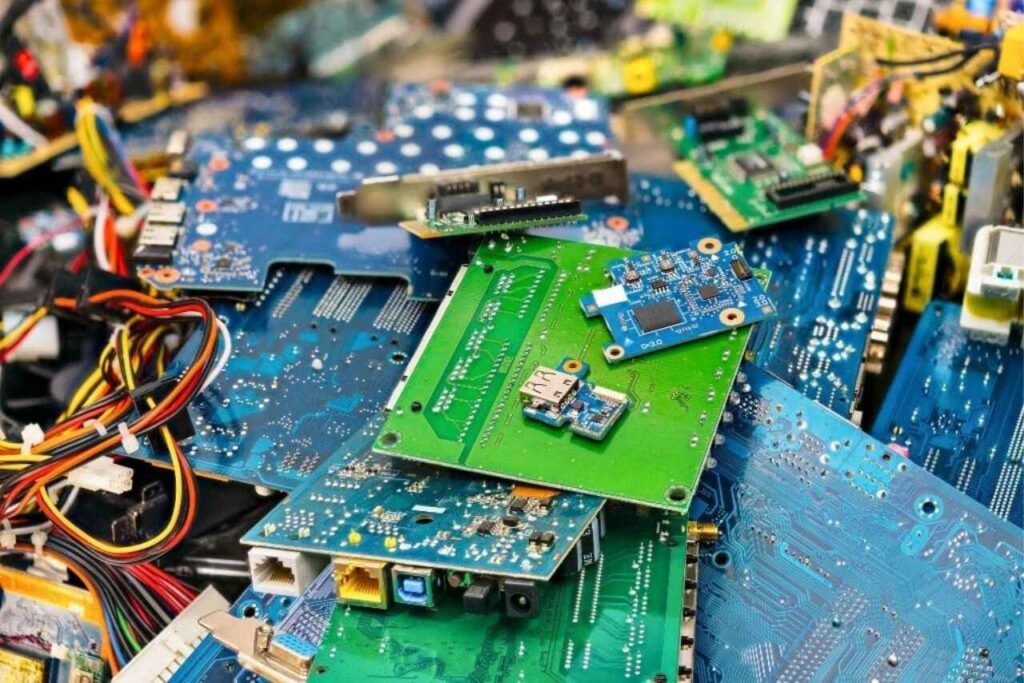
Synopsis: India’s e-waste recycling industry is experiencing rapid growth due to stricter regulations and increased electronic consumption. Two key players are benefiting with distinct strategies: one focuses on scaling processing capacity and mineral recovery, while the other has developed an integrated ecosystem for e-waste management and reverse logistics, illustrating the balance between scale and service diversification.
India has become one of the world’s largest generators of electronic waste, driven by rising smartphone penetration, consumer electronics demand, electric vehicles, and rapid digitalization. Alongside traditional e-waste, lithium-ion batteries are emerging as a major recycling opportunity as electric mobility and energy storage gain traction.
The government’s E-Waste Management Rules, Extended Producer Responsibility (EPR) framework, and growing focus on circular economy practices are encouraging organised recycling while shifting volumes away from the informal sector. Producers are increasingly partnering with authorized recyclers to meet compliance requirements, while businesses are adopting certified recycling and secure data destruction services.
Against this backdrop, two listed companies have established themselves as important players in India’s organized e-waste recycling industry. While both recover valuable metals from discarded electronics and batteries, their long-term strategies differ significantly. One is aggressively expanding processing capacity and critical-mineral recovery capabilities, while the other has built a broader technology-enabled recycling ecosystem that offers multiple environmental services beyond conventional recycling.
FY26 Financials: How Both Companies Performed
Namo eWaste Management reported its strongest-ever financial performance in FY26. Revenue increased 29 percent year-on-year to Rs.195.13 crore, while EBITDA grew 56 percent to Rs.23.10 crore. Profit after tax surged 70 percent to Rs.14.35 crore, supported by higher processing volumes and improved operational efficiencies. The company also expanded its recycling capacity to 82,000 MTPA and continued investing in advanced recycling technologies, including a hydrometallurgy plant for recovering lithium, cobalt, and nickel from black mass.
Eco Recycling delivered steady growth during FY26, with consolidated net sales rising 10 percent year-on-year to Rs.48.18 crore, while total income increased 14 percent to Rs.52.81 crore. EBITDA remained stable at Rs.33.32 crore, translating into a robust 63.09 percent EBITDA margin. Profit after tax stood at Rs.22.88 crore, with a healthy 43.33 percent PAT margin.
During the year, the company continued strengthening its integrated recycling ecosystem by expanding its e-waste recycling capacity to 31,200 MTPA and commissioning 6,000 MTPA of lithium-ion battery recycling capacity.
While Namo eWaste currently operates a much larger recycling capacity and delivers faster earnings growth during FY26, Eco Recycling continues to differentiate itself through a wider portfolio of specialized recycling and compliance services.
Where the Two Businesses Meet
The primary overlap between the two companies lies in authorised e-waste recycling. Both companies collect, dismantle, process and recycle discarded electronic products while recovering valuable metals such as copper, aluminium, iron, silver and gold. Both also serve producers, corporations, industrial customers and institutions seeking environmentally compliant disposal under India’s EPR regulations.
Each company is positioned to benefit from tightening environmental regulations, rising electronic waste generation, and increasing corporate focus on sustainability. Battery recycling has also become an important growth area for both businesses as lithium-ion battery adoption accelerates across electric vehicles and renewable energy storage. As organized recycling gains market share from the informal sector, both companies are expected to participate in a significantly expanding addressable market.
Where the Business Models Diverge
Namo eWaste has positioned itself as a high-capacity recycling company focused on processing scale and resource recovery. The company operates four recycling plants, more than 26 collection centres, and has expanded its recycling capacity to 82,000 MTPA, which comprises 70,000 MTPA of dedicated e-waste processing and 12,000 MTPA of specialized battery recycling capacity, making it one of the largest organized e-waste recyclers in the country.
It currently serves over 300 clients, employs around 370 people, and recycles more than 105 product categories. Its operations are increasingly moving beyond traditional e-waste into lithium-ion battery recycling and hydrometallurgical processing aimed at recovering critical minerals such as lithium, cobalt and nickel.
Eco Recycling, meanwhile, follows a broader integrated environmental services model. The company has an installed e-waste recycling capacity of 31,200 MTPA and an additional 6,000 MTPA lithium-ion battery recycling facility, giving it a combined recycling capacity of 37,200 MTPA.
Rather than competing purely on processing scale, Eco Recycling has built a comprehensive ecosystem around IT Asset Disposition (ITAD), reverse logistics, secure data destruction, lamp recycling, EPR compliance, mobile recycling units, digital collection platforms, trademarked Eco-Bin sustainability systems (with over 100,000 smart bins rolled out nationwide), the Book My Junk mobile platform, and their SmartER on Wheels infrastructure, India’s first mobile e-waste recycling unit endorsed by the PMO, allowing it to generate revenue across multiple segments of the recycling value chain.
FY27 Growth Triggers: What Could Drive Growth Ahead?
Namo eWaste enters FY27 with several expansion initiatives underway. The company enters the fiscal year focusing heavily on the volume ramp-up and commercial utilization of its 25,000 MT southern recycling hub in Hyderabad, which was commissioned in Q2 FY26. Concurrently, it is establishing a hydrometallurgy facility in Nashik to process black mass and extract critical battery minerals like lithium, cobalt, and nickel.
As battery recycling becomes an increasingly important component of India’s circular economy, these investments could significantly enhance value addition and profitability over the coming years. Continued growth in processing volumes, expanding industrial partnerships, and rising EPR compliance requirements also provide favorable long-term tailwinds.
Eco Recycling is pursuing growth through technology-led expansion and service diversification. The company has strengthened its lithium-ion battery recycling capabilities, expanded reverse logistics, launched mobile recycling infrastructure, and continues investing in secure data destruction and IT asset disposition services. Its integrated ecosystem allows the company to generate revenue from multiple business segments while benefiting from increasing corporate demand for end-to-end environmental compliance solutions.
Looking ahead, both companies are also expected to benefit from stricter enforcement of EPR regulations, higher organized recycling rates, increasing electronic consumption, and the rapid growth of lithium-ion battery waste generated by India’s electric vehicle ecosystem.
Investor Overview
Both companies are well-positioned to benefit from India’s rapidly expanding e-waste recycling industry, but they offer investors two distinct business models.
- Namo eWaste represents a capacity-driven recycling business focused on operational scale, higher processing volumes, and the recovery of critical minerals from electronic waste and batteries. Its aggressive capacity expansion and investments in hydrometallurgy provide meaningful exposure to the next phase of battery recycling in India.
- Eco Recycling, meanwhile, offers a more diversified environmental services platform. Beyond conventional recycling, it has built businesses across IT asset disposition, secure data destruction, reverse logistics, EPR compliance, mobile recycling infrastructure, and digital collection platforms. This broader ecosystem reduces dependence on any single revenue stream while strengthening customer relationships across the recycling value chain.
For investors seeking exposure to a rapidly expanding processing company with an increasing focus on critical mineral recovery, Namo eWaste offers an attractive growth opportunity. For those looking for a more diversified and established player with multiple service offerings across India’s organized recycling ecosystem, Eco Recycling presents a broader long-term business proposition.
Disclaimer: The views and investment tips expressed by investment experts/broking houses/rating agencies on tradebrains.in are their own, and not that of the website or its management. Investing in equities poses a risk of financial losses. Investors must therefore exercise due caution while investing or trading in stocks. Trade Brains Technologies Private Limited or the author are not liable for any losses caused as a result of the decision based on this article. Please consult your investment advisor before investing.
The post Namo eWaste vs Eco Recycling: Which E-Waste Stock Is Better for Long-Term Growth? appeared first on Trade Brains.
What's Your Reaction?