































































The Cold-Chain Opportunity: Stocks to Watch as India Tightens Food Safety Standards
Synopsis: India’s cold-chain market is becoming more and more vibrant with the introduction of tougher FSSAI regulations, increasing Q-commerce demand, and a large government support that is making companies upgrade very quickly. This article analyses the trend and the main stocks to be kept under review. The Indian logistics scene is getting very competitive. More […] The post The Cold-Chain Opportunity: Stocks to Watch as India Tightens Food Safety Standards appeared first on Trade Brains.

Synopsis: India’s cold-chain market is becoming more and more vibrant with the introduction of tougher FSSAI regulations, increasing Q-commerce demand, and a large government support that is making companies upgrade very quickly. This article analyses the trend and the main stocks to be kept under review.
The Indian logistics scene is getting very competitive. More specifically, the cooling aspect is getting increasing attention. The “Cold-Chain Revolution” is underway quietly, driven not only by our increased consumption of frozen vegetables and ice cream but also by strict new government regulations that are forcing the industry to upgrade.
With FSSAI imposing very strict standards on food safety for e-commerce and imports, companies are eagerly trying to repair the supply chain that is India’s farm-to-fork chain and is full of broken links. Today, we unravel the trend and look at the stocks that have the potential to benefit from this icy wave.
The Indian cold-chain warehousing market is experiencing significant growth. Recent research estimates the sector will grow from USD 10.5 billion in 2024 to USD 74.5 billion by 2033. This indicates a staggering compound annual growth rate (CAGR) of about 24.7 percent.
The new Industry
The “Cold-Chain Revolution” narrative gained fresh momentum recently after the Food Safety and Standards Authority of India (FSSAI) notified tighter norms. Key updates include:
New Import Testing Norms: On October 27, 2025, the FSSAI released the Food Safety and Standards (Import) First Amendment Regulations, 2025. It requires that laboratories testing imported food must follow internationally recognised methods (AOAC, ISO, BIS, Codex Alimentarius) and should issue the analysis reports within five days of the sample receipt. For cold-chain operators and logistics firms handling perishables at ports, it implies that they have to move out of temporary storage and into temperature-controlled, compliant storage facilities.
E-Commerce Crackdown: The Food Safety and Standards Authority of India (FSSAI) has imposed a requirement that all individuals who handle food in an e-commerce environment, including those who are involved in the delivery of the last mile, need to mandatorily undergo an FSSAI FoSTaC (Food Safety Training & Certification) training. Platform companies have been tasked with the responsibility of informing the FSSAI about their training schedules and timelines. This, in turn, affects Q-commerce players like Blinkit, Zepto, and Swiggy Instamart that need to put money into cold-storage training and the establishment of a temperature-monitoring system.
The Matter: Why Now?
India’s cold chain story was mainly about “potential” for years. Now, it is about “survival”. Here are some of the listed problems.
The 40 percent Problem: India is still wasting close to 30-40 percent of its agricultural produce every year, which is equivalent to losses ranging from Rs. 90,000 crore to 1 lakh crore rupees. The largest share of these losses is in perishable commodities, as stated by the Indian Council of Agricultural Research (ICAR). The losses in these sectors have been estimated at 22 percent for animal products (eggs, fish, meat), 19 percent for fruits, and 18 percent for vegetables. Such a situation is intolerable in a government that places food security at the top of its agenda.
The Q-Commerce Boom: The quick-commerce industry is the main contributor to the increase in the need for cold-chain facilities. The market reached $6–7 billion in 2024 GMV and is expected to continue growing at a rate of around 40 percent per year up to 2030. As of September 2025, Blinkit is the leader with more than 50 percent of the market share, while Zepto (with a share in the high-20s) and Swiggy Instamart (with an estimated 15-20 percent ) are the followers.
Frozen meat, dairy, or ice cream cannot be brought to the customers within 10 minutes if there is no temperature-controlled micro-warehouse network that is hyper-local. Every dark store needs to have freezers, chillers, and trained personnel.
The global online grocery market (including fresh, frozen, and ambient categories) was worth USD 11.4 billion in 2024 and is expected to grow to USD 96.3 billion by 2033 with a CAGR of 25.38 percent.
Policy Push: Pradhan Mantri Kisan SAMPADA Yojana (PMKSY) is an acronym for “A Scheme for Agro-Marine Processing and Development of Agro-Processing Clusters.” The program is a government initiative to set up the food-processing and cold-storage facilities that help fruits, vegetables, milk, fish, and meat to be non-perishable before they are supplied to the market. This plan aids the establishment of cold chains, refrigerated transport, and processing units, which extend the shelf life of food and allow farmers to get higher prices.
The government has given the green light to 395 projects under the PMKSY’s Integrated Cold Chain and Value-Addition Infrastructure component, out of which 291 are operational throughout India. These projects provide a storage capacity of 25.52 lakh metric tons and a processing capacity of 114.7 lakh metric tons.
The government offers a 35 percent subsidy in normal areas and a 50 percent subsidy in hilly and North-East regions with the funding per project being up to Rs 10 crore, and the total money allotted to the scheme is Rs 6,520 crore. This is a live and ongoing government intervention to improve the food supply chain and cut down on wastage.
Stocks to watch
We will look at companies from various areas of the cold-chain and food-processing supply ecosystem to get a complete view of the value chain. These areas include Cold-Chain Logistics, Equipment and Commercial Refrigeration, Food Processing, and Q-Commerce or Last-Mile Delivery.
Cold-Chain Logistics: The Infrastructure Play
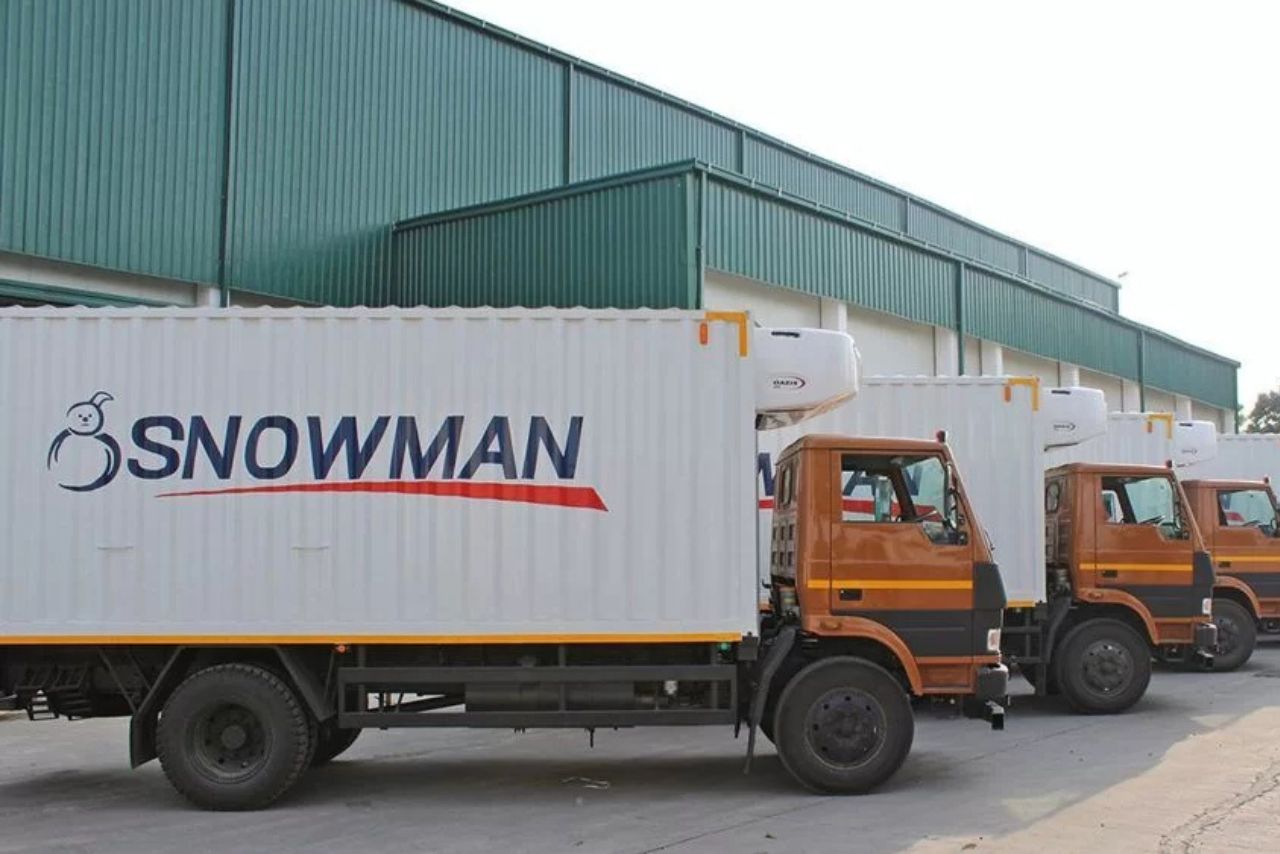
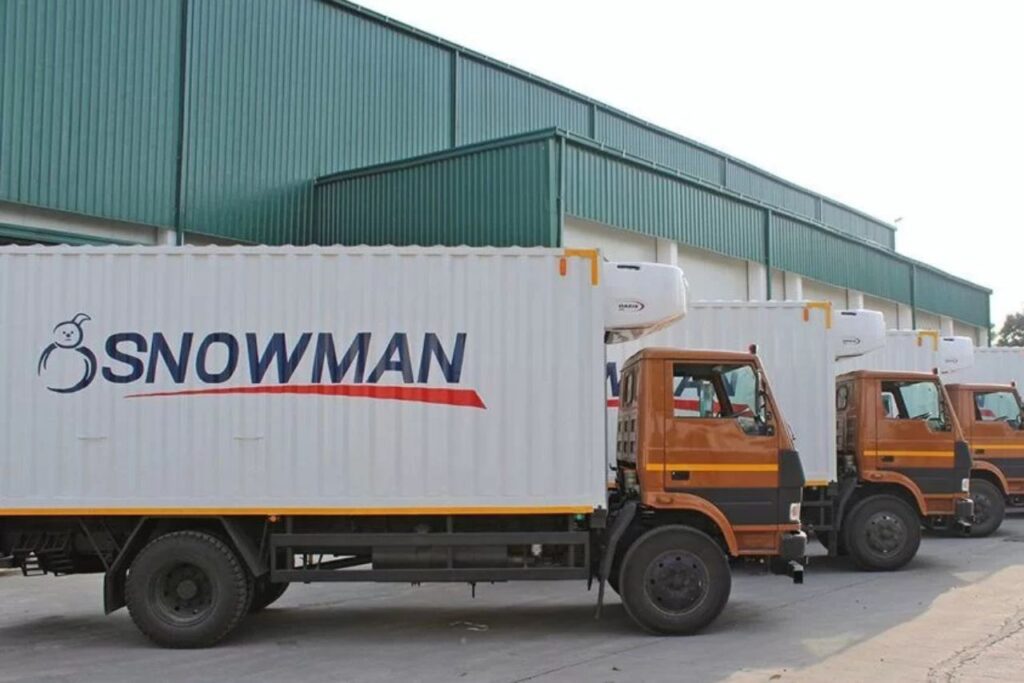
Snowman Logistics: Snowman Logistics is India’s top company for temperature-controlled logistics. It was founded in 1993 and has been mostly owned by Gateway Distriparks since 2006. The company runs a nationwide network of 45 warehouses in 20 cities, with a total pallet capacity of 143,285. It serves various sectors, including food, pharmaceuticals, retail, FMCG, and e-commerce. Snowman has 293 refrigerated vehicles and employs over 1,400 people.
It offers complete cold-chain solutions, which include temperature-controlled warehousing, long-distance and last-mile transportation, and value-added services like repacking, labelling, and sorting. Recently, it also started providing 5PL (Fifth-Party Logistics) services. 5PL (Fifth-Party Logistics) services in Snowman Logistics refer to the company managing a client’s entire supply chain, from sourcing and warehousing to delivery, as a comprehensive, integrated solution.
As FSSAI becomes stricter with food import and e-commerce rules starting May 1, 2026, many small cold-storage operators who use ice slabs may struggle to meet the new standards. This presents a significant opportunity for Snowman to capture its business. Snowman operates a 24/7 command centre with telematics and IoT, which maintains the correct temperature for various products such as frozen seafood (0–4°C), frozen meat (-18°C), and dairy.
The company now uses a 5PL model, which means it oversees everything from sourcing to storage and delivery. It already partners with major brands and supports Q-commerce, which requires quick restocking of fresh products. As the cold-chain industry expands, Snowman’s extensive network and efficient logistics system position it as the essential support for organised businesses.
Refrigeration & Cooling Equipment: Support Players
Voltas: Voltas is the top company in India for commercial refrigeration, even though most people mainly recognise it for its air conditioners. It has a strong presence in products like visi-coolers, deep freezers, and large cooling systems used in shops and industries.
Voltas also makes products like India’s only vaccine cooler that can keep vaccines safe for 58 hours without power, built with its partner Vestfrost Solutions. Additionally, it produces modular cold rooms, pharma refrigerators, and energy-saving deep freezers for retail stores, food factories, and dairy companies. With solid manufacturing and a reliable brand, Voltas continues to lead the commercial refrigeration market in India.
As small kirana stores start selling frozen food, chocolates, and ice cream due to strong demand from fast delivery apps, they purchase Voltas deep freezers and Visi-coolers in large quantities. At the same time, food companies that produce frozen products for platforms like Blinkit and Zepto are buying Voltas industrial chillers and ripening chambers to boost their production capacity.
The Q-commerce boom has led to a 25 to 50 percent rise in demand for commercial refrigeration since January 2025. Voltas now has an order book of around Rs 6,200 crore, which will become future earnings. Additionally, as storage rules for vaccines and medicines tighten, Voltas’ special vaccine coolers and pharmacy refrigerators are creating new opportunities for high profits.
Food Processing & Dairy Companies: The Demand Creators
Apex Frozen Foods is a fully integrated company that produces and exports processed Vannamei shrimp and frozen, ready-to-eat foods. It operates two processing plants in Kakinada and G. Ragampeta with a total capacity of 34,240 tonnes per year. Additionally, it has 3,500 tonnes of cold-storage space at the site. Apex makes products like IQF shrimp, ready-to-cook items, and ready-to-eat meals. These products are certified for export to the US, Europe, and China.
Apex is recognised as a Star Export House by DGFT. About 50 percent of its revenue comes from the US, while the remaining comes from Europe and other growing markets. The company has three hatcheries that produce high-quality shrimp seed, which supports its backward integration. It also owns refrigerated trucks to manage transportation effectively.
The frozen-food market in India is expanding rapidly. It reached Rs 191 billion in 2024 and is expected to grow to Rs 593 billion by 2033, increasing at a rate of 13.4 percent each year. This presents Apex with a significant opportunity to move beyond exports and increase sales in India’s Q-commerce market, where apps like Blinkit and Zepto are quickly developing frozen-food delivery. These platforms require reliable suppliers for IQF vegetables and ready-to-eat shrimp, which is where Apex excels.
Apex recently received EU approval for its second plant in G. Ragampeta. This will help produce more high-margin ready-to-eat products. The company is also expanding into new areas, with revenue outside the USA rising to about 50 percent in Q2 FY26. As Apex enters India’s rapidly growing frozen-food and quick-commerce sector, it will need to invest more in cold-storage and compliance systems to meet FSSAI standards, further strengthening its position.
Quick-Commerce & Retail: The Demand Accelerators
Eternal-Blinkit: Blinkit is the leading quick-commerce company in India, with around 45 to 50 percent market share as of September 2025. It outpaces competitors like Zepto and Swiggy Instamart. The company operates about 1,816 dark stores (small warehouses that deliver orders quickly) as of Q2 FY26 and plans to expand to 3,000 dark stores by March 2027, backed by ongoing funding from its parent company, Eternal.
Blinkit is growing rapidly. In Q2 FY26, its Net Order Value (NOV) rose 137 percent year-on-year to Rs 11,679 crore, and its quarterly revenue increased 312 percent year-on-year to Rs 9,891 crore, demonstrating strong customer demand and quick growth in the quick-commerce market.
India’s cold-chain revolution is not just beginning; it is happening now. With tighter regulations, the rise of Q-commerce, and billions being invested in storage and processing infrastructure, the companies that will succeed are those that comply with rules and expand their capacity. For investors, the next few years could influence long-term value in logistics, refrigeration, and food processing. If you believe in India’s farm-to-fork transformation, now is the time to start creating your watchlist.
Written by Satyajeet Mukherjee
Disclaimer

The views and investment tips expressed by investment experts/broking houses/rating agencies on tradebrains.in are their own, and not that of the website or its management. Investing in equities poses a risk of financial losses. Investors must therefore exercise due caution while investing or trading in stocks. Trade Brains Technologies Private Limited or the author are not liable for any losses caused as a result of the decision based on this article. Please consult your investment advisor before investing.
The post The Cold-Chain Opportunity: Stocks to Watch as India Tightens Food Safety Standards appeared first on Trade Brains.
What's Your Reaction?