





















































Dubai Real Estate Just Lost $250 Billion in Days: Is This a Dip or the Start of a Crash?
Synopsis: Dubai’s hot property market crashed overnight. War killed Iran’s leader, oil skyrocketed, investors fled. 2025 gains wiped out. How long will the storm last? Just weeks ago, Dubai’s property market looked untouchable. Transactions were setting records. Prices had nearly doubled from pre-pandemic lows. Global investors were pouring money in at a historic pace. Then […] The post Dubai Real Estate Just Lost $250 Billion in Days: Is This a Dip or the Start of a Crash? appeared first on Trade Brains.

Synopsis: Dubai’s hot property market crashed overnight. War killed Iran’s leader, oil skyrocketed, investors fled. 2025 gains wiped out. How long will the storm last?
Just weeks ago, Dubai’s property market looked untouchable. Transactions were setting records. Prices had nearly doubled from pre-pandemic lows. Global investors were pouring money in at a historic pace. Then war arrived and everything changed.
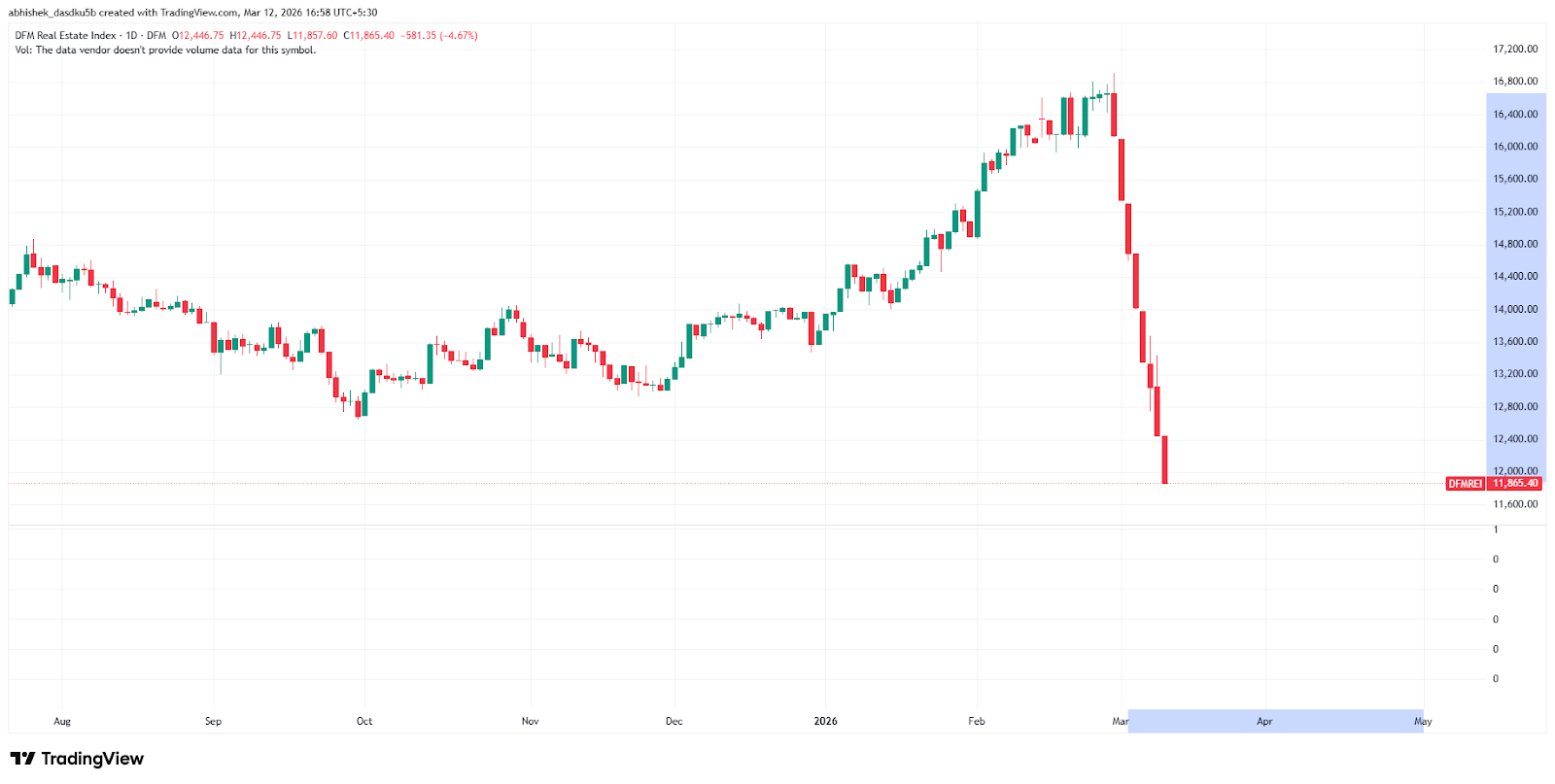
The Dubai Financial Market (DFM) Real Estate Index has plunged 30 percent since the conflict has started. It has now erased every gain made in 2025. The trigger was swift and brutal: the United States and Israel launched missile strikes on Iran last week. Iran’s Supreme Leader, Ayatollah Ali Khamenei, was killed. Tehran responded by firing back targeting Israel, US military bases, and Gulf states including the UAE, Saudi Arabia, Qatar, Kuwait, and Bahrain.
For Dubai, which had become one of the world’s most talked-about property destinations, the timing could not have been worse. The market had just wrapped up its strongest year on record. Now, investors are wondering how long this storm will last and whether it signals something deeper.
A Record Year Brought Down by Geopolitics
To understand how dramatic this reversal is, consider what Dubai’s property sector looked like just before the crisis hit. In 2025, real estate transactions in the emirate reached nearly AED 917 billion roughly $250 billion. That figure is the highest in Dubai’s history. More than 270,000 deals were closed during the year, reflecting broad investor participation across all segments of the market.
Residential deals alone accounted for around 200,000 transactions worth AED 538 billion. Since 2021, housing prices across Dubai have risen between 60 and 75 per cent. For context, the DFM Real Estate Index had gained 63 per cent in 2024 and 38 per cent in 2023. It reached a peak of 16,910 points on February 27 this year just days before tensions began to escalate.
The market had also attracted a broad base of global buyers. Indian nationals account for 20 to 22 per cent of all foreign property purchases, the single largest overseas investor group. On the other hand, prime residential assets in Dubai have offered annual rental yields between 6 and 9 per cent, among the highest in the world.
Government policies played a key role in driving that growth. Long-term residency visas, favourable investment regulations, and the Golden Visa programme attracted entrepreneurs, professionals, and high-net-worth buyers. As a result, the market built real structural depth not just speculative froth. However, even the strongest markets can be shaken by war. And the current conflict has done exactly that.
The Waiting Game: How Fear Is Freezing Dubai’s Property Deals
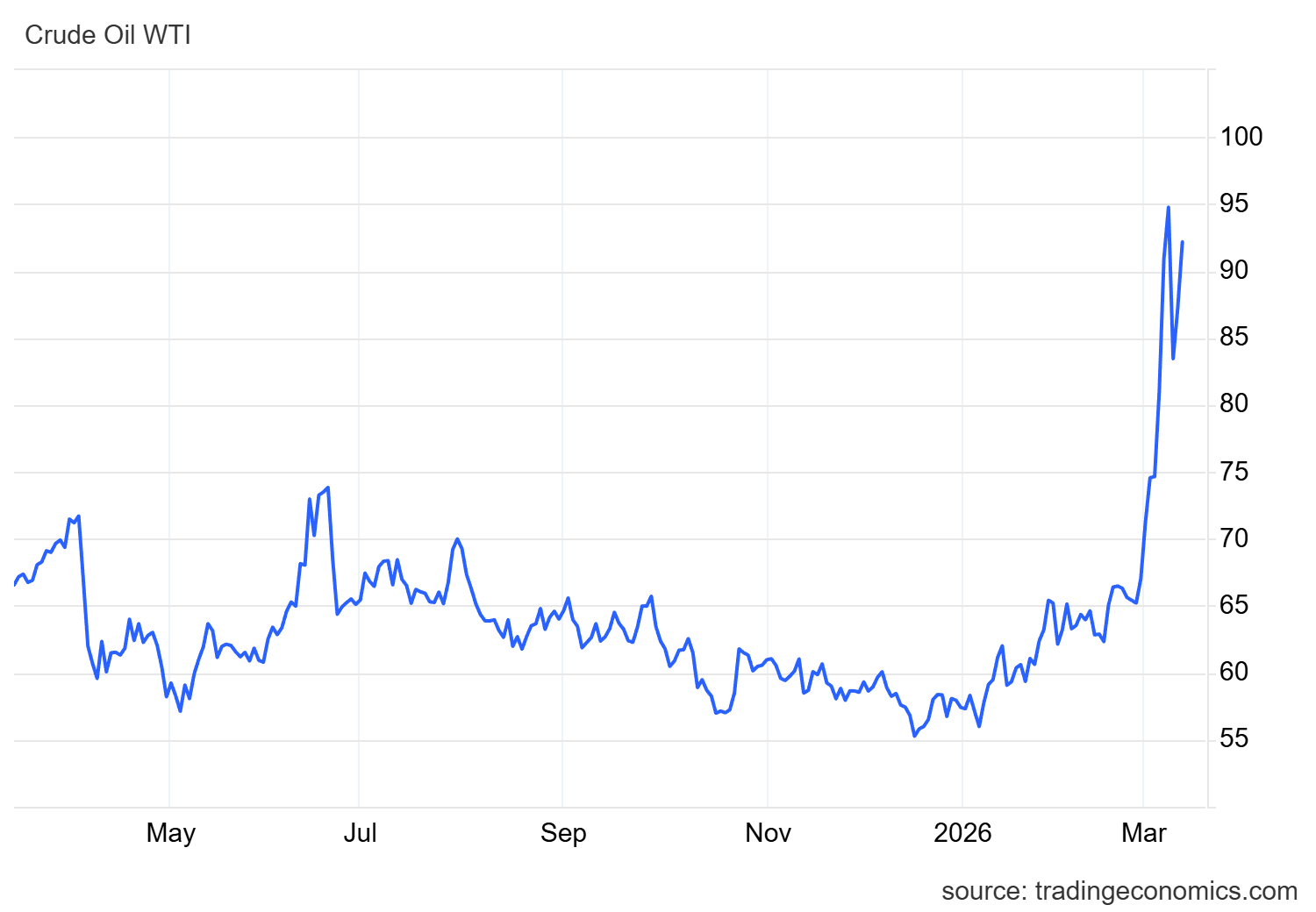
The financial fallout from the war has moved quickly across global markets. US crude oil prices jumped 35 per cent last week. Brent crude rose 28 per cent. So far this year, both benchmarks have climbed roughly 88 to 98 per cent respectively.
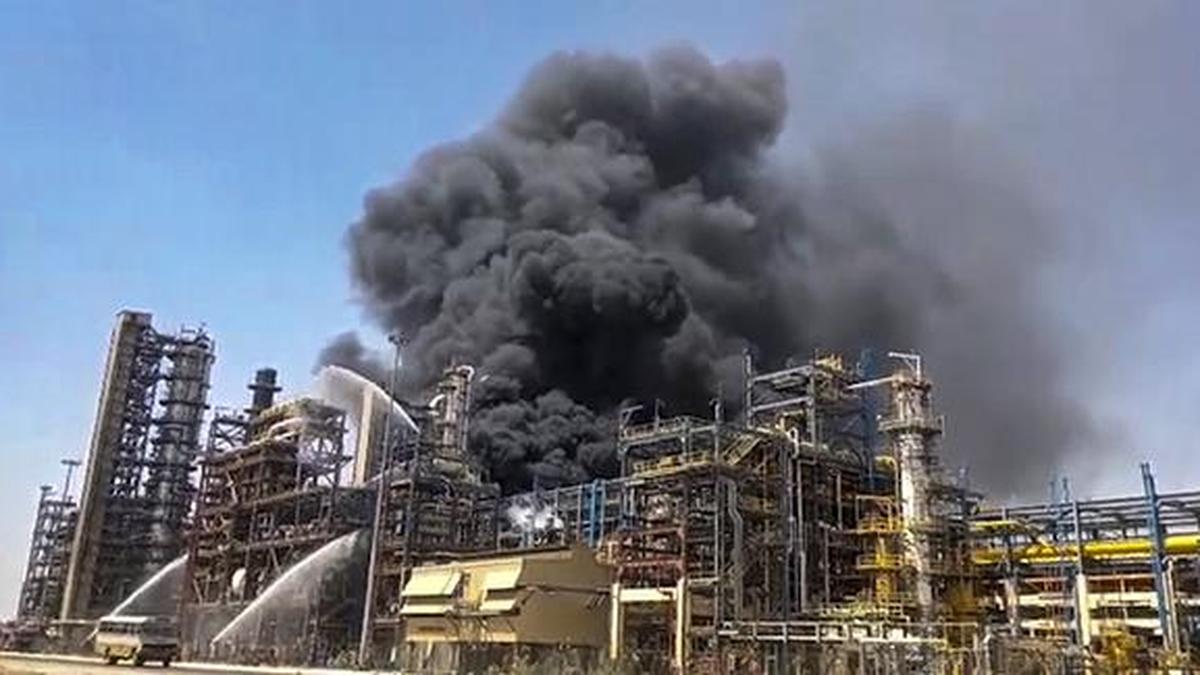
Iraq, Kuwait, and the UAE have cut oil production as storage capacity fills up. Iran, Israel, and the US have also targeted oil and gas facilities since the conflict began. That has added further pressure to already strained global supply chains.
In property markets, Analysts see that sentiment has shifted significantly. Geopolitical shocks typically slow deal-making before affecting prices. Some buyers are now adopting a wait-and-watch approach. Others are renegotiating prices or asking developers for concessions.
As a result, the mid-market segment properties priced between roughly $330,000 and $880,000 is expected to feel pressure first. These homes are popular with international investors seeking rental income. As buyers grow more cautious, negotiations in this price bracket are becoming more intense.
Amit Goenka, chairman of investment firm Nisus Finance, said: ‘In the mid-market segment, negotiations are likely to intensify as investors become more cautious.’ Even the luxury segment could see a short-term slowdown, as wealthy buyers wait for clearer signals before committing to large purchases.
Tourism Under Threat And What It Means for Rentals
Dubai’s property market does not operate in isolation. It is tightly linked to the region’s tourism industry, which sustains short-term rentals and hospitality investment.
The Middle East tourism sector contributes an estimated $367 billion annually to regional economies. Analysts warn that prolonged instability could reduce visitor numbers by 23 million to 38 million travellers. Tourism revenues could fall by $34 billion to $56 billion if the conflict drags on.
If that happens, the short-term rental market would likely feel the impact first. Property owners who rely on Airbnb-style income could see occupancy rates fall. That, in turn, would reduce rental yields, one of the main reasons global investors entered the Dubai market.
Nevertheless, analysts are careful not to overstate the damage. Dubai’s large expatriate workforce continues to generate steady, long-term housing demand. Even if tourist arrivals slow, the city’s residential market has foundations that extend well beyond holiday bookings.
Faisal Durrani, partner and head of Middle East research at Knight Frank, points to the city’s broader appeal. ‘Safety, rule of law, strong infrastructure and education all contribute to Dubai’s appeal as a place to live and invest,’ he said.
Furthermore, ground-level reports from Dubai residents paint a different picture from international media coverage. Offices remain open. Restaurants and public spaces continue to function normally. The UAE government has been sending real-time safety alerts via mobile phones. Several expat residents report feeling safer in Dubai than in their home countries.
Dubai Has Been Here Before
To understand what happens next, it helps to look at what happened before. Dubai’s property market has endured multiple serious shocks over the past two decades and recovered from all of them.
During the 2008 global financial crisis, property values in Dubai dropped by as much as 50 to 60 percent. Towers sat half-built. Defaults surged. The government responded with sweeping regulatory reform locking developer funds in escrow accounts, empowering the Real Estate Regulatory Agency, and introducing mortgage caps to limit speculative debt.
That crisis, though painful, transformed Dubai from a speculative market into one of the most transparently regulated property markets in the world. It laid the foundation for the 2013–2014 boom that followed.
Then came the Arab Spring. As instability swept Egypt, Libya, and Syria, long-term capital began flowing into Dubai as a safe haven. The city absorbed billions in foreign direct investment without triggering another bubble. Prices between 2014 and 2019 declined roughly 25 to 30 per cent a natural correction after rapid growth.
The COVID-19 pandemic looked like an existential threat at first. Borders closed. Aviation stopped. Yet Dubai moved fast rolling out one of the world’s fastest vaccination programmes and reopening months before most of Europe and Asia. The Golden Visa programme launched during this period and changed how wealthy individuals globally thought about the city. Within about a year, the market had fully rebounded.
In April 2024, the UAE experienced its heaviest rainfall in 75 years. Infrastructure was damaged. However, rather than causing panic, the floods pushed buyers to conduct more rigorous due diligence. Poor-quality developers were exposed. Well-managed projects attracted stronger demand. The crisis became a quality filter. Each time, Dubai identified the weakness that a crisis exposed. Each time, it built something stronger in response.
As a result, analysts say the current sell-off reflects market sentiment not a collapse of the underlying fundamentals. Transaction volumes remain high. Prices have not yet moved significantly. Foreign buyer demand has not disappeared.
For investors watching from the sidelines, the central question is now familiar: is this a buying opportunity or the beginning of a deeper downturn? In past cycles, those who held conviction during the peak of uncertainty were often rewarded when calm returned.
Still, nobody knows how long the conflict will last or how far it will spread. Until ceasefire signals emerge, volatility is expected to continue. The DFM index will likely remain under pressure. And buyers in the mid-market segment will keep pushing for better deals. What seems clear, however, is this: Dubai has faced bigger crises before. It has always found a way through.
Disclaimer: The views and investment tips expressed by investment experts/broking houses/rating agencies on tradebrains.in are their own, and not that of the website or its management. Investing in equities poses a risk of financial losses. Investors must therefore exercise due caution while investing or trading in stocks. Trade Brains Technologies Private Limited or the author are not liable for any losses caused as a result of the decision based on this article. Please consult your investment advisor before investing.
The post Dubai Real Estate Just Lost $250 Billion in Days: Is This a Dip or the Start of a Crash? appeared first on Trade Brains.
What's Your Reaction?