



































Uflex Shares Down 30%; Can Capex Plans Revive Growth by FY27?
SYNOPSIS: A leading integrated packaging player trading about 31 percent below its 52-week high remains on watch, backed by global presence, diversified packaging ecosystem, expansion capex, and management’s margin improvement outlook from FY27. This multinational packaging company from India has built a strong presence across almost every segment of the packaging value chain. Its operations […] The post Uflex Shares Down 30%; Can Capex Plans Revive Growth by FY27? appeared first on Trade Brains.

SYNOPSIS: A leading integrated packaging player trading about 31 percent below its 52-week high remains on watch, backed by global presence, diversified packaging ecosystem, expansion capex, and management’s margin improvement outlook from FY27.
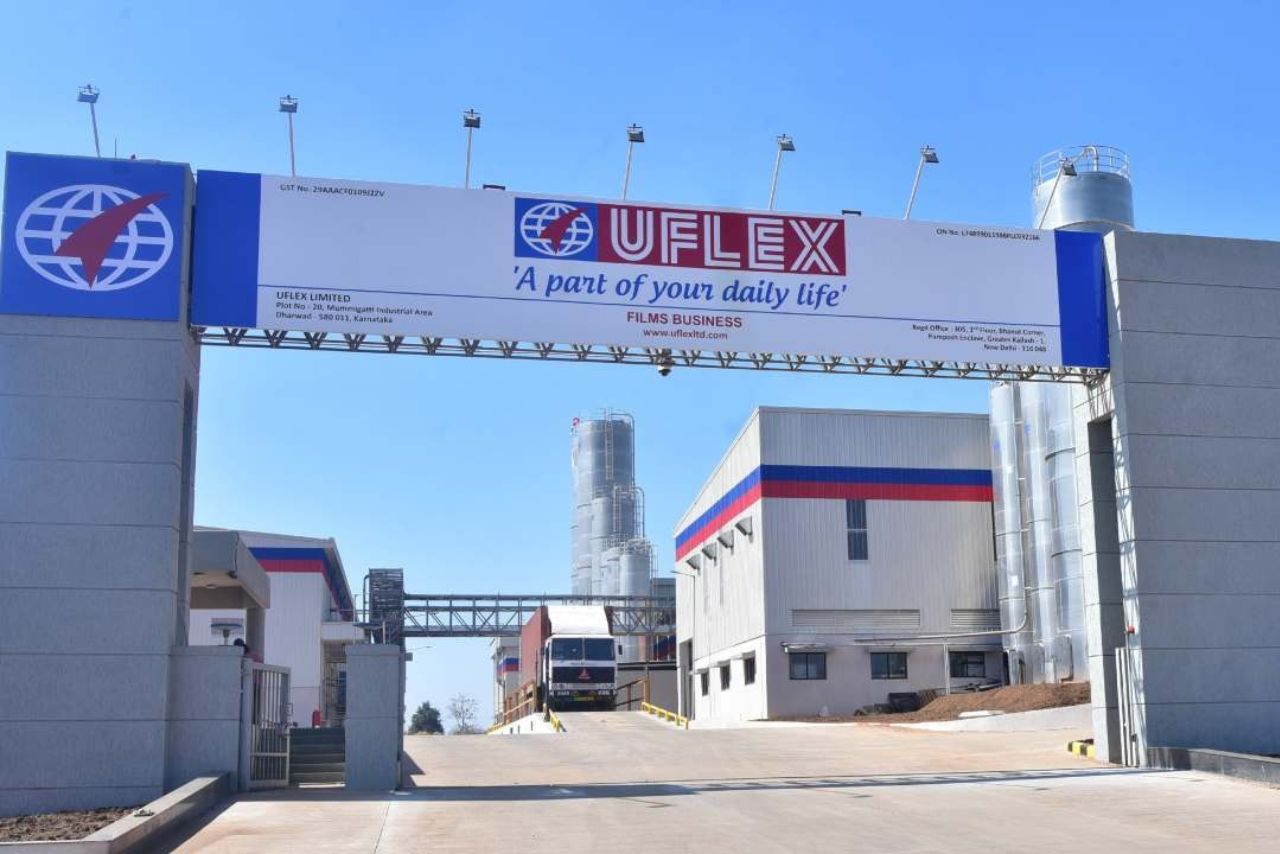
This multinational packaging company from India has built a strong presence across almost every segment of the packaging value chain. Its operations span a wide range of areas, including packaging films, chemicals, aseptic liquid packaging, holography, flexible packaging, printing cylinders, and engineering solutions, making it one of the most integrated players in the global flexible packaging industry.
The company we are referring to is Uflex Limited, which is engaged in the business of manufacturing and selling flexible packaging products and offering complete flexible packaging solutions to its customers across the globe. One reason the company is particularly worth watching right now is its exposure to the Middle East region, which contributes around 15.1 percent of its total revenue, making it relevant amid the ongoing developments in that market.
With a market cap of Rs. 3,266 crores, shares of Uflex Limited surged around 1 percent to close at Rs. 452.25 on Thursday. The stock has delivered negative returns of around 3 percent in one year, as well as nearly 11 percent in the last one month. Additionally, it is currently trading at a discount of around 31 percent from its 52-week high of Rs. 652.8 recorded on 23rd May 2025.
In this article, we take a closer look at the company’s business profile, financial performance, revenue mix, management guidance and other key aspects to better understand its positioning and growth prospects.
Company Overview
Established in 1985, Uflex Limited has built a strong operational presence with 17 manufacturing units and a customer base exceeding 5,000 clients. Its products and services reach more than 150 countries, and currently operates with a global production capacity of around 1,351,910 metric tonnes per annum (MTPA).
In terms of product capabilities, the company has an aseptic liquid packaging capacity of 12 billion packs, tube manufacturing capacity exceeding 300 million units, and pouch production capacity of over 1,090 million units. It also operates a recycling capacity of 74,317 MTPA and has recycled around 5.4 billion PET bottles (PCR PET). Additionally, the company has a chemicals production capacity of around 69,730 MTPA, further strengthening its presence across the packaging value chain.
Its operations begin with resins, where it produces vPET chips for film and bottle grades, along with recyclable resins and moulding products such as rPET chips and rMLP granules. In the next stage, the company manufactures packaging films, including BOPET, BOPP, and CPP films, along with value-added specialty films such as metallised films, aluminium oxide (AlOx) coated films, and PCR-based films. These materials form the base for a wide range of packaging applications.
The company also produces key intermediaries, including chemicals such as inks and adhesives, holography solutions, printing cylinders, and engineering solutions, which support the packaging manufacturing process.
At the final stage, these inputs are converted into flexible packaging products and aseptic packaging solutions, which are supplied to customers across industries such as food, beverages, personal care, and consumer goods, thereby creating an integrated packaging ecosystem.
Financials & Revenue Mix
For Q3 FY26, the company posted a consolidated revenue from operations of Rs. 3,612 crores, reflecting a sequential decline of around 6 percent QoQ compared to Rs. 3,832 crores in Q2 FY26. Likewise, on a year-on-year basis, revenue fell over 3 percent from Rs. 3,735 crores recorded in Q3 FY25.
Revenue performance was affected by a decline in packaging film volumes (down 6.8 percent YoY) along with lower realisations. In India, volumes declined 9.1 percent YoY, primarily due to increased low-cost imports, export diversion, and inventory destocking by FMCG companies. In overseas markets, US sales volumes fell 8.8 percent YoY, reflecting weak consumer packaged goods (CPG) demand and subdued consumer sentiment. Additionally, tariff-related uncertainties led to excess supply in non-US markets, which further weighed on volumes in the Middle East & Africa (down 8.0 percent YoY) and Europe (down 6.2 percent YoY).
Net profit for Q3 FY26 stood at Rs. 36 crore, indicating an increase of nearly 33 percent QoQ from Rs. 27 crores in Q2 FY26, but a year-on-year decline by around 74 percent from Rs. 137 crores reported in Q3 FY25.
The company’s consolidated revenue mix for Q3 FY26 shows that Packaging films remain the largest contributor, accounting for 52.7 percent of total revenue. This is followed by the Packaging segment, which contributed 38 percent, while other value-added products (VAP) accounted for 5.5 percent and the engineering segment contributed 3.2 percent.
From a geographical perspective in Q3 FY26, India remained the largest market, contributing 46.1 percent of total revenue. The Americas accounted for 18.9 percent, followed by Europe with 17.4 percent, and the Middle East & Africa region contributed 15.1 percent, while other regions accounted for about 2 percent.
Capex Updates
During Q3 FY26, the company incurred a capex of ~Rs. 434.2 crores, primarily directed toward multiple expansion and capacity-building projects across Egypt, Mexico, and India. The company invested Rs. 72.2 crores in Egypt for its aseptic packaging facility, Rs. 13 crores in Mexico for a Woven Polypropylene (WPP) bag manufacturing unit, Rs. 115.3 crores in India (Noida) for PET and MLP recycling units, and Rs. 67.5 crores in Dharwad (Karnataka) toward setting up a new BOPP packaging films manufacturing line.
As part of its sustainability initiatives, the company is establishing two recycling plants in Noida. These include a PCR rPET chips plant with a capacity of 36,000 MTPA and an MLP recycling plant with a capacity of 3,600 MTPA, with a total estimated investment of ~Rs. 317 crores. Out of this, Rs. 200.3 crores had already been incurred as of December 2025, while the remaining Rs. 116.8 crores is expected to be invested before commissioning in FY26.
To address the rising demand for packaging films in India, the company is also setting up a new BOPP film manufacturing line at Dharwad, Karnataka, with an annual capacity of 54,000 MTPA. The project involves a total capex of Rs. 715.4 crores, of which Rs. 67.5 crores had been spent as of December 2025. The facility is expected to be commissioned during FY27-28.
In Egypt, the company plans to commission an aseptic packaging facility with an annual capacity of 12 billion packs to cater to increasing demand across Egypt, Europe, the Middle East, and East Africa. The project has an estimated cost of about Rs. 1,133 crores, of which ~Rs. 805 crores has already been invested, while the remaining around Rs. 326.6 crores will be deployed before commissioning in FY26.
Additionally, the company is setting up a Woven Polypropylene (WPP) bag manufacturing plant in Mexico with a capacity of 80 million bags annually, aimed at meeting the growing demand for pet food packaging in North and South America. The project has an estimated investment of $50 million and is currently undergoing stability testing and validation processes ahead of commissioning in FY26.
Management Guidance
The management has reiterated its FY26 guidance, maintaining an EBITDA outlook of Rs. 1,800-1,850 crore for the year and expects the EBITDA margin to remain around 12 percent.
Looking ahead, the management indicated that margins could improve further from FY27 onward, supported by better product mix, ongoing cost rationalisation measures, and improved realisations in packaging films across both domestic and international markets.
Regarding FY27 visibility, the management refrained from providing a firm financial projection at this stage, stating that clearer guidance will emerge once the Egypt aseptic packaging facility is commissioned and ramp-up visibility improves. However, management indicated that the combined contribution from the India and Egypt operations is expected to drive meaningful growth once both facilities operate together at scale.
From an industry perspective, management pointed to early signs of pricing recovery in packaging films, with BOPET prices approaching around Rs. 110 per kg and BOPP NTT around Rs. 120-121 per kg, and expects further normalisation as tariff-related uncertainties ease.
On the balance sheet front, the company disclosed debt maturities of ~Rs. 1,450-1,500 crore, with a blended cost of funds of around 7 percent. The debt mix currently comprises 74 percent long-term borrowings and 26 percent working capital debt, while geographically, around 40 percent of long-term debt is domestic and about 60 percent is overseas borrowings.
Conclusion
Overall, the company operates across multiple segments of the packaging value chain and maintains a diversified global presence. While recent financial performance has been impacted by softer demand, lower realisations, and supply pressures in certain markets, the company continues to invest in capacity expansion and sustainability initiatives across key regions.
Management has reiterated its FY26 guidance and expects gradual improvement in margins over the medium term, supported by a better product mix, cost rationalisation, and potential recovery in packaging film pricing. At the same time, developments in the Middle East region will also remain an important factor to monitor, given the company’s meaningful revenue exposure to the region. Going forward, the pace of demand recovery, global trade dynamics, geopolitical developments, and the successful ramp-up of new facilities will be key factors to watch.
Disclaimer: The views and investment tips expressed by investment experts/broking houses/rating agencies on tradebrains.in are their own, and not that of the website or its management. Investing in equities poses a risk of financial losses. Investors must therefore exercise due caution while investing or trading in stocks. Trade Brains Technologies Private Limited or the author are not liable for any losses caused as a result of the decision based on this article. Please consult your investment advisor before investing.
The post Uflex Shares Down 30%; Can Capex Plans Revive Growth by FY27? appeared first on Trade Brains.
What's Your Reaction?