











































Top 7 companies that got delisted from the Indian stock markets in the last 25 years
Synopsis: In the last 25 years, several prominent companies have exited India’s stock exchanges, including Cadbury India and Reckitt Benckiser India. Some chose to delist voluntarily to consolidate ownership and reduce regulatory burdens, while others were forced out due to financial irregularities or operational failures, highlighting the risks and realities of investing in the market. […] The post Top 7 companies that got delisted from the Indian stock markets in the last 25 years appeared first on Trade Brains.



Synopsis: In the last 25 years, several prominent companies have exited India’s stock exchanges, including Cadbury India and Reckitt Benckiser India. Some chose to delist voluntarily to consolidate ownership and reduce regulatory burdens, while others were forced out due to financial irregularities or operational failures, highlighting the risks and realities of investing in the market.
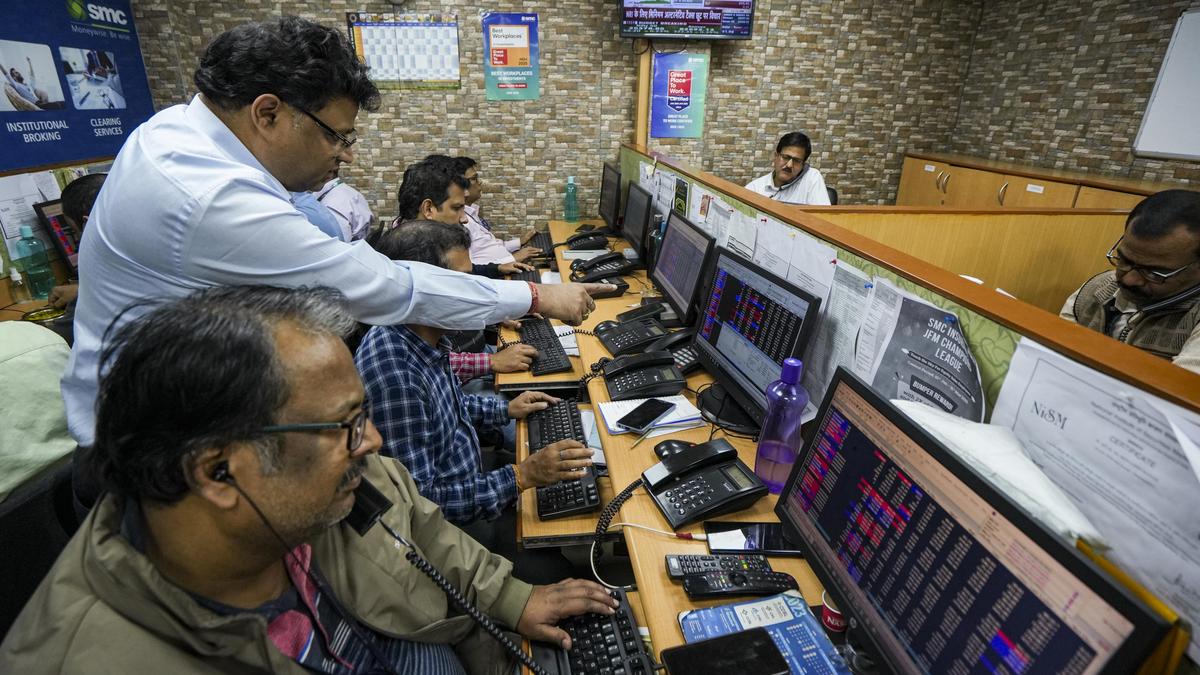
Over the past 25 years, Dalal Street has witnessed several high-profile exits, from household consumer brands to major industrial players. These companies disappeared from public trading for reasons ranging from strategic restructuring to financial troubles, leaving investors and market watchers asking, Which companies were delisted and why?
What Does Delisting Mean?
Delisted shares are shares of a company that have been removed permanently from a stock exchange like the NSE or BSE. Once a company is delisted, its shares can no longer be bought or sold on these exchanges. In India, the process of delisting is regulated by SEBI, the market watchdog. A company can be delisted either voluntarily (by its own choice) or involuntarily (forced by the exchange or regulator).
A company may get delisted for several reasons, such as low market value, bankruptcy, or failure to follow stock exchange rules. Many investors wonder what happens to their shares if a company gets delisted. Even after delisting, you still remain a shareholder of the company based on the number of shares you own. However, you cannot trade these shares on the stock exchange anymore. You can only sell them in the over-the-counter market by finding a buyer privately. Whether the delisting is voluntary or involuntary, it can have a significant financial impact on investors.
Types of Delistings
Voluntary Delisting
In voluntary delisting, a company chooses on its own to remove its shares permanently from the stock exchange, usually because it wants to become a private company. This often happens due to mergers, acquisitions, amalgamations, or poor business performance.
If you are a shareholder in such a company, SEBI rules require the company to give you two choices, either sell your shares through the reverse book-building process or continue holding them until you find a private buyer later.
Involuntary Delisting
Involuntary delisting happens when a stock exchange forces a company to leave the market. This usually occurs due to rule violations, delayed financial reporting, or a very low share price over a long period.
In such cases, promoters must buy back shares from public shareholders at a price decided by an independent evaluator. Even though you still legally own the shares after delisting, they may lose most or all of their value. Therefore, if any stock you own gets delisted, it is generally better to sell your shares. You can either exit completely or sell them back to the company when it offers a buyback.
Why Do Companies Delist Their Shares?
Multinational holding companies often delist their Indian subsidiaries once they already own a large majority stake. Many of these firms were listed decades ago when foreign ownership rules were stricter and public markets were needed to expand in India. Over time, as the parent increased its stake through open offers, the need for a public listing reduced. Once ownership crosses 75-90 percent, the remaining public shareholders create obligations without adding real value, making delisting a practical choice.
Another major reason is the cost and complexity of being listed in India. Public companies must follow strict SEBI rules, quarterly reporting, independent director norms, and detailed disclosures. For global groups maintaining a small listed entity adds compliance costs without financial benefit. Delisting allows them to operate with greater flexibility and less regulatory burden.
Finally, delisting helps companies restructure their India business more easily. As private entities, they can merge subsidiaries, move assets, change capital structure, or adjust profit flows without minority shareholder resistance. In simple terms, delisting turns the Indian company from a public firm into a fully controlled subsidiary of the global parent. Let us look at some of the most famous delistings that have taken place on Dalal Street in the last 25 years.
Voluntary
Essar Oil
Essar Oil, part of the Mumbai-based Essar Group, was a major energy company operating India’s second-largest refinery in Gujarat along with private petrol pumps, a 1,000-MW power plant, and the Vadinar port and oil terminal. The company’s ownership structure changed significantly in 2016 when Russia’s state-owned oil giant Rosneft bought a 49.13 percent stake, while global traders Trafigura and UCP Investment Group acquired another 49.13 percent stake in a deal worth about USD 12.9 billion.
Following this takeover, the new owners decided to take the company private, which led to its voluntary delisting from Indian stock exchanges. The company was later renamed Nayara Energy in May 2018, marking the transition from an Indian listed firm to a privately owned global downstream energy player.
As part of the delisting process, Essar Oil conducted a reverse book-building exercise in which the final exit price was discovered at Rs. 262.80 per share. To buy back public shareholders’ stakes, the company paid Rs. 3,745 crore, partly funded through USD 330 million bridge financing from Russia’s VTB Bank. Trading in Essar Oil shares was officially stopped from February 10, 2016, and the stock was completely removed from the NSE and BSE records on February 17, 2016, formally completing its delisting from Dalal Street.
Cadbury India
Cadbury India is one of the country’s most popular chocolate makers today, known for brands like Dairy Milk, Silk, 5 Star, Perk and Gems across urban and rural markets.
Cadbury India was delisted from the Bombay Stock Exchange on January 20, 2003 after its foreign parent Cadbury Schweppes and its associate increased their stake in the company to more than 90 percent. Once the foreign owners crossed this threshold, they complied with SEBI’s takeover rules and moved ahead with removing Cadbury India from stock exchange trading. As per a BSE release, the company’s shares were struck off the list of officially quoted securities following this acquisition.
Before delisting, the British multinational made an open offer to Indian shareholders at Rs. 500 per share to buy the remaining public shareholding. Even after delisting, the acquirer agreed to provide an exit option at the same price of Rs. 500 per share for one full year from the date of delisting, allowing small shareholders additional time to sell their shares if they wished to exit.
Reckitt Benckiser India
Reckitt Benckiser India, known for household brands like Dettol, Mortein and Harpic, was one of the strongest FMCG companies in India before its delisting. In 2003, its UK-based parent, Reckitt Benckiser Plc, decided to take the company private by increasing its ownership and removing it from public markets. The parent company followed SEBI’s takeover regulations and moved ahead with a complete buyout of minority shareholders, which allowed it to gain full control over the Indian business without the requirements of a public listing.
As per a BSE release, trading in Reckitt Benckiser (India) shares was discontinued and the stock was officially delisted from the Bombay Stock Exchange from May 19, 2003. To protect public shareholders, the acquirer offered an exit price of Rs. 250 per share for a full year after delisting and also committed to resolving any pending investor complaints during this period. This completed Reckitt Benckiser India’s transition from a listed company to a wholly privately owned subsidiary of its UK parent.
Phillips India
Philips India, a well-known consumer electronics and appliances company, was delisted from the stock exchange on February 16, 2004. The delisting happened after its Dutch parent company, Royal Philips Electronics NV of the Netherlands, decided to make Philips India a 100 percent wholly owned subsidiary. At that time, the parent already owned 51 percent of the company and first proposed to buy an additional 23 percent stake at Rs. 105 per share. Later, it revised its plan and offered to purchase the entire remaining 49 percent public shareholding in an all-cash deal.
By buying out the full floating stock, Philips aimed to completely privatize its Indian arm as part of a larger restructuring of its consumer durables and home appliances business. The company believed that becoming a 100 percent subsidiary would help improve profitability, allow it to focus on high-end electronic products, and strengthen its position in premium gadgets and appliances. With this buyout, Philips India ceased to be a publicly traded company and became fully controlled by its Dutch parent.
Other Notable Delistings
Other notable delistings on Dalal Street include Otis Elevator Company (India), which was removed from both NSE and BSE on June 16, 2003. The delisting occurred after the company’s public shareholding fell below the minimum required level under SEBI’s takeover regulations. Since it was no longer compliant with listing norms, the company itself requested the exchanges to delist its shares.
Another prominent case was Ray Ban Sun Optics India, which was delisted on October 22, 2008 under SEBI’s delisting guidelines. Its majority owner, Ray-Ban Indian Holdings, bought out the remaining public shares at Rs. 140 per share to take full control of the company. Similarly, Panasonic Home Appliances India was delisted on April 24, 2015 after its parent company purchased additional shares at Rs. 380 per share, increasing its stake to 90.64 percent and then applying for delisting from the BSE.
Involuntary
Kingfisher Airlines
Kingfisher Airlines, promoted by Vijay Mallya, was one of India’s most high-profile corporate failures that eventually led to its compulsory delisting from stock exchanges. The airline stopped operations in 2012 and never made a profit since its launch in 2005. By March 31, 2013, the company had accumulated losses of Rs 16,023.47 crore and its net worth had turned negative at Rs 12,919.82 crore, making its financial position extremely weak. Despite this, its shares continued to be actively traded because of a very high free float of 95 percent, with retail and high-net-worth investors holding 58.5 percent of the stock.
Trading in Kingfisher Airlines shares was suspended on December 1, 2014 due to non-compliance with listing rules, as the company failed to report its quarterly financial results for two consecutive quarters since the December quarter of FY14. Under Indian regulations, if a company remains suspended for more than six months, stock exchanges can initiate compulsory delisting proceedings. NSE and BSE issued show-cause notices and public notices in early 2018 under the Securities Contract (Regulations) Act and SEBI’s delisting regulations to begin the formal delisting process. Meanwhile, the entire promoter shareholding of 8.54 percent was also frozen.
The final compulsory delisting took place in two stages. First, BSE delisted Kingfisher Airlines with effect from May 11, 2018. As per rules, once a company is delisted from one recognized exchange, it must be delisted from all exchanges. Accordingly, NSE completed its process and formally delisted the stock with effect from May 30, 2018. This meant the shares could no longer be traded anywhere in India, and the promoters were barred from accessing capital markets for 10 years while also being required to repurchase outstanding shares at a fair value determined by an arbitrator.
ABG Shipyard
ABG Shipyard Ltd, founded by Rishi Kamlesh Agarwal, was once India’s largest shipbuilding and repair company and the flagship of the ABG Group. The company operated major shipyards in Dahej and Surat in Gujarat and built 165 ships over 16 years till 2008, including specialized vessels such as newsprint carriers, bulk cement carriers, and offshore rigs.
About 80 percent of its orders came from international clients, while the rest included prestigious domestic customers like the Indian Navy and the Indian Coast Guard. To fund its large operations and expansion, the company borrowed heavily from a consortium of 28 banks led by ICICI Bank.
However, instead of using the borrowed funds for business growth, the promoters diverted money for personal use through shell companies abroad. These funds were routed to 98 related sister companies and hundreds of crores were paid to connected parties, much of which was used to purchase properties. The fraud came to light only in 2019 when EY conducted a forensic audit, which confirmed large-scale fund diversion. This scandal, amounting to Rs 22,842 crore, came to be known as India’s biggest bank fraud.
ABG Shipyard’s shares were listed on the stock exchange from April 1, 2007, but trading was suspended on May 16, 2019 after the National Company Law Tribunal (NCLT), Ahmedabad ordered its liquidation in IA 113 of 2019. Mr. Sundaresh Bhat was appointed as the liquidator to oversee the process. Following the liquidation order and continued non-operation of the company, its equity shares were compulsorily delisted from the stock exchange with effect from March 2, 2020, formally ending its presence on Dalal Street.
Satyam Computer Services
Satyam Computer Services was once one of India’s leading IT outsourcing companies but became the centre of the country’s biggest corporate fraud at the time. Its founder and top management deliberately falsified financial accounts, inflated revenues, and misrepresented profits to keep the company’s share price artificially high.
A large part of the misappropriated money was invested in real estate, and the scam began to unravel in late 2008 when the Hyderabad property market collapsed, exposing links back to Satyam. The fraud was publicly confirmed in January 2009 when Chairman Byrraju Ramalinga Raju admitted that the company’s accounts had been manipulated for years.
As the scandal broke out, global and Indian markets moved quickly to suspend Satyam’s trading. On January 7, 2009, the New York Stock Exchange halted trading in Satyam shares. Soon after, India’s National Stock Exchange announced that Satyam would be removed from the prestigious S&P CNX Nifty 50 index with effect from January 12, 2009, signalling that the company had lost its credibility and standing in the market. Two days after his confession, Ramalinga Raju was arrested and charged with criminal conspiracy, breach of trust, and forgery.
The exposure of accounting fraud destroyed investor confidence and made it impossible for Satyam to continue functioning as a normal listed company. With its financial statements unreliable and legal proceedings underway, the stock effectively became untradeable and the company was pushed out of mainstream capital markets. This crisis later led to government intervention and the eventual takeover of Satyam by Tech Mahindra, marking the end of Satyam as an independent listed entity on Dalal Street.
Delistings on Dalal Street highlight the delicate balance between corporate strategy and shareholder interests. While voluntary exits often reflect consolidation, global restructuring, or regulatory convenience, involuntary removals expose financial mismanagement or operational failures. For investors, these events serve as stark reminders that market visibility does not always guarantee corporate stability.
Disclaimer: The views and investment tips expressed by investment experts/broking houses/rating agencies on tradebrains.in are their own, and not that of the website or its management. Investing in equities poses a risk of financial losses. Investors must therefore exercise due caution while investing or trading in stocks. Trade Brains Technologies Private Limited or the author are not liable for any losses caused as a result of the decision based on this article. Please consult your investment advisor before investing.
The post Top 7 companies that got delisted from the Indian stock markets in the last 25 years appeared first on Trade Brains.
What's Your Reaction?