

















































Why Gautam Adani Could Become the Most Important Person in India’s Economy by 2030?
Synopsis: Few business leaders in India have attracted as much controversy, scrutiny, and debate as Gautam Adani. From allegations and market shocks to rapid expansion across critical industries, his raise has often divided opinions. Yet as the Adani Group continues to expand across ports, energy, logistics, aviation, digital infrastructure, and manufacturing, a larger question is […] The post Why Gautam Adani Could Become the Most Important Person in India’s Economy by 2030? appeared first on Trade Brains.



Synopsis: Few business leaders in India have attracted as much controversy, scrutiny, and debate as Gautam Adani. From allegations and market shocks to rapid expansion across critical industries, his raise has often divided opinions. Yet as the Adani Group continues to expand across ports, energy, logistics, aviation, digital infrastructure, and manufacturing, a larger question is emerging: could Gautam Adani ultimately become one of the most important figures shaping India’s economy by 2030?
The Adani Group’s journey began with Gautam Adani working as a diamond sorter in Mumbai before returning to Ahmedabad in 1981 to manage his brother’s plastics business. In 1988, he founded Adani Exports, now known as Adani Enterprises, which started as a commodity trading company dealing in agricultural and power-related products. During the early 1990s, the business began expanding rapidly. A contract with the Gujarat state government in 1991 helped bring in capital and resources that allowed the company to diversify its operations. By 1993, the group had already expanded its import and export activities into international markets. A major turning point came in 1995 when the company developed Mundra Port, which later became India’s largest private port and laid the foundation for its expansion into infrastructure sectors such as airports, roads and power.
Over the following decades, the group steadily expanded across multiple industries. Adani Power was established in 1998 as India’s demand for electricity increased, followed by the creation of Adani Wilmar in 2001, which marked the group’s entry into the edible oil and agribusiness sector. The company went public in 2002, strengthening its financial position and enabling further growth. Expansion continued with the development of a Special Economic Zone in 2006, while Adani Power became the country’s largest private thermal power producer in 2009. The group later entered renewable energy, launched Adani Transmission in 2017 to develop private power transmission infrastructure, and made a major international investment through Australia’s Carmichael Coal Mine and Rail Project in 2019. By 2020, the Adani Group had crossed a significant milestone by becoming the third Indian company to surpass a USD 100 billion market capitalization, reflecting its rapid growth and increasing role in India’s economy.
Ports – The Gateway To India’s Trade
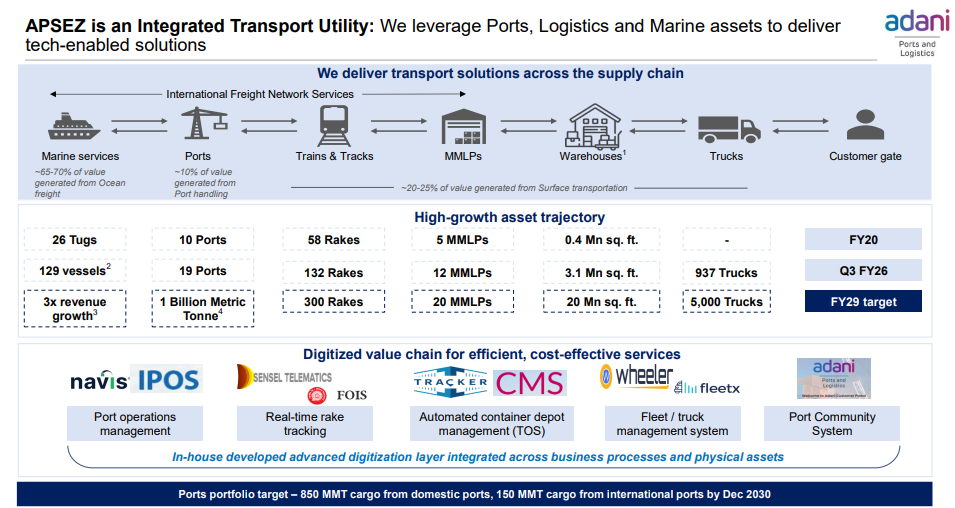
One of the strongest pillars of the Adani Group’s presence in India’s economy is its dominance in ports and logistics. Adani Ports and Special Economic Zone (APSEZ) has developed what it describes as an integrated transport utility that connects cargo movement from its origin all the way to the final destination. This system covers the entire logistics chain, starting from international freight networks and port operations to rail transportation, multi-modal logistics parks, warehousing, and last-mile road delivery. Supported by digital infrastructure and artificial intelligence-based optimisation, this “shore-to-door” model allows the company to manage cargo movement efficiently across the entire supply chain.
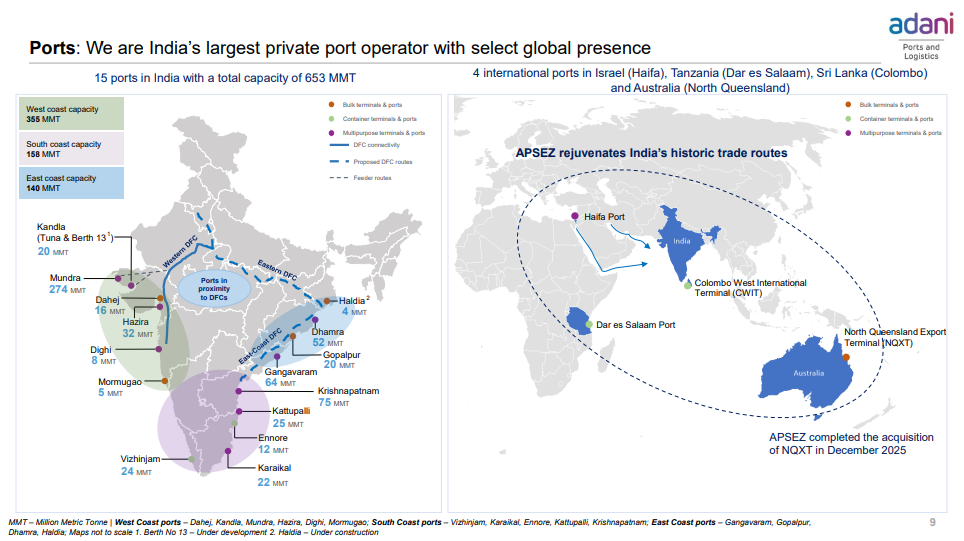
The scale of this network is significant. APSEZ operates a network of 15 ports and terminals located across India’s western, southern, and eastern coastlines, giving it a presence across the country’s key maritime trade routes. Alongside these ports, the company runs a large marine fleet of 129 vessels and has built an integrated logistics ecosystem that includes 12 multi-modal logistics parks, more than 3.1 million square feet of warehousing space, and a proprietary logistics platform that manages over 25,000 trucks. Together, these assets allow the company to handle cargo not only from coastal regions but also from deep within the country’s hinterland.
The company’s operations are not limited to India. APSEZ also runs four international ports located in Australia, Colombo, Israel, and Tanzania, expanding its reach into global trade routes. Currently, the company has a cargo handling capacity of around 653 million tonnes per year and accounts for roughly 28 percent of India’s total port volumes. Looking ahead, it aims to increase throughput to one billion tonnes by 2030. Its operational scale and infrastructure capabilities have also earned global recognition, with the company ranking in the top 5 percent of transportation and infrastructure firms in the 2025 S&P Global Corporate Sustainability Assessment, while five of its ports were included in the World Bank’s Container Port Performance Index for 2024.
Airports – Control of Passenger Infrastructure
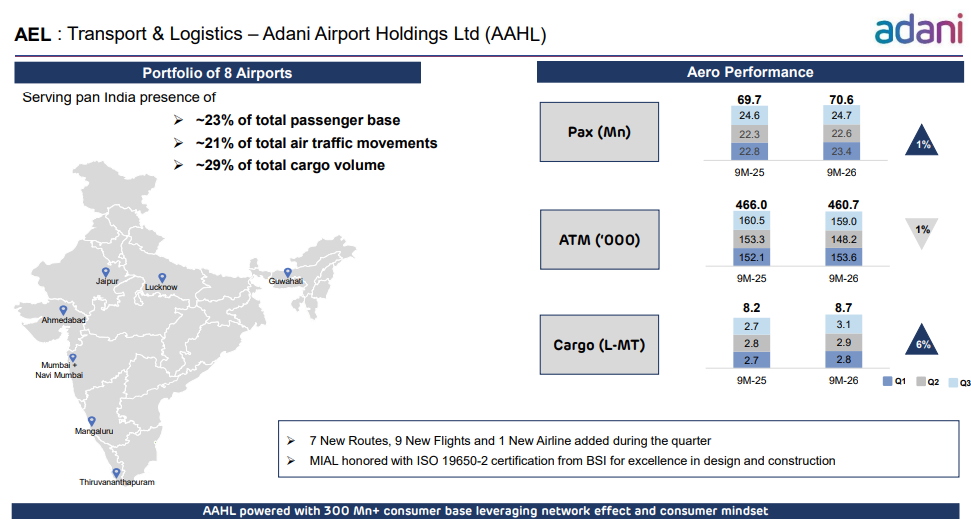
The Adani Group has emerged as a major force in India’s aviation sector through Adani Airport Holdings Ltd (AAHL). The company currently operates eight airports across key cities including Mumbai, Ahmedabad, Lucknow, Jaipur, Guwahati, Mangaluru, Thiruvananthapuram, and the upcoming Navi Mumbai airport. Through this network, the group handles around 23 percent of India’s total passenger traffic, more than 21 percent of the country’s air traffic movements, and nearly 29 percent of overall air cargo volumes. Passenger traffic across these airports has continued to grow, with more than 70 million travelers recorded during the latest nine-month period, while cargo volumes have reached around 8.7 lakh metric tonnes. As India’s aviation market expands with rising incomes, tourism, and business travel, managing such a large share of passenger and cargo flows places the Adani Group in a strong strategic position within the country’s transportation infrastructure.
Beyond passenger movement, Adani Airports is also building a diversified business ecosystem around its airport infrastructure. Nearly half of its airport revenue now comes from non-aeronautical sources such as duty-free retail, food and beverage outlets, leasing of commercial spaces, parking facilities, and passenger services. At the same time, the company continues to expand connectivity through new routes, additional flights, and airline partnerships, while also focusing on improving operational efficiency in areas such as security checks, immigration processing, check-in, and parking services. This combination of large passenger volumes, cargo handling capacity, and growing commercial activity is turning Adani’s airport network into an important platform linking India’s travel, trade, and consumer economy.
Energy – Powering The Economy
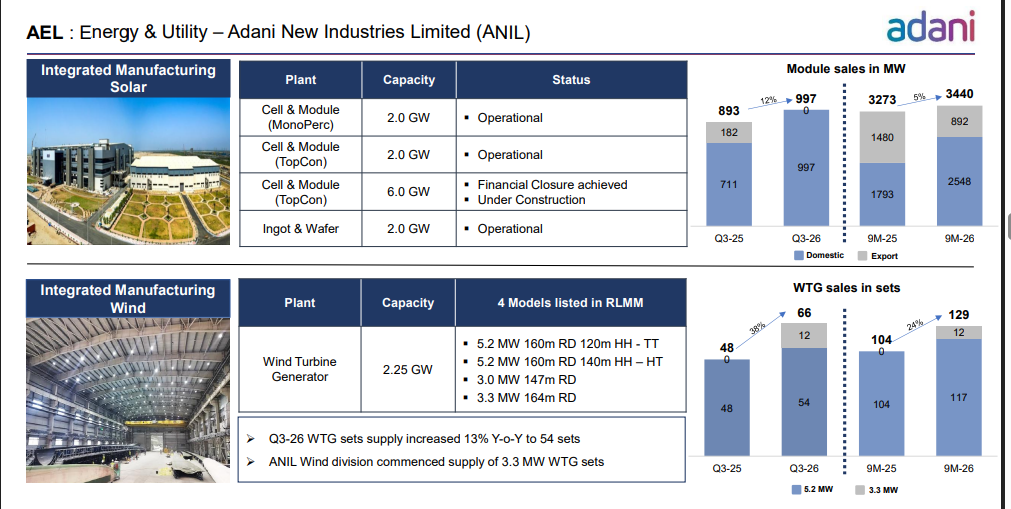
Energy is another sector where the Adani Group has built a strong presence across multiple layers of the value chain. Its clean energy manufacturing ambitions are housed under Adani New Industries Limited (ANIL), which has been created to build large-scale renewable manufacturing capacity in India. The company is developing an integrated solar manufacturing ecosystem that covers the entire process from ingots and wafers to solar cells and finished modules. Several facilities are already operational, producing mono-PERC and advanced TOPCon solar cells and modules, while additional manufacturing capacity is currently under construction. Alongside solar manufacturing, ANIL has also entered wind turbine production with manufacturing facilities and turbine models designed for different wind conditions and project requirements. By producing key renewable equipment domestically, the group is positioning itself not only as a renewable power producer but also as a supplier of critical technology for India’s clean energy expansion.
The group’s energy infrastructure is further strengthened through Adani Energy Solutions Ltd (AESL), which operates across several areas including power transmission, distribution, smart metering, and cooling solutions. AESL is the largest private transmission and distribution company in India, with transmission projects spread across 16 states and a network of around 27,901 circuit kilometers along with transformation capacity of 1,18,175 MVA. In distribution, the company serves more than 13 million consumers in Mumbai and the industrial region of Mundra SEZ. AESL has also emerged as one of India’s leading smart metering companies with an order book of more than 24.6 million meters. In addition, the company is implementing large centralized cooling systems for commercial, industrial, and mixed-use real estate developments.
At the same time, the group has built a large renewable energy portfolio through Adani Green Energy Ltd (AGEL), which develops, owns, and operates utility-scale solar, wind, and hybrid renewable power projects. With an operating renewable capacity of 10.9 GW spread across 12 states, AGEL currently has the largest renewable portfolio in India and aims to expand this to 50 GW by 2030. The company is also working on reducing the cost of renewable electricity through technology while maintaining sustainability practices such as water-positive operations, zero waste to landfill, and eliminating single-use plastics at large plants. Alongside this, Adani Total Gas Ltd (ATGL) operates one of India’s largest city gas distribution networks, supplying cleaner fuel to residential, commercial, industrial, and automotive users. The company is also expanding into electric vehicle charging and compressed biogas. In addition, the group is exploring infrastructure opportunities such as sewage treatment plants, irrigation systems, large-scale water supply networks, and desalination projects to produce drinking water and support industrial use. Together, these initiatives place the Adani Group at the center of India’s evolving energy and infrastructure ecosystem.
Data Centres – The Digital Infrastructure
The Adani Group’s digital infrastructure strategy is being developed through AdaniConneX, a 50:50 joint venture between Adani Enterprises and global data centre operator EdgeConneX. The partnership combines Adani’s strengths in land, power generation and infrastructure development with EdgeConneX’s expertise in building and operating hyperscale data centres worldwide.
The aim is to build large-scale digital infrastructure in India that can support the growing demand for cloud computing, artificial intelligence and data storage. The company has already begun establishing data centre campuses in major technology hubs including Chennai, Noida, Hyderabad and Pune, while development has also started in Navi Mumbai. Together, these projects represent more than 210 megawatts of tied-up capacity, with several facilities already operational. Over the long term, AdaniConneX plans to expand this platform to around one gigawatt of data centre capacity powered by renewable energy by 2030.
The group is also building partnerships with global technology companies to scale these projects further. Adani Enterprises has partnered with Google to develop an artificial intelligence focused data centre campus in Visakhapatnam, which could become one of India’s largest AI-ready digital infrastructure hubs. The project is expected to attract investments of around USD 15 billion between 2026 and 2030 and will be supported by subsea cable connectivity, renewable energy and transmission infrastructure. The company is also collaborating with technology firms such as Microsoft and Flipkart to support cloud, ecommerce and AI workloads.
Looking further ahead, the Adani Group has outlined plans to invest up to USD 100 billion in artificial intelligence data centres by 2035, which could trigger another USD 150 billion in related industries such as server manufacturing, electrical systems and cloud platforms, potentially creating around USD 250 billion worth of AI infrastructure in India. The group has also explored entering the electronics manufacturing ecosystem and was reportedly seeking a technology partner in 2025 to establish an LCD display fabrication plant after an earlier semiconductor partnership with Israel’s Tower Semiconductor did not proceed.
Logistics, Cements & Industrial Expansion – The Backbone of The Country
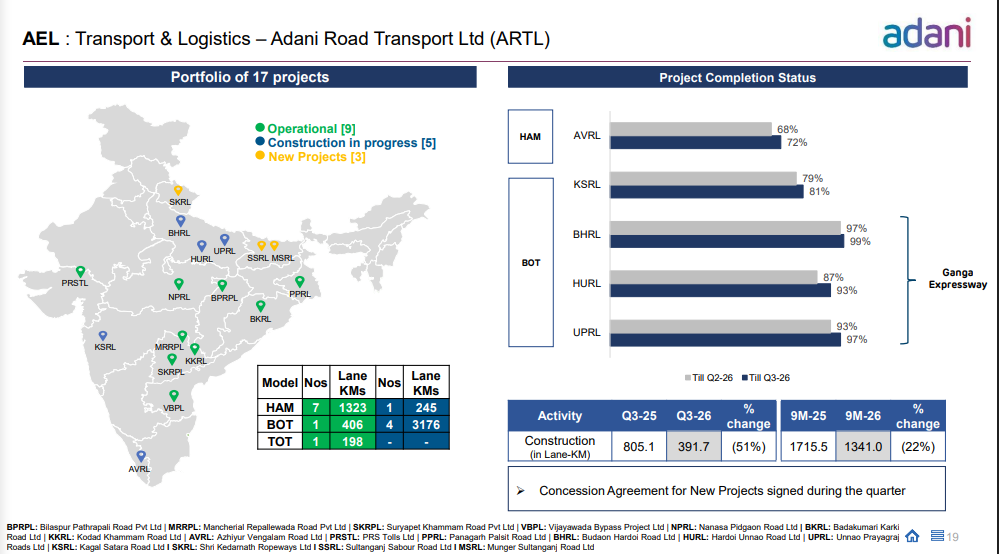
The Adani Group has also expanded its role in India’s transport infrastructure through Adani Road Transport Limited (ARTL), which develops and operates highways and expressway projects across the country. The company currently has a portfolio of 17 highway projects across multiple states, with several already operational while others are under construction or recently awarded. Many of these projects are developed under public-private partnership models such as the Hybrid Annuity Model (HAM) and Build-Operate-Transfer (BOT). Some of the projects are linked to major corridors including the Ganga Expressway. Alongside highways, the group also owns the longest private railway network in India, spanning around 300 kilometres, which connects its ports, mines and industrial hubs to ensure smooth cargo movement. Together with its ports, airports and logistics parks, this network strengthens the group’s integrated logistics ecosystem that connects coastal trade routes to inland markets.
The group has also built a major presence in construction materials through Adani Cement, which includes well-known brands such as Ambuja Cements, ACC, Sanghi, Orient and Penna Cements. With an installed capacity of about 109 million tonnes per annum, the business is the ninth largest cement producer globally and supplies nearly 30 percent of the cement used in India’s housing and infrastructure projects. The company produces a wide range of cement, concrete and specialised construction products, supported by advanced research and development centres. It has also focused on sustainability, becoming one of the few large cement companies globally whose net-zero targets have been validated by the Science Based Targets initiative (SBTi), while developing technologies and additives aimed at lowering the carbon footprint of construction.
The group has further strengthened its infrastructure capabilities through CemIndia Projects Limited, earlier known as ITD Cementation India Limited. With nearly nine decades of experience, the company executes large engineering and EPC projects across sectors including ports, maritime infrastructure, metros, airports, highways, bridges, tunnels, dams and irrigation systems. It has carried out specialised marine works such as jetties, berths, breakwaters, dredging and coastal protection structures, along with metro systems, airport terminals, national highways and river bridges. Its expertise also includes industrial buildings, factories, warehouses, hydroelectric projects and irrigation infrastructure. In recent years, the company has expanded into data centre EPC work, specialised foundation engineering, water and wastewater systems, and micro-tunnelling. CemIndia is increasingly emerging as a key execution arm supporting the Adani Group’s large infrastructure projects across ports, airports, power plants and data centres.
Defence – Powering India’s National Security
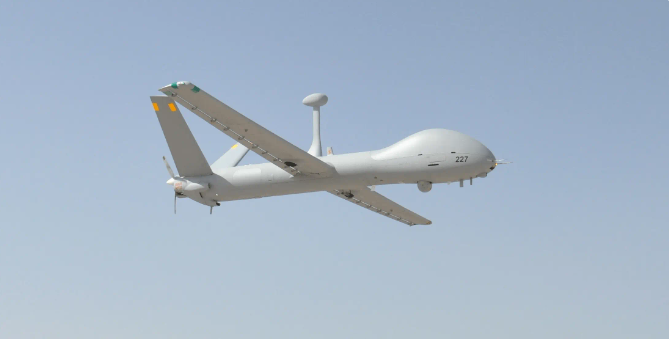
The Adani Group has been gradually expanding its presence in India’s defence and aerospace sector through Adani Defence & Aerospace. The company has developed a wide range of unmanned systems that include long-endurance surveillance drones as well as smaller tactical platforms used for reconnaissance, border monitoring and security operations. Systems such as the Drishti 10 long-endurance drone and the combat-tested Drishti 6 are designed for high-altitude and long-duration missions, while other smaller drones and VTOL platforms support surveillance, logistics and autonomous swarm operations. The company is also developing loitering munitions that combine surveillance with precision strike capability, allowing drones to identify and engage targets during missions.
Alongside surveillance and strike platforms, the company has also entered the growing counter-drone defence segment. Adani Defence has developed an integrated counter-drone system capable of detecting, tracking and neutralizing hostile drones in different environments. The system uses radar, signal intelligence tools and electro-optical sensors to detect threats, while countermeasures such as radio-frequency jamming, interceptor drones and high-power laser systems are used to disable or destroy them. These technologies can be integrated with existing air defence networks to help protect critical infrastructure, military bases and urban areas from drone attacks.
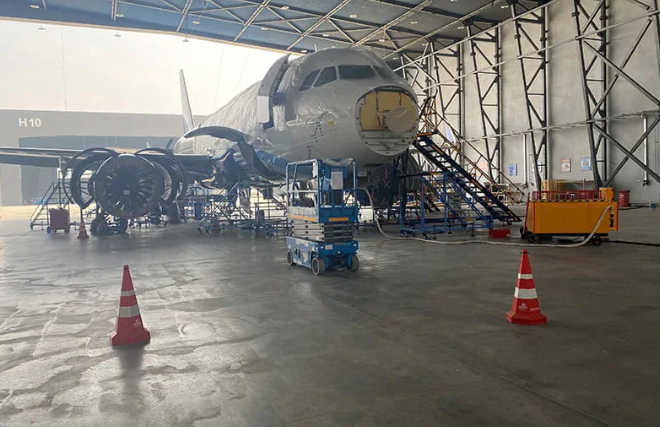
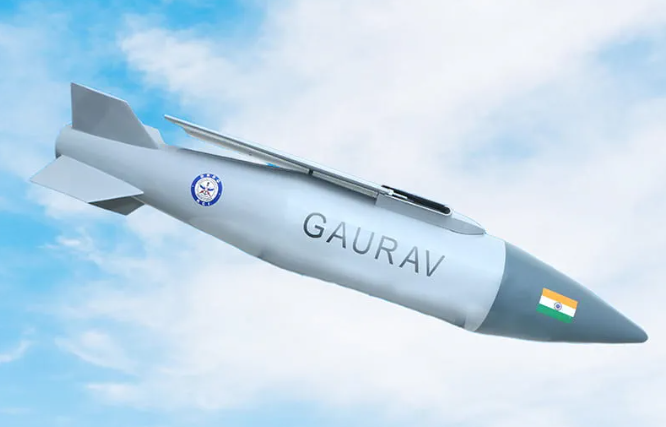
The group has also built a presence in traditional defence manufacturing through the production of small arms, ammunition and advanced weapon systems. Its portfolio includes rifles, carbines, pistols, machine guns and precision sniper weapons along with related equipment such as optics and tactical accessories. The company also manufactures ammunition across different calibres ranging from small arms rounds to grenades and artillery shells. In addition, Adani Defence is involved in advanced missile systems including precision-guided weapons, anti-radiation missiles designed to target enemy radar systems, low-altitude air defence missiles and anti-ship missiles used in naval warfare. The company is also expanding its aerospace capabilities through aircraft maintenance, repair and overhaul services and has formed partnerships with global aerospace companies such as Leonardo and Embraer to develop helicopter manufacturing and regional aircraft ecosystems in India.
Media – What You See
The Adani Group entered the media sector through its acquisition of NDTV. More than a decade ago, NDTV founders Radhika and Prannoy Roy had taken an interest-free loan of over Rs. 400 crore from Vishvapradhan Commercial Pvt Ltd (VCPL), pledging part of their shares as collateral. VCPL was later acquired by the Adani Group through Adani Enterprises. The loan agreement allowed VCPL to convert the unpaid loan into a controlling stake in RRPR Holdings, the Roys’ promoter company, which resulted in an indirect 29.18 percent stake in NDTV. Since this exceeded 25 percent ownership, SEBI rules required the group to launch an open offer. In August 2022, Adani-linked entities including VCPL and AMG Media Networks offered to buy 1.67 crore shares from public investors. Although the offer targeted 26 percent, investors tendered about 8.27 percent, increasing Adani’s stake to 37.45 percent and making it the largest shareholder.
The group later strengthened its control by purchasing another 27.26 percent stake directly from the founders, raising its total holding in NDTV to 64.71 percent and giving it full control of the media company. NDTV reaches more than 500 million viewers and users across television and digital platforms, with social media reach of over 100 million people per month and more than 200 million website visitors. The network is available in around 38 million households across more than 60 countries. Alongside this media presence, the group has also launched Adani One, a digital super app that brings together its consumer-facing services, especially travel-related products, into a single integrated platform.
Metals & Mining Services – Supplying The Materials That Build The Economy
The Adani Group has also expanded into the metals sector through Kutch Copper Limited (KCL), a subsidiary of Adani Enterprises Limited. The company is developing what is planned to be the world’s largest single-location copper manufacturing facility at Mundra in Gujarat. This project is designed to strengthen India’s domestic copper production capacity while supporting the government’s broader goal of turning the country into a global manufacturing hub. The plant is being developed with an annual production capacity of around 1 million tonnes and involves an initial investment of about USD 1.2 billion funded by a consortium of banks. Once operational, the project is expected to meet up to 50 percent of India’s growing domestic demand for copper, which is a critical metal used in sectors such as power infrastructure, electronics, transportation and renewable energy.

Alongside copper cathodes and copper rods, the facility will also produce several other metals including gold and silver. The manufacturing process will generate additional by-products such as sulphuric acid, copper slag and industrial gases. The company will also produce minor metals including selenium powder, nickel carbonate and copper telluride. In addition, KCL plans to manufacture value-added copper products such as plain wall tubes, inner grooved tubes, pancake coils and straight length tubes. Through this project, the Adani Group is positioning itself as a significant player in India’s metals and industrial materials supply chain while contributing to the country’s efforts to strengthen domestic manufacturing and resource security.
What Adani Could Become The Most Important Person?
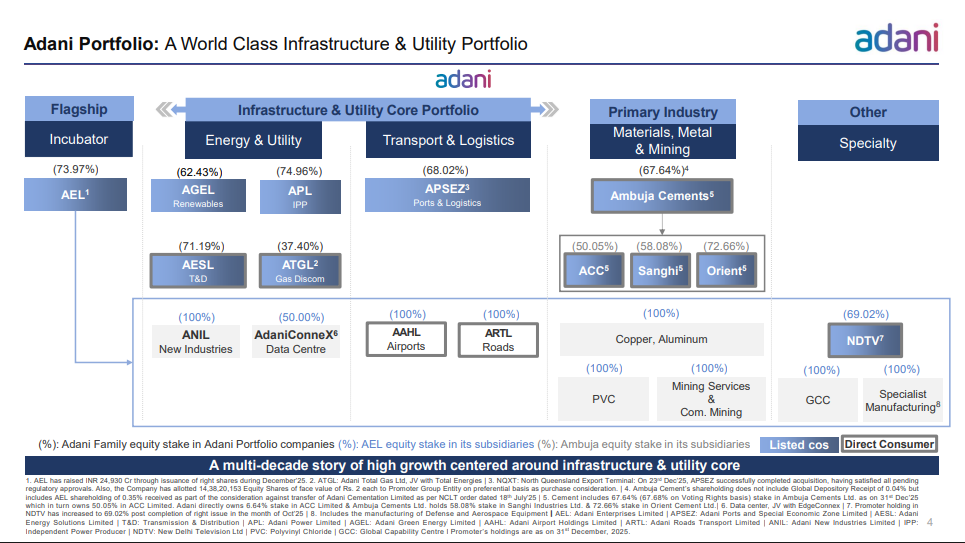
What makes Gautam Adani’s position unique is not just the size of his businesses but the way they are spread across the most critical sectors of the economy. Over the past three decades, the Adani Group has built a presence in ports, airports, power generation, renewable energy, transmission networks, logistics, highways, cement, data centres, defence manufacturing, metals, and media. These are not ordinary industries; they are the systems that keep an economy running. Ports move trade, airports move people, power plants supply electricity, cement builds infrastructure, data centres power the digital economy, and defence protects national security. By gradually expanding into these sectors, Adani has positioned his group across many of the core pillars that support India’s economic growth.
What makes this expansion even more significant is that many of these businesses are interconnected, creating a large integrated infrastructure network. Ports link with logistics parks and rail networks to move cargo inland, power plants and renewable projects can supply energy to data centres and industrial hubs, airports generate commercial ecosystems around travel and trade, while cement and metals support the construction of new infrastructure. As India continues to urbanize, digitize, and expand its manufacturing base, these sectors are expected to grow rapidly. If the Adani Group continues building across these strategic industries, Gautam Adani’s influence could extend across multiple layers of the economy, placing him at the center of some of the most important systems driving India’s growth by 2030.
Disclaimer: The views and investment tips expressed by investment experts/broking houses/rating agencies on tradebrains.in are their own, and not that of the website or its management. Investing in equities poses a risk of financial losses. Investors must therefore exercise due caution while investing or trading in stocks. Trade Brains Technologies Private Limited or the author are not liable for any losses caused as a result of the decision based on this article. Please consult your investment advisor before investing.
The post Why Gautam Adani Could Become the Most Important Person in India’s Economy by 2030? appeared first on Trade Brains.
What's Your Reaction?