










































.png)


MOIL Cuts Manganese Ore Prices by Up to 10% for July as Downstream Alloy Margins Compress
Synopsis: Weak offtake from the steel and ferroalloy sector has pushed the country’s largest manganese ore producer to cut prices for a third straight month, a move that follows a sharp fall in quarterly profit and comes as the company navigates a leadership transition and unresolved governance issues. A regulatory filing effective July 1, 2026 […] The post MOIL Cuts Manganese Ore Prices by Up to 10% for July as Downstream Alloy Margins Compress appeared first on Trade Brains.

Synopsis: Weak offtake from the steel and ferroalloy sector has pushed the country’s largest manganese ore producer to cut prices for a third straight month, a move that follows a sharp fall in quarterly profit and comes as the company navigates a leadership transition and unresolved governance issues.
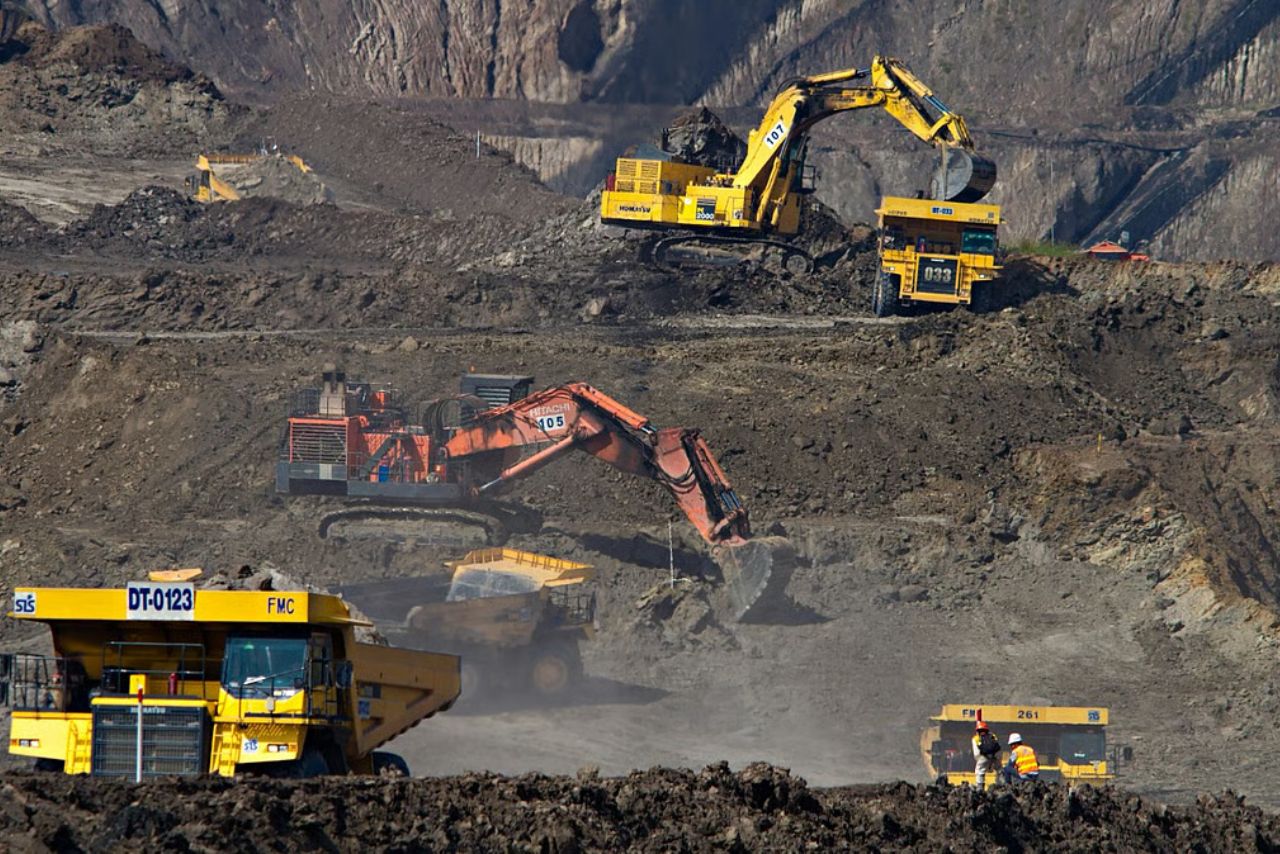
A regulatory filing effective July 1, 2026 confirmed a fresh round of price cuts across nearly all manganese ore grades, extending a pattern of monthly reductions that has now stretched into its third consecutive cycle. The revision follows a quarter in which earnings fell sharply even as revenue held up, putting the spotlight on margin pressure at a state-run mining major that supplies raw material to India’s steel and ferroalloy industry.
With a market capitalization of Rs. 5,669.10 crore, the shares of MOIL Limited were trading at Rs. 278.60 per share, up 0.18 percent from its previous closing price of Rs. 278.10 apiece. It is trading at a P/E of 21.16.
Under the latest filing, prices for all ferro grades of manganese ore with manganese content of 44 percent and above have been cut by 5 percent from June levels. The same 5 percent reduction applies to lower-grade ferro ore, chemical grades, SMGR grades, and fines. One specific ferro-grade code, BG4584, saw a steeper 10 percent cut. Prices for select fines codes were held unchanged, and the basic price for Electrolytic Manganese Dioxide, where MOIL is the country’s only producer, stayed flat at Rs. 1,80,000 per metric tonne, with EMD flakes unchanged at Rs. 1,71,000.
This is not an isolated move. MOIL raised prices sharply in April, by 15 to 17.5 percent, but has cut them every month since: down 4 percent in May, 5 to 6 percent in June, and now 5 to 10 percent in July. The reversal points to softening demand from downstream steel and alloy producers rather than a one-off adjustment, and it lines up with the broader trend in metallurgical manganese markets, where high-carbon ferromanganese and silicomanganese prices have both stayed under pressure through the first half of 2026 on subdued Chinese steel output.
What Falling Prices Mean for Profitability and Steel Users
For MOIL, monthly price fixation is standard business practice, but the direction of these cuts matters more than the mechanism. Manganese ore pricing feeds directly into the company’s realisations, and three straight months of reductions will weigh on the current quarter’s topline even if production volumes hold steady. That pattern is already visible in the numbers just reported. For the quarter ended March 31, 2026, MOIL’s standalone net profit fell 20 percent year-on-year to Rs. 92.61 crore, down from Rs. 115.65 crore a year earlier, even as revenue rose 2.6 percent to roughly Rs. 444.5 crore.
Operating profit stayed flat at close to Rs. 139 crore, but operating margin contracted from around 32.2 percent to 31.3 percent, a signal that costs are outpacing realisations. For the full year, the picture is starker: FY26 net profit fell nearly 30 percent to Rs. 267.48 crore from Rs. 381.64 crore in FY25, and the Board has chosen not to recommend a final dividend for the year, a departure from MOIL’s historical payout ratio of 30 to 40 percent.
For downstream steel and ferroalloy producers, cheaper manganese ore is a modest tailwind on raw material costs, since manganese remains an essential input for ferro manganese and silico manganese production. But retail investors reading this as a straightforward win for steelmakers should temper that view. Manganese ore is one input among many in alloy and steel cost structures, and a 5 to 10 percent cut on ore pricing does not automatically translate into equivalent margin relief for large integrated players, whose input costs are dominated by coking coal and iron ore rather than manganese.
The more direct read-through is on MOIL itself, where sustained price cuts against a backdrop of already-compressed margins raise the question of how much further realisations can fall before volumes need to pick up meaningfully to offset the hit.
The company is also working through a leadership transition. Vishwanath Suresh took over as Chairman and Managing Director in January 2026, following the retirement of the previous CMD, and has since had to navigate a board composition dispute: NSE and BSE levied fines of Rs. 5.31 lakh each on MOIL in May for non-compliance with independent director requirements, which the company has attributed to delays in appointments by the Ministry of Steel rather than any lapse of its own. A further independent director’s tenure lapsed in April.
None of this affects day-to-day operations, but a PSU navigating vacant board seats while pushing through consecutive price cuts is one for shareholders to watch, particularly around disclosure quality and strategic decision-making in the current fiscal year.
Business Overview
MOIL Limited, formerly Manganese Ore India Limited, is a Nagpur-headquartered Miniratna public sector enterprise under the Ministry of Steel, established in 1962. It is India’s largest manganese ore producer with roughly 53 percent domestic market share, and the country’s only producer of Electrolytic Manganese Dioxide, operating ten mines across Maharashtra and Madhya Pradesh alongside wind and solar power assets. The company remains almost debt-free, with return on equity of around 10 percent over the past three years reflecting a business that has grown revenue only modestly over the last five years even as it maintains a healthy balance sheet.
Disclaimer: The views and investment tips expressed by investment experts/broking houses/rating agencies on tradebrains.in are their own, and not that of the website or its management. Investing in equities poses a risk of financial losses. Investors must therefore exercise due caution while investing or trading in stocks. Trade Brains Technologies Private Limited or the author are not liable for any losses caused as a result of the decision based on this article. Please consult your investment advisor before investing.
The post MOIL Cuts Manganese Ore Prices by Up to 10% for July as Downstream Alloy Margins Compress appeared first on Trade Brains.
What's Your Reaction?